Foxtail Fern Care: Light, Water, Winter and Yellowing Fixes
Foxtail fern looks soft and delicate, but it is a tough, tuber-rooted plant that mostly suffers from too much water, too little light or a sudden cold snap. This guide explains how to care for it indoors and outdoors, how to read yellow or brown fronds, and how to keep pets and people safe around its berries.
Quick Answer: Foxtail Fern Care at a Glance
Foxtail fern care comes down to bright indirect light, watering only when the top 5 to 7 cm (2 to 3 in) of soil is dry, fast-draining soil and protection from frost. The plant stores water in underground tubers, so soggy soil harms it faster than a missed watering.
| Care factor | What foxtail fern needs |
|---|---|
| Light | Bright indirect light indoors; morning sun with afternoon shade outdoors |
| Water | Water deeply when the top 5 to 7 cm (2 to 3 in) of soil is dry; less in winter |
| Soil | Well-draining, organically rich mix, slightly acidic (about pH 6.0 to 6.8) |
| Temperature | Best at 18 to 24°C (65 to 75°F); growth slows below 10°C (50°F) |
| Cold limit | Fronds die back with frost; tubers survive to about -7 to -4°C (20 to 25°F) |
| Humidity | Moderate to high, around 40 to 50 percent or more indoors |
| Fertilizer | Half-strength balanced feed monthly in spring and summer only |
| Hardiness | USDA zones 9 to 11 outdoors all year |
| Size | About 60 cm (2 ft) tall and 90 to 120 cm (3 to 4 ft) wide |
| Toxicity | Toxic to cats and dogs (berries); sap can irritate skin |
What Is a Foxtail Fern?
Foxtail fern is Asparagus densiflorus ‘Myersii’ (also sold as ‘Myers’ or ‘Meyersii’), a cultivar in the asparagus family, Asparagaceae. It is not a true fern: it makes small flowers and berries with seeds instead of spores, which is why its care differs from a moisture-loving fern such as the Kimberly Queen fern.
The species is native to southern Africa, from South Africa to Mozambique, where it grows in rocky open forest, thickets and coastal areas, according to its botanical profile. The compact ‘Myersii’ form holds the Royal Horticultural Society’s Award of Garden Merit.
Here is what you can check with your own eyes:
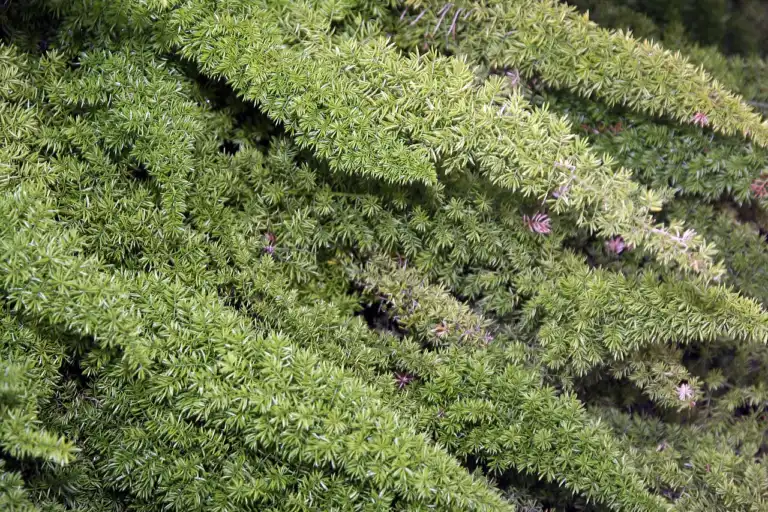
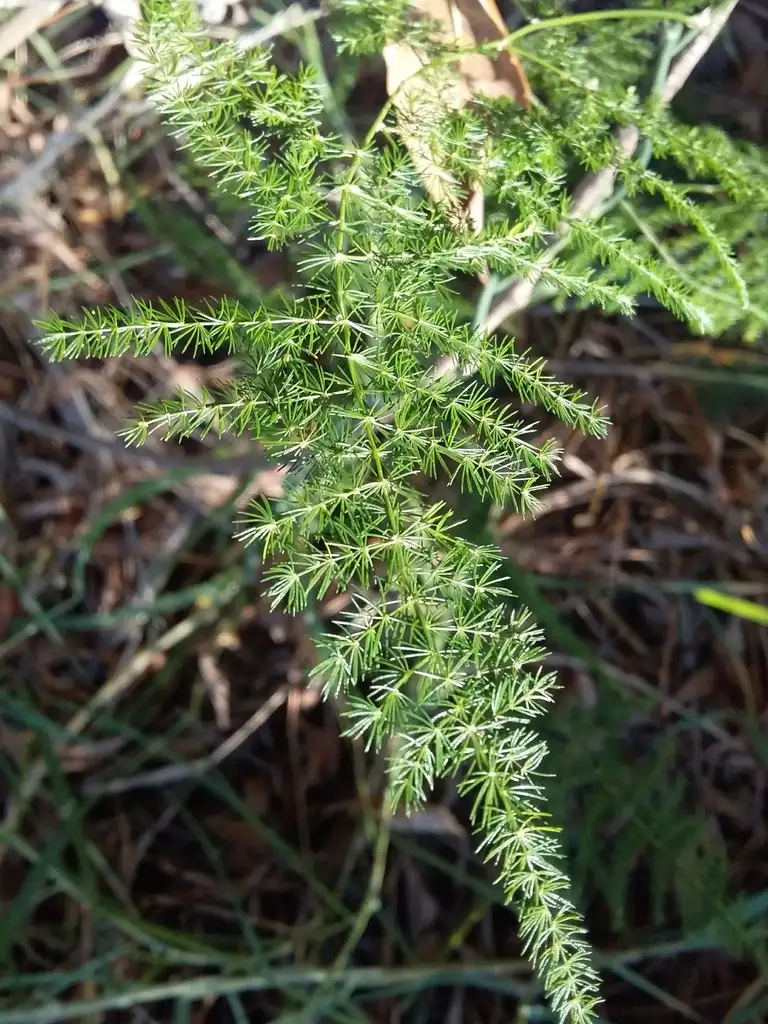
- Stems: stiff, upright plumes that taper like a fox’s tail and sometimes twist slightly.
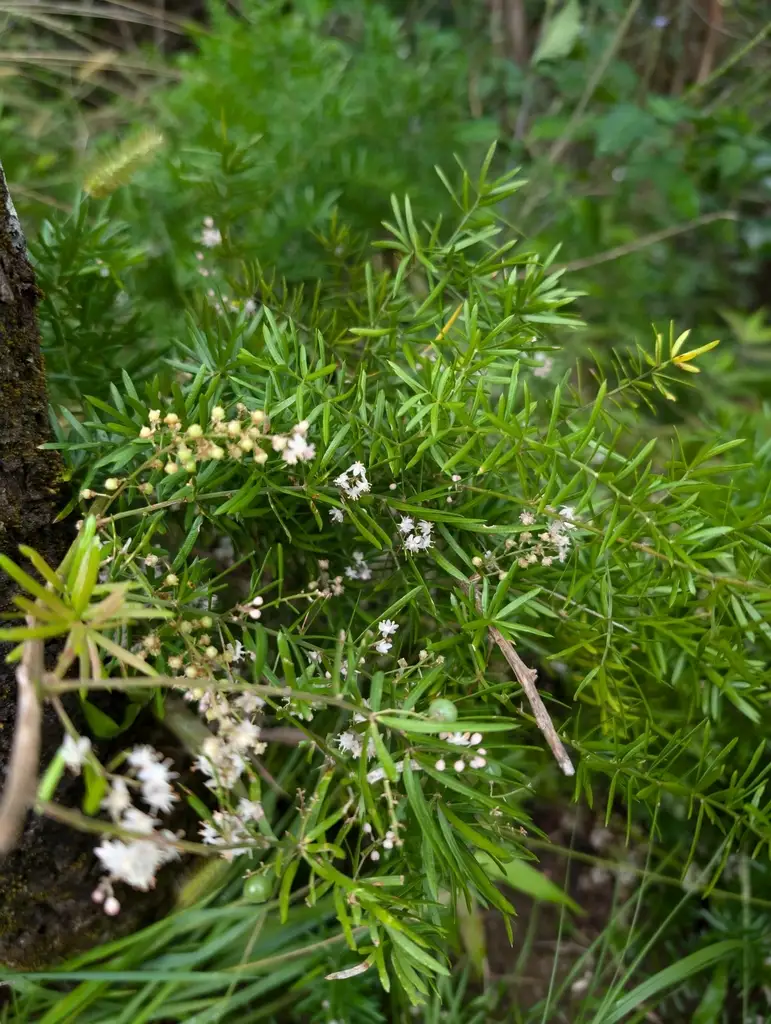
- “Leaves”: tiny needle-like cladodes (flattened stems that do the work of leaves), light to emerald green and under 5 cm (2 in) long.
- Spines: small, sharp spines along the stems.
- Roots: white, swollen tubers that store water and push up toward the soil surface in crowded pots.
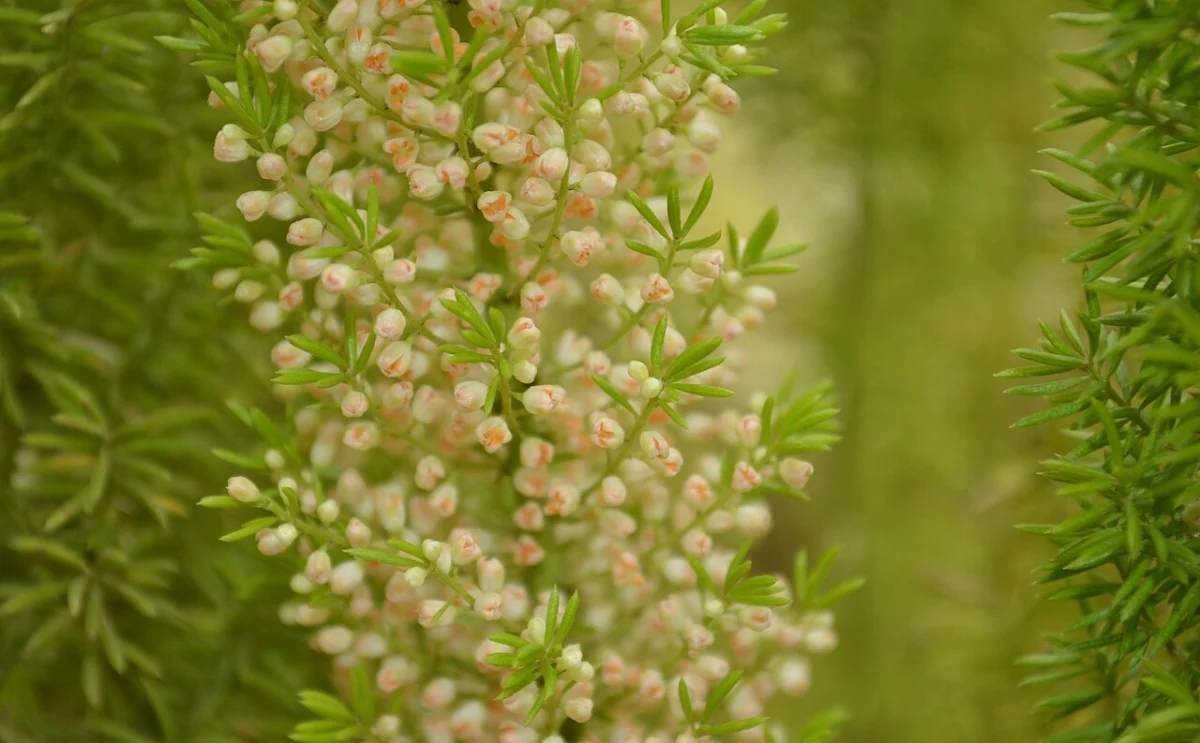
- Flowers: small, fragrant white to pale pink flowers in short clusters.
- Fruit: round to oval berries, green at first and red when ripe, each under 1.3 cm (1/2 in).
The University of Florida IFAS fact sheet on Asparagus densiflorus ‘Meyersii’ lists a mature size of up to 60 cm (2 ft) tall and 1.2 m (4 ft) wide, with good salt tolerance and moderate drought tolerance.
Foxtail Fern vs Sprengeri vs Plumosa: How to Tell Them Apart
Stem habit is the fastest way to separate these three relatives. Foxtail fern stands upright in dense cylinders, Sprengeri arches and trails loosely, and plumosa spreads in flat, lacy layers.
| Feature | Foxtail fern | Sprengeri (asparagus fern) | Plumosa fern |
|---|---|---|---|
| Scientific name | Asparagus densiflorus ‘Myersii’ | Asparagus densiflorus ‘Sprengeri’ (treated by many botanists as Asparagus aethiopicus) | Asparagus setaceus (syn. A. plumosus) |
| Family | Asparagaceae | Asparagaceae | Asparagaceae |
| Stem habit | Stiff, upright, tail-shaped plumes | Long, loose, arching or trailing stems | Climbing or spreading, branching sideways |
| Foliage look | Dense, packed all around the stem | Open, spaced needles along the stem | Flat, triangular, very fine sprays |
| Typical use | Containers, borders, upright accent | Hanging baskets, ground cover | Houseplant, florists’ greenery |
| Berries | Red | Red | Black when ripe |
If your plant arches and trails rather than standing upright, read our asparagus Sprengeri fern care guide instead. Not sure which one you have? Upload a clear daylight photo of a whole stem to our plant identifier or the leaf identifier.
How Much Light Does a Foxtail Fern Need?
Foxtail fern grows best in bright indirect light indoors and in morning sun with afternoon shade outdoors. Strong midday or afternoon sun scorches the needles, while deep shade gives thin, pale, stretched growth.
- Indoors: place it within about 1 m (3 ft) of an east-facing window, or behind a sheer curtain at a south or west window (north in the Southern Hemisphere). Rotate the pot every two weeks so the plumes grow evenly, a tip Jeff of the Tropical Plant Party channel shares in the video below.
- Outdoors in mild coastal climates: it can handle full sun.
- Outdoors in hot inland or desert climates: give it partial shade, especially when summer days pass 32°C (90°F).
Low winter light is a common reason indoor plants drop needles. A south-facing window or a full-spectrum grow light helps; our guide on what color light is best for plant growth explains what to look for.
In my experience, placing plants in a suitable spot with indirect sunlight makes a visible difference in their growth, and foxtail fern is no exception.
How Often Should You Water a Foxtail Fern?
Water a foxtail fern when the top 5 to 7 cm (2 to 3 in) of soil feels dry, then soak it until water drains from the bottom. For most indoor pots in warm months this works out to roughly once a week, but the soil test matters more than the calendar.
The reason is the tubers. They hold a water reserve, so the plant tolerates a short dry spell, but constantly wet soil suffocates and rots them. I have learned that checking the soil before watering is the simplest way to prevent overwatering and keep plants healthy.
- Push a finger 5 cm (2 in) into the soil near the edge of the pot.
- If it feels moist, wait two or three days and check again.
- If it feels dry, lift the pot. A dry pot feels noticeably lighter than a freshly watered one.
- Water slowly until it runs from the drainage hole.
- Empty the saucer after 15 minutes so the pot never sits in water.
Adjust by season and climate:
- Hot summers (for example 35°C / 95°F and above in South Asia, the Middle East or the US Southwest): outdoor containers may need water every two to three days. Check daily during heat waves.
- Mild coastal gardens: in-ground plants may only need water every 8 to 14 days.
- Winter or low light: water less. Let more of the soil dry, but do not let the root ball dry out completely.
If dry soil has shrunk from the sides of the pot and water runs straight through, the soil has become water-repellent. Soak the pot from the bottom in a basin for 20 to 30 minutes.
Best Soil and Pot for Foxtail Fern
Foxtail fern needs a fast-draining, organically rich mix and a pot with at least one drainage hole. A simple container mix is 3 parts quality potting soil, 1 part perlite and 1 part peat moss or coco coir.
- pH: slightly acidic, around 6.0 to 6.8, is preferred. UF IFAS notes that garden plants tolerate clay, sand, loam and slightly alkaline soil, as long as the soil drains well.
- Pot material: unglazed terracotta dries faster than plastic and suits growers who tend to overwater.
- Pot size: move up only 2.5 to 5 cm (1 to 2 in) in diameter at a time. An oversized pot holds wet soil around the tubers.
- Spacing outdoors: plant 45 to 60 cm (18 to 24 in) apart, because the tuberous clumps widen over time.
Temperature, Humidity and Climate
Foxtail fern is happiest at 18 to 24°C (65 to 75°F). Growth slows below 10°C (50°F), frost kills the fronds back to the soil, and the tubers usually survive down to about -7 to -4°C (20 to 25°F).
| Your climate | How to grow it |
|---|---|
| USDA zones 9 to 11 (frost-free or light frost) | Grow in the ground or in pots all year. Expect some frond damage after a light frost. |
| Zone 8 | Mulch in-ground plants 5 to 8 cm (2 to 3 in) deep; they may die back and regrow. Pots are safer. |
| Zone 7 and colder | Keep in containers and bring indoors before night temperatures fall below 10°C (50°F). |
| Hot, dry summers (over 32°C / 90°F) | Give afternoon shade and check soil more often; brown, crispy plumes signal heat stress. |
| Southern Hemisphere | Shift the calendar by six months: spring repotting falls around September to November, and indoor moves happen around April to May. |
Indoors, aim for humidity of about 40 to 50 percent or more. Dry heated air makes the tiny needles brown and shed. A humidifier works best; grouping plants or setting the pot on a tray of wet pebbles helps a little.
Fertilizer: When and How Much
Feed foxtail fern once a month in spring and summer with a balanced fertilizer such as 10-10-10, diluted to half strength. Stop in autumn and winter, because feeding without enough light and warmth produces long, weak, spindly stems.
A slow-release granular fertilizer applied once in spring is a simple alternative. For garden plants, a yearly top-dressing of compost is often enough. Pale or yellowish needles on a plant that is watered correctly can point to hunger, especially if it has been in the same soil for two or more years.
Pruning, Repotting and Dividing
Foxtail fern needs little pruning: cut brown, yellow or broken stems off at the soil line with clean pruners. Wear gloves, because the stems carry small spines and the sap can irritate skin.
Repot in spring when you see any of these signs:
- Tubers pushing up above the soil or over the pot rim.
- Roots coming out of the drainage holes.
- Water running straight through without soaking in.
- A plastic pot bulging or a clay pot cracking.
How to Divide a Foxtail Fern
Division is the fastest way to propagate foxtail fern. Seeds from ripe red berries also work but take much longer.
- Water the plant the day before so the root ball holds together.
- Put on gloves and slide the plant out. Run a knife around the inside of the pot if the tubers are stuck.
- Look for natural gaps between crowns and cut the clump into two or three pieces with a clean, sharp knife. Each piece needs several stems and plenty of tubers.
- Remove any soft, dark or mushy tubers.
- Plant each division in fresh mix at the same depth as before, with the tubers covered.
- Water lightly and keep the pots in bright indirect light for two to three weeks while the roots settle.
Common Foxtail Fern Problems and How to Fix Them
Most foxtail fern problems trace back to water, light or temperature. Use this table to match what you see with the most likely cause.
| What you see | Likely cause | What to check | Fix |
|---|---|---|---|
| Yellowing from the base up, soil stays wet | Overwatering or root rot | Soggy soil; soft, brown tubers | Let the soil dry, trim rotten roots, repot in fresh mix |
| Yellow, crisp needles, droopy stems | Underwatering | Soil dry deep down, pot very light | Soak from the bottom, then follow the finger test |
| Pale, stretched, sparse plumes | Too little light | Distance from the window | Move closer to bright light or add a grow light |
| Bleached or scorched patches on one side | Too much direct sun | Afternoon sun hitting that side | Move into filtered light or add a sheer curtain |
| Brown tips and needles dropping indoors | Low humidity or heater draft | Nearby vents or radiators | Move away from heat, raise humidity |
| Whole plant turns yellow after a cold night | Cold or frost dieback | Recent temperatures below 10°C (50°F) or frost | Bring indoors; check tubers before throwing it out |
| Only a few old stems brown inside the clump | Normal aging | New spears still emerging | Cut old stems at the base |
| Fine webbing, sticky residue or white fluff | Spider mites, scale or mealybugs | Undersides and stem joints | See the pest section below |
For a wider look at yellowing in other houseplants, see why plant leaves turn yellow.
Pests: Spider Mites, Mealybugs and Scale
Foxtail fern has few pests, but spider mites are the main issue listed by UF IFAS, and mealybugs and scale also show up indoors. The dense plumes give insects plenty of hiding places, so treat early.
- Spider mites: rinse the plant with a strong spray of water in the shower or with a hose every few days for one to two weeks.
- Mealybugs and scale: dab them with a cotton swab dipped in rubbing alcohol, then spray with insecticidal soap or neem oil weekly until they are gone.
- Aphids: the same water spray works; our guide on getting rid of aphids on indoor plants covers more options.
- Before moving a pot indoors for winter: hose the foliage thoroughly and check under the pot for slugs and snails.
- After treatment: keep the plant away from other houseplants for a few weeks.
Winter Care and Frost Dieback
A foxtail fern that turns completely yellow or brown after the first cold nights is usually not dead. Frost kills the above-ground stems, but the tubers often survive and send up new spears in spring.
To check, gently dig at the edge of the clump. Firm, plump, pale tubers mean the plant is alive; cut the dead stems to the ground and keep the soil barely moist. Soft, dark, collapsed tubers mean rot.
For potted plants in cold climates:
- Bring pots indoors before night temperatures drop below 10°C (50°F).
- Rinse the foliage and inspect it for pests first.
- Place the plant in the brightest window you have.
- Water only when the top 5 to 7 cm (2 to 3 in) is dry, and do not fertilize.
- Move it back outside in spring after the last frost, starting in shade for a week.
Is Foxtail Fern Toxic to Cats, Dogs and People?
Yes. The ASPCA lists asparagus fern (Asparagus densiflorus) as toxic to dogs and cats. Eating the berries can cause vomiting, abdominal pain and diarrhea, and repeated skin contact can cause allergic dermatitis.
The UF IFAS fact sheet rates the plant as low in toxicity for people: all parts contain an unidentified toxic compound, eating it may cause stomach upset, and the sap may cause contact dermatitis. Keep the berries away from children, cats, dogs and other pets, and wear gloves when pruning or dividing.
If a person or pet ate part of the plant and shows symptoms, call your local poison control center or a veterinarian right away.
For a pet-friendly comparison, see whether snake plants are toxic to cats.
Is Foxtail Fern Invasive?
The answer depends on the plant and the region. The Florida Exotic Pest Plant Council lists Asparagus aethiopicus (Sprenger’s asparagus) as a Category I invasive, meaning it harms native habitats. The UF IFAS fact sheet for ‘Meyersii’ describes the foxtail cultivar as not known to be invasive.
Gardening sources also flag wild asparagus ferns in parts of Australia, Texas, southern California and Hawaii. If you garden in a warm climate:
- Grow foxtail fern in containers or contained beds.
- Snip off berries before they ripen so birds cannot spread the seeds.
- Check your local invasive plant list or extension service before planting in the ground.
How to Check Your Foxtail Fern Yourself
A weekly two-minute check catches most problems before they spread. I believe that observing plants regularly and adjusting their care to what they show you is essential for healthy indoor plants, and small changes in care often support healthier growth.
- Soil: finger test at 5 cm (2 in) deep.
- Color: are new spears bright green, or are older stems yellowing from the base?
- Pests: look under the plumes and at stem joints for webbing, white fluff or brown bumps.
- Tubers: are they lifting the soil or crowding the rim? Plan a spring repot.
- Position: has the light changed with the season? Rotate the pot.
If you are unsure whether you have a foxtail fern or a look-alike, take a sharp daylight photo of one full stem and try our plant identifier. Photo identification, including our tool, can be wrong, so do not rely on it alone when safety matters, such as with children or pets who may eat berries.
Video: Foxtail Fern Care Indoors and Out
This video from the Tropical Plant Party channel shows foxtail fern plumes up close and covers light, division, winter indoor care and why low humidity makes the needles drop.
Key Takeaways
Foxtail fern thrives when you treat it like a water-storing perennial rather than a true fern. Give it bright indirect light, water only after the top few centimeters dry, protect it from frost and keep the berries away from pets. If the plumes yellow, start with the soil moisture and light, then work through the diagnosis table above.
Frequently Asked Questions
Can foxtail fern take full sun?
Foxtail fern can handle full sun in mild coastal climates, but in hot inland areas, especially above 32°C (90°F), it needs afternoon shade. Strong afternoon sun bleaches and scorches the needles.
Why is my foxtail fern turning yellow?
The most common causes are overwatering (soggy soil and soft tubers), too little light, cold below 10°C (50°F) or frost, and old exhausted soil. Check soil moisture first, then light and recent temperatures.
Will a foxtail fern come back after frost?
Usually yes. Frost kills the stems, but the tubers survive to about -7 to -4°C (20 to 25°F). If the tubers are firm and pale, cut the dead stems to the ground and wait for new spears in spring.
Is foxtail fern safe for cats and dogs?
No. The ASPCA lists asparagus fern (Asparagus densiflorus) as toxic to cats and dogs. The berries can cause vomiting, abdominal pain and diarrhea, and repeated skin contact can cause dermatitis. Contact a vet if your pet eats it and shows symptoms.
Is foxtail fern a real fern?
No. Foxtail fern is Asparagus densiflorus ‘Myersii’ in the asparagus family, Asparagaceae. It produces flowers and berries with seeds instead of spores and stores water in underground tubers.
How big does a foxtail fern get?
A mature foxtail fern typically reaches about 60 cm (2 ft) tall and 90 to 120 cm (3 to 4 ft) wide, according to the University of Florida IFAS fact sheet.
Featured image: Photo: Krzysztof Ziarnek, Kenraiz / Wikimedia Commons, CC BY-SA 4.0