How To Get Rid Of Aphids On Indoor Plants
In my years of tending cherished houseplants, I’ve found aphids to be the most persistent nuisances we gardeners deal with on indoor plants. These tiny insects pale greenfly or darker black variants are sap-sucking insects that multiply fast, and an infestation brings real plant damage before you spot it.
My aphid management relies wholly on natural methods and non-chemical methods; treat this as a short extensive guide where knowing the biology of aphids and the early signs of infestation matters as much as the fix.
Simple practical solutions and eco-friendly solutions: a wipe, a rinse, steady checks keep my plants thriving, the same routine I use for maintaining vegetable patch health. Whether a vegetable patch or a shelf of houseplants, controlling these insects is about consistency.
Quick Answer
To get rid of aphids on indoor plants, first isolate the affected plant, then blast the aphids off with a firm water spray or wipe leaves with diluted soapy water (1 tsp mild dish soap per litre). Repeat every 3–4 days until they’re gone. For stubborn infestations, apply neem oil weekly.
The fast fix, in order:
Isolate: the plant so aphids don’t spread to your collection.
Rinse or wipe: water jet or soapy-water spray, focusing on leaf undersides.
Repeat: every 3–4 days; aphids breed fast, so one treatment won’t cut it.
Escalate to neem oil: (weekly) if they persist.
Prevent: inspect new plants before bringing them home, don’t overwater, and don’t overcrowd.
1. Understanding Aphids: Biology, Identification, and Life Cycle
What Are Aphids?
In my experience, aphids are the one pest challenge that catches both novice gardeners and experienced gardeners off guard on their indoor plants. They’re small, soft-bodied insects with distinctive pear-shaped bodies and they survive by plant feeding, sucking sap straight from plants, which makes them classic plant pests.
Most people first meet the pale green kind known as greenfly, but there are darker forms too, like blackfly and the woolly aphids with their tell-tale white coating; across every species these are formidable pests precisely because of their rapid reproductive rates.
That reproduction happens fastest on tender new leaves where they excel at hiding, and I’ve watched them drain the sap from houseplants before many houseplant enthusiasts even realise anything’s wrong.
How to Spot an Aphid Infestation
From experience, early detection is everything when it comes to effective control of aphids on indoor plants catch the infestation signs early and the control is simple.
When identifying aphids, I always check the undersides of leaves first, since that’s where these small insects gather in tight clusters, especially on new unfurling leaves.
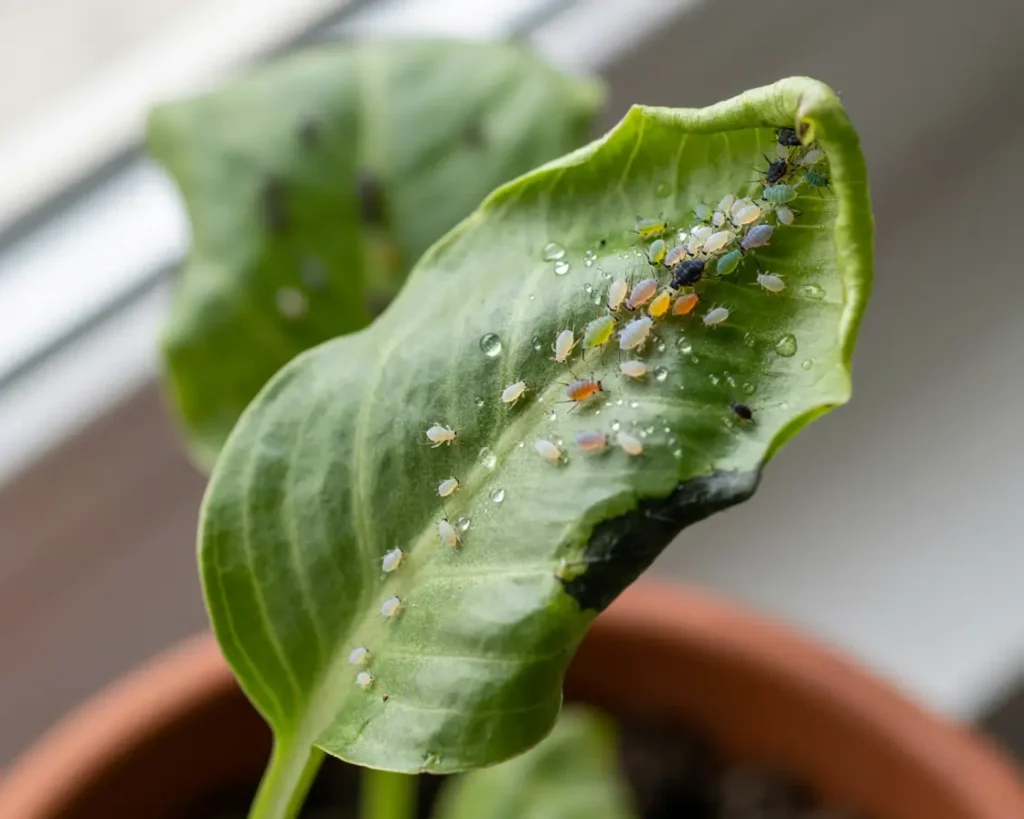
Look for curled leaves and discoloured leaves, a plant response to the steady loss of sap, along with pale white aphid skeletons the shed skins or aphid skins they leave behind, those tiny white skeletons dusting the foliage.
The other giveaway is a sticky residue called honeydew, a sugary substance that’s really just aphid excretion, and left alone it invites sooty mould; that mould growth is what finally tips off many people to the threat to their plant health, by which point the plant damage and the spread across the leaves is well underway.
The Aphid Life Cycle
- The Rapid Cycle: What makes aphids so troublesome on indoor plants is their rapid life cycle, a life cycle that flips a minor infestation into a major infestation within days a fast-moving pest problem if you’re not watching.
- Nymph Stage: It begins here, with newly born aphids, or nymphs, that start feeding almost at once and look like smaller versions of the adult aphids they’re growing into.
- Adult Stage: At the adult stage, these mature aphids shift to reproduction and the striking part, in my experience via asexual reproduction, a process called parthenogenesis where females birth live young with no mating, fuelling explosive population growth.
- Winged Aphids: Under stressful conditions overcrowded plants, undernourished plants, general plant stress some grow winged forms; I’ve watched these winged aphids sprout wings, turn into flying aphids, reach new plants, and start spreading infestation across an entire plant collection.
- My Approach: For me, infestation control hinges on monitoring plants closely regular monitoring allows the early intervention and infestation prevention that keep population growth and aphid numbers in check across my houseplants.
2. The Impact of Aphids on Plant Health
Direct Damage to Plants
- Beyond a Visual Nuisance: In my experience, aphids are far more than a visual nuisance their feeding habits cause real direct impacts on plant health that go well past appearances.
- Nutrient Depletion: As they suck away essential sap, they drive nutrient depletion in plants, and that loss of nutrients leaves them weak and stunted, with poor growth and a noticeably reduced yield.
- Leaf Symptoms: You’ll see leaf discolouration and leaf deformation infected leaves turn yellow, curl up, and take on a crinkled texture, something I spot most often on tender houseplants.
- Impact on Edibles: On vegetables like tomatoes and chillies, aphid infestations bring fruit damage and flower damage, a real reduction in both quality and quantity of the fruits and flowers.
- The Full Cost: Ultimately it’s not just aesthetics at stake but fruit production itself, which is why I never treat these pests as harmless.
Indirect Consequences
- The Honeydew Problem: In my experience, the trouble with aphids doesn’t end at their feeding the sticky honeydew they leave behind is where secondary issues really begin.
- Sooty Mould: That honeydew coats the leaves and quickly feeds sooty mould, a fungal growth that spreads across the surface, blocking sunlight and reducing plant ability to photosynthesise.
- Disease Transmission: What worries me more is disease transmission aphids act as vectors for plant viruses, and through their constant aphids movement from one plant to another they transmit diseases in a steady chain of plant viruses transmission.
- The Real Toll: Between this and the physical damage they inflict directly, these pests can weaken plants and even kill plants over time, which is exactly why I never let an outbreak run its course.
3. Natural Aphid Control Methods: Expert Advice and Practical Solutions
Natural Ladybird Predator
When it comes to managing aphids without chemicals, ladybirds are the first ally I reach for over the years I’ve found few methods as reliable.
These little predators are among the most tried-and-tested natural remedies out there, devouring aphids by the dozen while staying completely gentle on your plants and the wider environment.
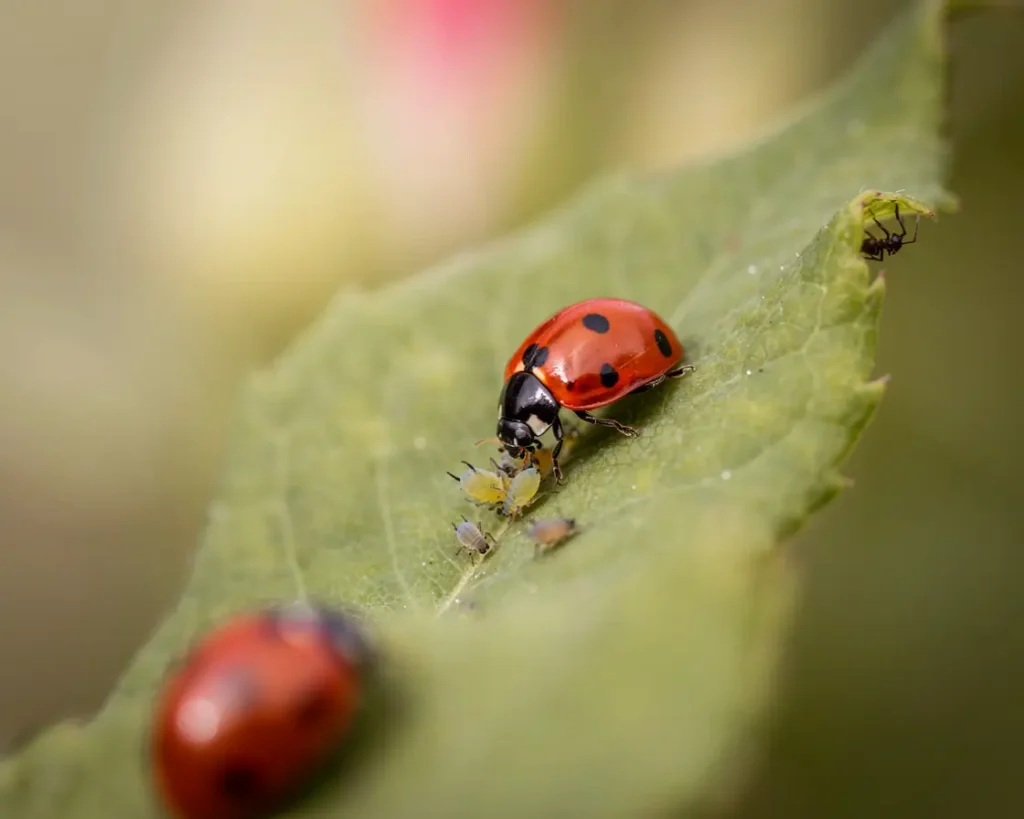
For anyone who wants their plants protected without harsh sprays, encouraging this natural hunter is one of the simplest things you can do.
3A. Homemade Sprays
Before I ever consider anything stronger, a homemade spray is my first line of defence against an outbreak.
What I love about the DIY route is how easily it targets aphids directly while letting you mix solutions that are tailored to your needs: a stronger batch for a heavy cluster, something milder for delicate foliage.
In my experience, these simple sprays knock back aphids fast, and you almost always have the ingredients sitting in your kitchen already.
Soapy Water Spray
This is the classic remedy I always come back to, and it couldn’t be simpler: mixing water with a few drops of mild dish soap creates a solution that works by breaking down the protective outer coating of the aphids, which is what lets you dislodge them from the plant.
A trick I picked up from seasoned growers is to add a little vegetable oil to the mixture. It helps the spray adhere better to the leaves and gives you far more thorough coverage on every surface where these pests like to hide.
How to Use:
- Mix the Solution: Combine a litre of water with a teaspoon of mild dish soap and a splash of vegetable oil, then pour the solution into a clean spray bottle and shake it well.
- Test First: Before going all in, always test on a small section of the plant and wait a day to check for any adverse reaction, a step I never skip, no matter how confident I am in the mix.
- Apply Thoroughly: Once it’s safe, spray generously across all the affected areas, paying special attention to the undersides of leaves where aphids love to congregate.
- Stay Consistent: Repeat every few days until you’ve got the infestation properly under control. Persistence here is what makes the difference in my experience.
2. Neem Oil Solution
When a soapy spray isn’t quite enough, neem oil is the next thing I turn to a natural remedy pressed from the seeds of the neem tree that’s been trusted for generations. What makes it so effective is the way it disrupts both the feeding cycles and reproductive cycles of aphids, quietly dismantling the very processes they need to thrive rather than just knocking down the ones you can see today.
How to Use:
- Dilute Correctly: Start by learning to dilute neem oil according to the manufacturer’s instructions, which usually means a set number of millilitres per litre of water I always measure rather than eyeball it.
- Add an Emulsifier: Combine in a little mild liquid soap so the oil mix with water properly instead of separating; skip this and you’ll get an uneven, patchy spray.
- Apply Everywhere: Apply the solution to all parts of the plant, focusing on the spots where aphids are most active, the new growth and leaf undersides especially.
- Stay on Schedule: For best results, reapply every 7–10 days, since consistency is what truly breaks the cycle in my experience.
3B. The Power of a Water Jet
Sometimes the simplest fix is the best one, and in outdoor spaces a plain strong jet of water is a genuinely effective, chemical-free way to reduce aphid numbers. In my outdoor gardens I’ll grab the hose and use a well-aimed spray to dislodge aphids straight off the foliage.
The sheer force does the work no soap even needs to. Showering plants like this is such an effective approach for reducing population quickly that I often reach for it before mixing anything at all.
Tips for Effective Use:
- Control the Pressure: Fit a spray nozzle and adjust the pressure so it’s forceful enough to shift the pests but never so harsh it tears delicate growth a balance I’ve learned by trial and error.
- Target the Right Spots: Aim carefully at the undersides of leaves, and follow up with a light brushing by hand to remove stubborn aphids that cling on after the water passes.
- Time It Well: I always use this method in the early morning or late afternoon to prevent leaf scorch, since droplets left sitting under the direct sun can act like tiny lenses and damage the foliage.
3C. Beneficial Insects and Biological Control
Some of the best pest controllers come straight from nature, and over the years I’ve leaned on them heavily for managing aphids.
In an outdoor garden, simply encouraging beneficial insects works wonders ladybirds (or ladybugs) have such a voracious appetite for aphids that many gardeners report dramatic improvements within days of introducing natural predators.
For indoor use, this same principle of natural pest control and pest control scales up through specific allies like Aphidius colemani, Aphidoletes aphidimyza, and Aphidius Ervi, which control various species of aphids so reliably that even commercial growers depend on them.
Encouraging Beneficial Insects Outdoors Can Help Indoors:
- Build Plant Diversity: A varied garden full of different flowering plants naturally attracts beneficial insects, and I’ve found this outdoor foundation quietly reduces the pest pressure that eventually creeps indoors.
- Skip the Sprays: Avoid broad-spectrum pesticides they harm aphids, yes, but they wipe out the predators that feed on aphids just as easily, leaving you worse off in the long run.
- Provide Habitat: Provide habitat by leaving a patch of undisturbed ground or setting up a bug hotel; this kind of welcoming environment keeps ladybirds, lacewings, and parasitic wasps close by.
- Know Your Allies: Learn to plant identify and recognise these helpers on sight, so you never mistake a friend for a foe when you’re inspecting your plants.
3D. Cultural and Preventative Practices
In my experience, the direct treatments only get you so far the real wins come from adjusting your everyday growing habits long before trouble appears.
Small, consistent changes in how you water, feed, space, and inspect your plants do more to prevent aphid infestations than any spray ever will, because they stop aphid infestations from taking hold in the first place rather than fighting them after the fact.
1. Regular Monitoring and Hygiene
For me, routine inspection is the backbone of prevention when you inspect your plants frequently, early detection becomes almost automatic, and that’s crucial because the sooner you spot aphids the easier they are to manage.
I pair this with regular pruning, cutting away to remove heavily infested leaves and stems, which does a lot to prevent aphids from spreading to healthy growth nearby.
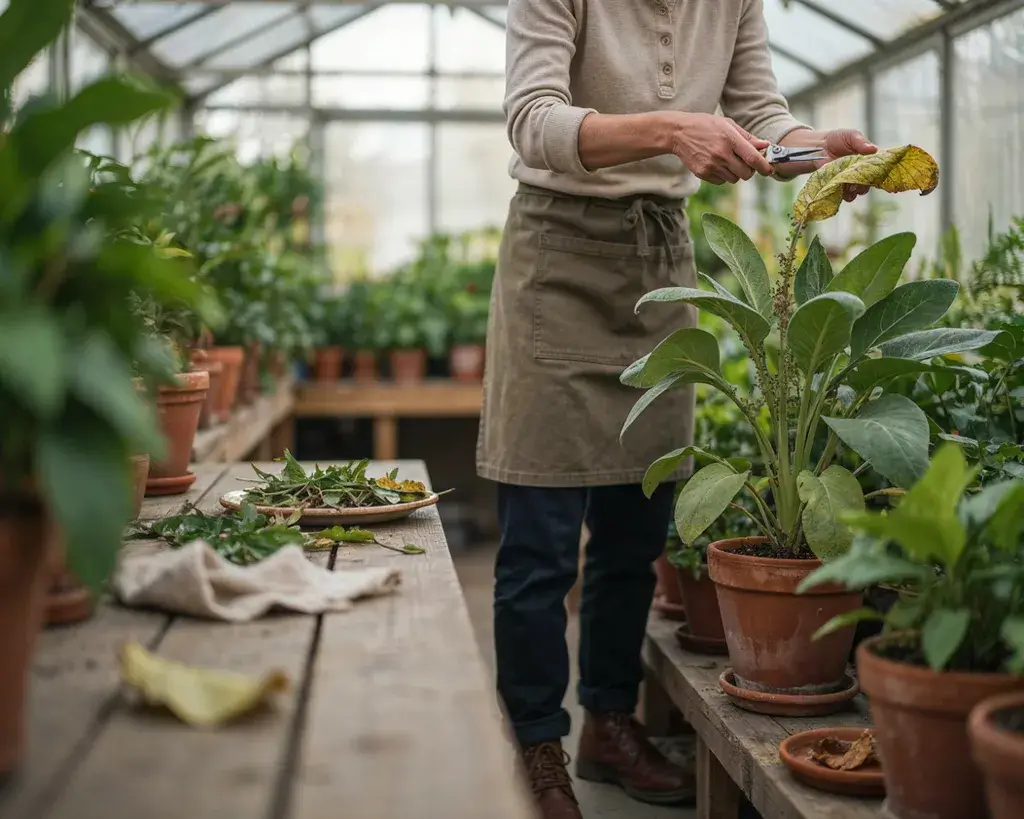
Just as important is cleaning: I keep plants tidy by removing dead leaves, dying leaves, and any plant debris, since that leftover clutter is exactly the kind of thing that will harbour pests and disease if you let it pile up.
Maintaining Plant Health
Over the years I’ve become convinced that healthy plants are simply less susceptible to pests, so most of my effort goes into keeping them in peak condition rather than reacting to problems. I make sure they stay well-watered to avoid water stress, because stressed, thirsty plants are far more attractive to aphids than vigorous ones.
I also keep them properly fertilised, since balanced fertilisation promotes robust growth that shrugs off pests, and I ensure everything is adequately spaced for good air circulation that simple bit of breathing room reduces risk of both fungal diseases and pest infestations at once.
4. Expert Insights: What We Recommend
- Work With Nature, Not Against It: After years of nurturing plants without reaching for harsh chemicals, my whole philosophy of aphid control is built on practical natural methods that work with nature rather than fighting it that’s the foundation of my expert recommendations.
- Lead With Early Intervention: My first of the top tips is early intervention through early detection; regularly inspecting plants lets you catch aphids long before they become a full-blown infestation.
- Reach for Gentle Treatments First: Instead of chemical pesticides, I rely on gentle treatments — a firm water spray or a soapy solution knocks down aphid numbers fast without collateral damage.
- Recruit Natural Predators: I’m a firm believer in natural predators; the approach I call Ladybird Plant Care is something I recommend to fellow gardeners welcoming beneficial insects like ladybirds and lacewings that consume aphids and restore a balanced garden ecosystem.
- Favour Non-Chemical Methods: Leaning on non-chemical methods over chemical sprays protects the natural balance of your garden and your houseplants alike, keeping chemical use to an absolute minimum both outdoors and in our homes.
- Protect Beneficial Organisms: Every choice should shield the beneficial organisms that keep pest populations in check constant observation and adaptation in your own home teach you what each of your plants actually needs.
- Commit to the Long Game: Ultimately, my recommended strategy for long-term success is managing aphids naturally, and it’s what turns an ordinary healthy garden into a genuinely thriving space.
6. Long-Term Strategies for Aphid Prevention
Prevention always beats cure when it comes to managing aphids, and thinking long term is what separates a garden that limps from outbreak to outbreak from one that stays clear. Weave these small habits into consistent strategies and you ensure your garden stays largely aphid-free season after season.
6A. Maintain a Healthy Plant Ecosystem
Everything I’ve learned about keeping pests away eventually circles back to soil health, so I always start my plants off with good quality soils and a few microbial amendments to give them the best start possible.
From there it’s about consistency: regular feeding and sensible watering are what keep healthy plants genuinely stress-free, and in my experience a well-nourished plant is dramatically less likely to fall victim to an aphid infestation than a neglected one struggling to hold itself together.
6B. Adopt Integrated Pest Management (IPM)
- Think Holistically: Integrated Pest Management is really a holistic approach that ties together monitoring, natural remedies, and prevention strategies into one system rather than a scatter of one-off fixes it’s how I’ve come to run all my plants.
- Keep a Record: I lean heavily on observation, keeping a simple log of pest sightings and the conditions of your plants; that record lets you identify trends you’d otherwise miss entirely.
- Act Early: The habit that’s saved me most often is learning to act quickly at the first sign of trouble, scaling your response from gentle natural methods like water sprays and soapy solutions only up to more intensive interventions when they’re truly needed.
- Review and Adapt: Finally, review and assess effectiveness of your methods regularly, and don’t be afraid to adjust strategy when something isn’t working that willingness to adapt is what makes IPM hold up long term.
7. Bringing It All Together: A Comprehensive Aphid Control Plan
- Start With Detection: My whole step-by-step plan to keep aphids at bay naturally begins with early detection I schedule regular inspections through the warmer months when aphids most active, because catching them then changes everything.
- Hit Them Early: For the initial response at the first sign of aphids, I go straight to a strong water spray to knock them off the plant, followed by a soapy water spray if any remain.
- Recruit Allies: When aphids persist, I turn to natural predators, building my collections biodiversity by attracting ladybirds and other beneficial insects with flowering plants rather than reaching for chemical pesticides.
- Escalate to Neem: For persistent infestations, a neem oil treatment is my next step — a neem oil solution disrupts their feeding cycles and reproductive cycles, and I always follow the product instructions to the letter.
- Keep Plants Strong: Underpinning all of it, I maintain plant health by keeping everything well-watered, fertilised, and never overcrowded plants, since a healthy plant rarely suffers severe damage.
- Track and Refine: I monitor and adjust constantly, keeping a record treatments and their outcomes so I know when to try a different approach or combine techniques that work better together.
- Keep Learning: Finally, I educate yourself on natural pest management techniques from reliable sources, and lean on the houseplant community for the ongoing support and advice that keeps the whole plan sharp.
8. Final Thoughts
Aphids may be tiny, but their impact on houseplants is anything but small if you let an infestation go unchecked. What’s kept my indoor collection thriving is treating these pests as a manageable nuisance, recognizing the early signs, learning their biology, and taking action with gentle treatments and natural, non-chemical methods that avoid harming your plants.
Folding regular monitoring and control into your houseplant routine, following trusted expert advice, and committing to long-term prevention strategies is how you keep plants healthy while sparing the beneficial creatures that protect them.