Asparagus Sprengeri Fern Care: Light, Water, Repotting and Yellowing Fixes
Asparagus Sprengeri fern care comes down to three things: bright indirect light, soil that stays lightly moist but never soggy, and a roomy, sturdy pot for its water-storing tubers. Get those right and this fluffy, arching plant grows fast indoors or out. Get them wrong and it sheds its needles all over the floor.
This guide covers daily care, how to tell the Sprengeri fern apart from its look-alikes, why it turns yellow, and how to handle it safely around pets.
Quick Answer: How to Care for an Asparagus Sprengeri Fern
- Light: bright indirect light indoors, with no more than about 2 hours of direct sun. Outdoors, give it part shade or gradually acclimated sun.
- Water: water when the top 2.5 cm (1 inch) of soil is dry in spring and summer. Let it dry a little deeper in winter.
- Temperature: keep it above about 12 °C (54 °F). It grows best around 18 to 24 °C (65 to 75 °F).
- Soil and pot: use a well-drained, slightly acidic potting mix and a thick pot with drainage holes. Repot in early spring.
- Feeding: use a diluted balanced fertilizer monthly in spring and summer, and none in winter.
- Safety: the ASPCA lists it as toxic to dogs, cats and horses. Wear gloves because the stems have small spines.
What Is an Asparagus Sprengeri Fern?
The Sprengeri fern is Asparagus densiflorus ‘Sprengeri’, also sold as Asparagus aethiopicus, Asparagus sprengeri or Sprenger’s asparagus. It belongs to the asparagus family, Asparagaceae, the same genus as edible asparagus (Asparagus officinalis). Despite the name, it is not a true fern and never makes spores.
According to UW-Madison Extension, it is native to coastal southeastern South Africa. There it grows in sandy, shady spots such as dunes, rocky ground and woodland edges. That background explains a lot about its care: it tolerates short dry spells but dislikes deep shade and waterlogged roots.
Here are the features you can check with your own eyes:
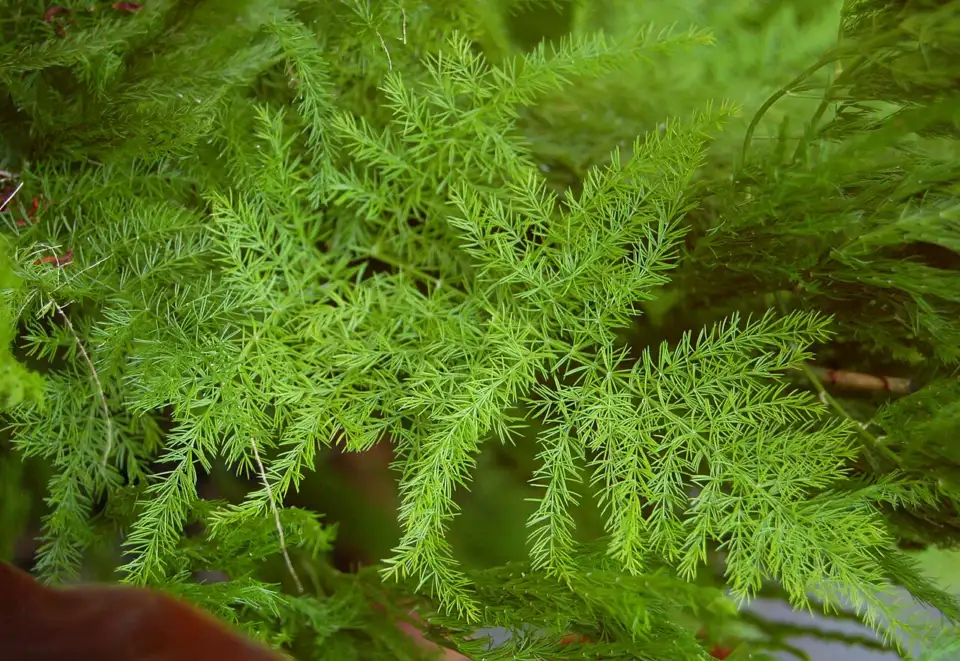
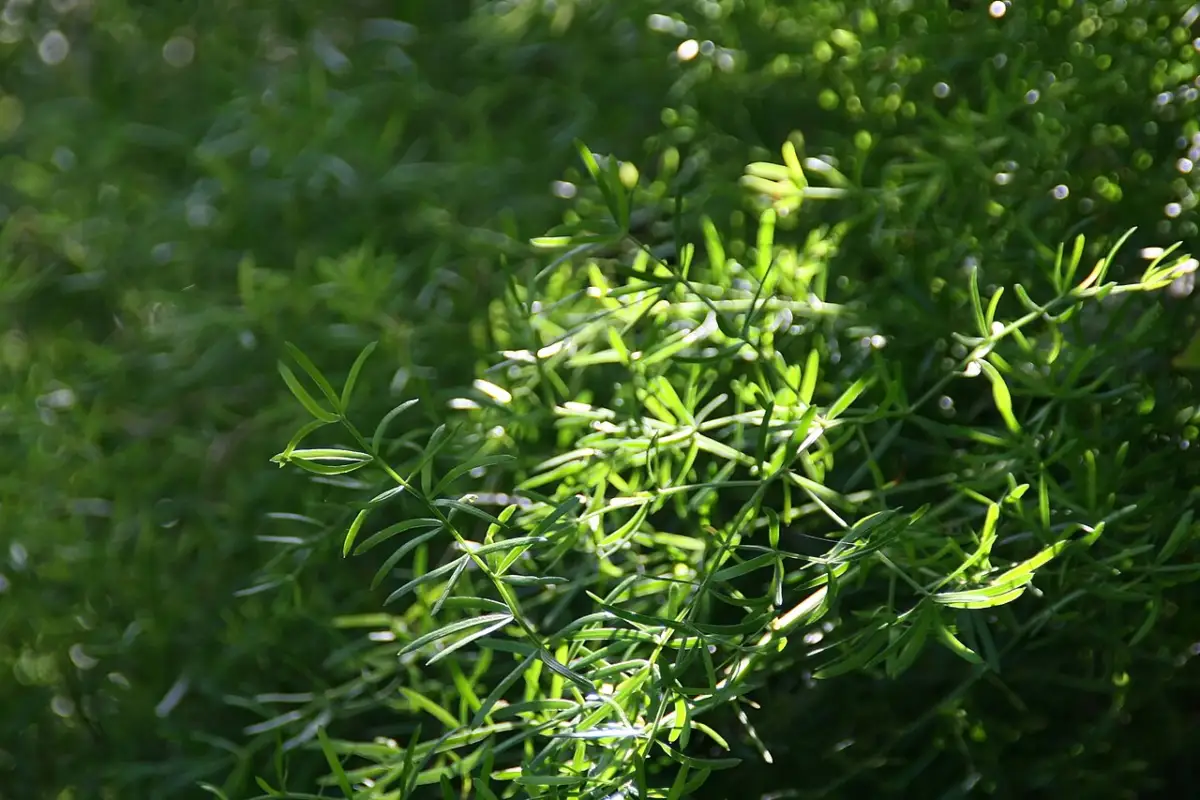
- “Needles”: the soft green needles are not leaves. They are cladodes, flattened stems that do the work of leaves, growing in groups of 4 to 8 along the stem. The true leaves are tiny brown scales at their base.
- Stems: long, arching or trailing stems that can reach about 1.8 m (6 feet), with small, sharp, hooked spines.
- Roots: dense fibrous roots with fleshy white tubers that store water.
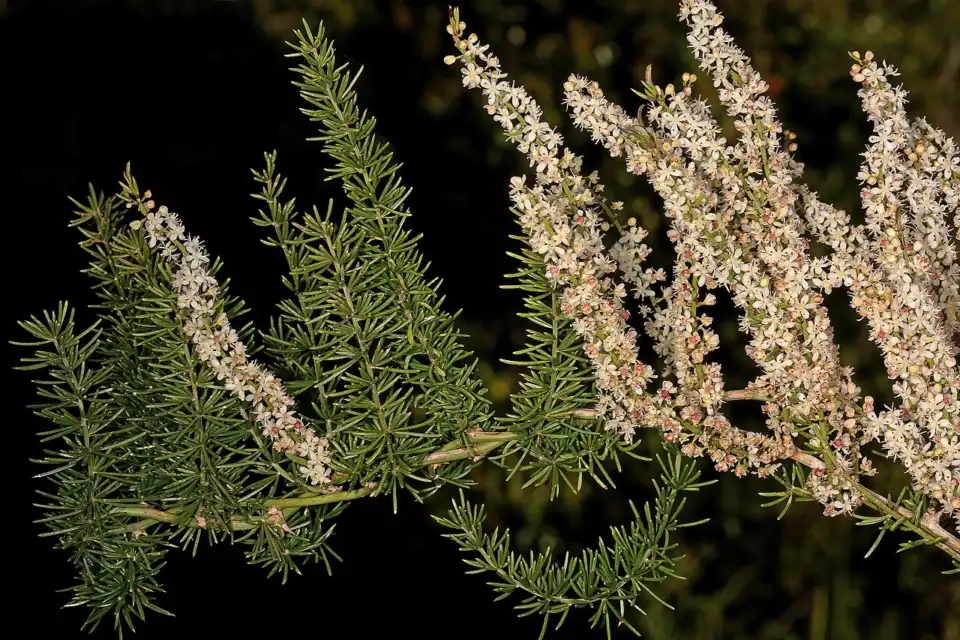
- Flowers: tiny, fragrant white to pinkish flowers with six tepals, in short clusters from spring to fall. Indoor plants and plants in cool climates often never bloom.
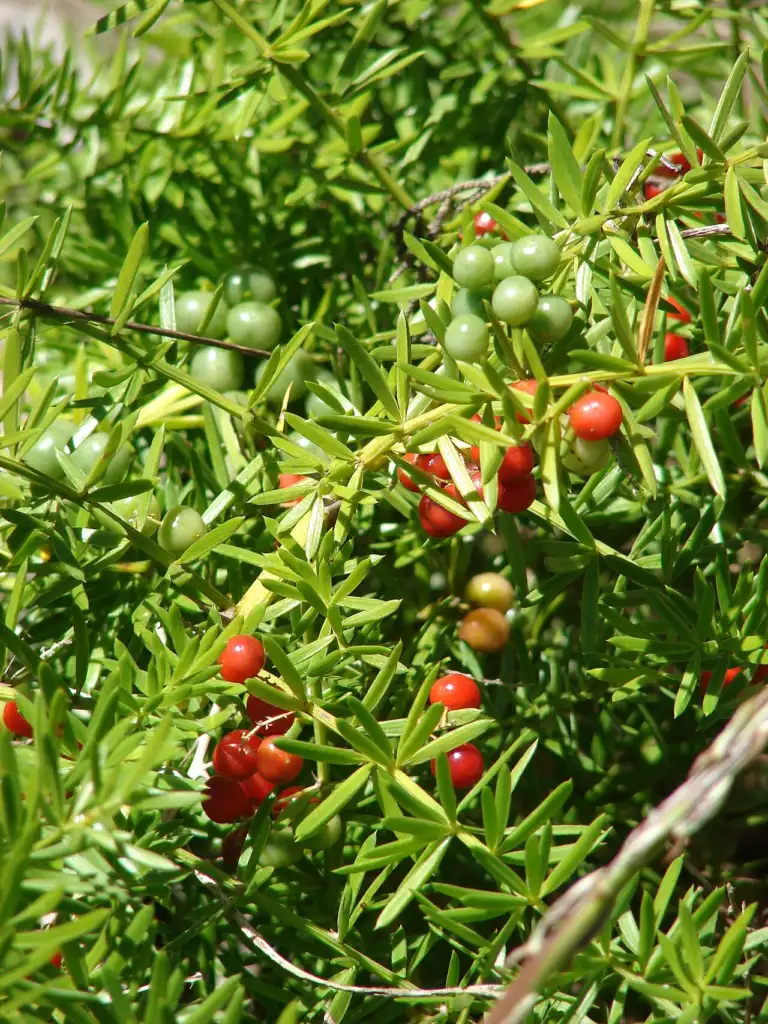
- Berries: small round berries up to about 6 mm (1/4 inch) that turn from green to glossy red. Plants are male or female, so only female plants fruit.
Sprengeri vs Foxtail vs Plumosa Fern: How to Tell Them Apart
Three “asparagus ferns” are sold side by side, and their care is similar but not identical. The fastest way to tell them apart is to look at the shape of the stems and how the needles are arranged.
| Feature | Sprengeri fern | Foxtail fern | Plumosa (lace) fern |
|---|---|---|---|
| Scientific name | Asparagus densiflorus ‘Sprengeri’ (A. aethiopicus) | Asparagus densiflorus ‘Meyeri’ (A. meyeri) | Asparagus setaceus (A. plumosus) |
| Family | Asparagaceae | Asparagaceae | Asparagaceae |
| Stem habit | Loose, arching, trailing stems | Stiff, upright, tightly packed plumes like a fox’s tail | Wiry stems that can twine and climb |
| Needle look | Bright green needles spaced along the stem | Very dense needles all around each stem | Flat, triangular, lace-like sprays held horizontally |
| Size as a pot plant | About 45 to 60 cm tall, 90 to 120 cm wide | About 30 to 90 cm tall, 90 to 120 cm wide | About 60 to 90 cm, longer if it climbs |
| Berry color | Red | Red | Purple-black |
| Best use | Hanging baskets, container spiller | Upright accent pots | Tabletop plant, floral greenery |
Sizes for the Sprengeri and foxtail ferns come from UW-Madison Extension. The plumosa details come from NC State Extension, which notes it is often confused with the Sprengeri Group. If you are not sure which one you have, snap a clear daylight photo of one stem and try our free plant identifier or the leaf identifier. Photo identification, including our tool, can be wrong, so treat the result as a starting point rather than a final answer.
Sprengeri Fern Care at a Glance
| Need | Indoors | Outdoors |
|---|---|---|
| Light | Bright indirect, up to about 2 hours of gentle direct sun | Part shade or dappled light; full sun only after slow acclimation |
| Water | When the top 2.5 cm (1 inch) is dry; less in winter | Regular in containers; established ground plants are fairly drought tolerant |
| Temperature | 18 to 24 °C (65 to 75 °F); minimum about 12 °C (54 °F) | Perennial in USDA zones 9 to 11; bring pots in before frost elsewhere |
| Humidity | Average room humidity; keep away from heaters | Not usually an issue |
| Soil | Well-drained, slightly acidic potting mix (about pH 6.5 to 6.8) | Moist, organic-rich, well-drained soil |
| Feeding | Diluted balanced feed monthly, spring and summer | Slow-release or diluted liquid feed in the growing season |
| Repotting | Early spring, when tubers fill the pot | Divide crowded clumps in spring |
How Much Light Does a Sprengeri Fern Need?
A Sprengeri fern needs bright indirect light to stay full. Brighter light means faster, denser growth, while low light is one of the top causes of yellow, falling needles, according to UW-Madison Extension.
Indoors, a spot within a meter or so of an east or west window, or a bright north window, works well. Hot midday sun through glass can scorch and bleach the needles, so filter strong southern light with a sheer curtain. If your home is dim, a full-spectrum LED grow light helps; our guide to what color light is best for plant growth explains which bulbs to choose.
Outdoors, the plant handles more sun than people expect, and full sun gives a more compact shape. The catch is acclimation: a plant moved straight from a living room into full sun will burn. Start in shade and add an hour or two of sun every few days over about two weeks.
How Often to Water a Sprengeri Fern
Water a Sprengeri fern when the top 2.5 cm (1 inch) of soil feels dry, then water until it drains from the bottom. There is no fixed number of days, because pot size, light and season change how fast the soil dries.
The tubers explain why this plant forgives a missed watering but not constant sogginess. They store water for dry spells, so the plant can go a short while without a drink. Keep the soil wet all the time, though, and those same tubers rot.
In my experience, checking the soil before watering is the habit that prevents overwatering most reliably. Push a finger into the mix up to the first knuckle. If it feels dry, water; if it feels cool and damp, wait a day or two and check again.
- Spring and summer: check every few days. Plants in bright light or small pots dry out fastest.
- Fall and winter: growth slows, so let the top 5 cm (2 inches) dry before watering. University of Maryland Extension recommends this two-inch check for plants brought indoors.
- Saucers: empty standing water after watering so the roots never sit in it.
Humidity: average indoor humidity is usually enough. Dry air from radiators and heaters browns the needle tips, so keep the plant away from vents. A tray of pebbles and water under the pot helps in very dry rooms. Daily misting is often recommended, but it raises humidity only for a few minutes and does little to fix a watering problem.
Temperature and Where It Grows Outdoors
The Sprengeri fern is frost tender. It grows as a perennial in USDA zones 9 to 11 (roughly regions where winter lows stay above about -7 °C or 20 °F). UW-Madison Extension notes that protected roots sometimes survive colder winters and regrow from the tubers.
- Tropical and subtropical climates (for example, Florida, coastal Australia, South Asia, much of Africa): it can live outdoors all year, ideally in light shade during the hottest months.
- Mediterranean and warm-temperate climates: it survives mild winters outdoors but may die back after frost and regrow in spring.
- Cold-winter climates (much of Canada, northern Europe and the northern US): grow it as a houseplant, or as a summer container plant that comes indoors before nights drop below about 10 to 12 °C (50 to 54 °F).
Expect some needle drop for a few weeks after any move indoors. University of Maryland Extension explains that the sudden drop in light, humidity and temperature causes this shedding, and it usually tapers off once the plant settles in a bright spot.
Soil, Pots and Repotting
Use a loose, well-drained potting mix that holds some moisture, such as a standard houseplant mix with a handful of perlite or fine bark added. HGTV’s growing guide puts the ideal pH at a slightly acidic 6.5 to 6.8, which most peat- or coir-based mixes already match.
Choose a heavy pot with drainage holes. The tubers expand quickly, and UW-Madison Extension warns that the roots can crack thin containers. Thick plastic, glazed ceramic or terracotta all work; terracotta dries out faster, so check it more often.
Repot in early spring, before new growth starts, when you see any of these signs:
- Tubers or roots pushing out of the drainage holes or lifting the plant.
- Water running straight through without soaking in.
- The plant drying out within a day or two of watering.
Move up only one pot size (about 5 cm or 2 inches wider). For more general container tips, see our guide on how to grow plants in pots.
How to Divide a Sprengeri Fern
Division is the easiest way to get new plants and to shrink an overgrown one. Spring is the best time.
- Water the plant the day before so the root ball holds together.
- Put on gloves and slide the plant out of its pot. Cut away the pot if it is stuck.
- Use a clean, sharp knife or pruning saw to cut the root ball into 2 to 4 pieces, each with several stems and a good cluster of tubers.
- Pot each piece in fresh mix at the same depth it grew before.
- Water well and keep the divisions in bright indirect light, out of direct sun, for a few weeks while new roots form.
Seed is also possible, but UW-Madison Extension notes germination is slow and uneven, taking about 3 to 4 weeks at room temperature after an overnight soak.
This video from the GROW UP MAN! channel shows how tightly asparagus fern tubers pack a pot and how to repot one; the plant shown is a related asparagus fern, but the root-handling steps are the same.
Fertilizer: How Much and How Often
Feed a Sprengeri fern about once a month in spring and summer with a balanced liquid houseplant fertilizer mixed at half the label strength. Stop feeding in fall and winter, when growth slows, as UW-Madison Extension advises.
More fertilizer does not mean more growth. Gardeners on a National Gardening Association forum thread point to fertilizer salts as a common cause of yellow needles and burned tips on recently bought plants, which often arrive with fertilizer already in the nursery soil. If you see a white crust on the soil or pot rim, flush the pot by running plain water through it for a minute and skip the next feeding.
Pruning and Cutting Back
Prune by cutting old, bare or yellow stems right at the soil line. Cutting partway along a stem leaves an ugly stub, while a base cut makes room for fresh shoots that rise from the crown.
To shape the plant, trim stem tips that trail too far. If the whole plant looks yellow and tired, a hard prune can reset it: cut every stem to about 2.5 cm (1 inch) above the soil in spring or summer, then keep it warm and in bright indirect light. UK Houseplants reports this works best above about 18 °C (64 °F).
Always wear gloves and long sleeves. The stems carry small hooked spines, and repeated contact with the plant can irritate skin.
Why Is My Sprengeri Fern Turning Yellow or Dropping Needles?
Yellowing and needle drop on a Sprengeri fern most often come from too little light or soil that dried out completely. Yellow needles do not turn green again, but NC State Extension notes that new shoots appear from the soil line once conditions improve. Use this table to match the symptom to the cause:
| What you see | Likely cause | What to do |
|---|---|---|
| Needles yellow and fall all over the plant, soil dry | Underwatering or a pot packed with tubers | Soak thoroughly; repot if water runs straight through |
| Yellowing and drop on the shaded side or after moving indoors | Low light or move shock | Move closer to a bright window or add a grow light; wait a few weeks |
| Yellow stems, soil wet, sour smell, mushy brown roots | Overwatering and root rot | Let it dry; trim rotten tubers; repot in fresh, well-drained mix |
| Pale, bleached or brown patches | Too much direct sun | Move to bright indirect light or filter the sun |
| Brown, crispy needle tips | Dry air from heaters or uneven watering | Move away from vents; use a pebble tray; water more evenly |
| Yellow tips with a white crust on the soil | Fertilizer salt buildup | Flush the pot with water; feed at half strength |
| Long, sparse stems | Low light or an old plant | Increase light; cut bare stems at the base |
For yellow leaves on other houseplants, our guide on why plant leaves turn yellow covers more causes.
Pests to Watch For
Sprengeri ferns have few pests, but stressed plants can attract aphids, mealybugs, spider mites and whiteflies (UW-Madison Extension). Look for sticky residue, white cottony tufts, fine webbing or tiny insects on new growth.
Rinse light infestations off in the shower, then treat with insecticidal soap or neem oil, following the label and testing a small area first. Our guide on how to get rid of aphids on indoor plants walks through each step.
Is Asparagus Sprengeri Fern Toxic to Pets and People?
Yes. The ASPCA lists the Sprengeri fern as toxic to dogs, cats and horses. Eating the berries can cause vomiting, abdominal pain and diarrhea, and repeated skin contact can cause allergic dermatitis.
People are affected too. UW-Madison Extension notes that the berries can irritate skin and upset the stomach if eaten, so keep berrying plants out of reach of young children. Some retail listings describe this plant as pet friendly; based on the ASPCA listing, that is not correct.
- Hang the plant in a basket or place it where pets and toddlers cannot reach it.
- Pick off and bin red berries as they form.
- Wear gloves when pruning, dividing or repotting.
If a person or pet has eaten part of the plant and shows symptoms, contact your local poison control center or veterinarian right away. In the US, the ASPCA Animal Poison Control Center is at (888) 426-4435 (a fee may apply). For another common houseplant question, see are snake plants toxic to cats.
Growing It Outdoors Without Spreading It
In warm climates, the Sprengeri fern can escape gardens. UW-Madison Extension lists it as an invasive weed in parts of Florida, Texas and Hawaii, and the California Invasive Plant Council rates it a high potential risk, noting it is spreading into some natural areas of Southern California.
Birds eat the red berries and drop the seeds elsewhere, and Cal-IPC reports that a single plant can carry up to 600 ripe fruits at once. In cold-winter regions it is not a weed problem, because frost kills it.
- In zones 9 to 11, grow it in containers rather than in the ground.
- Remove berries before they ripen red.
- Never dump old plants or soil with tubers in natural areas or green waste that ends up in compost.
- Check your local extension service or council list before planting it in the ground.
How to Check Your Sprengeri Fern Each Week
I believe that observing plants regularly and adjusting care to what they show you is what keeps indoor plants healthy, and this fast-growing plant shows problems quickly. A two-minute weekly check catches most issues before the needles fall.
- Feel the soil. Water only if the top 2.5 cm (1 inch) is dry (5 cm in winter).
- Look at the newest shoots. Bright green, upright tips mean the plant is happy. No new shoots for weeks in summer suggests too little light.
- Check the color. A few yellow needles on old stems are normal; yellowing across new growth is not. Use the table above.
- Peek underneath. Look under the stems and at the drainage holes for pests and escaping tubers.
- Adjust one thing at a time. Change light or watering, then wait about two weeks to see the result.
From growing indoor plants, I have found that placing them in a spot with suitable indirect sunlight often makes more difference than any fertilizer, and small changes like that add up to healthier growth.
Key Takeaway
An asparagus Sprengeri fern is one of the easier foliage plants to keep, as long as you remember it is a tuberous, sun-loving relative of asparagus rather than a shade-loving fern. Give it bright indirect light, water by touch rather than by calendar, repot in a sturdy container when the tubers fill it, and keep the berries away from pets and children.
Frequently Asked Questions
Why is my asparagus Sprengeri fern turning yellow?
The most common causes are too little light and soil that dried out completely. Overwatering, move shock after bringing the plant indoors, and fertilizer salt buildup can also cause yellowing. Yellow needles will not turn green again, but new shoots grow from the base once the cause is fixed.
Can I cut my asparagus fern back to the soil?
Yes. A healthy, established Sprengeri fern can be cut to about 2.5 cm (1 inch) above the soil in spring or summer. Its tubers store energy, so new shoots usually appear within a few weeks if the plant is warm and in bright indirect light.
Is the Sprengeri fern toxic to cats and dogs?
Yes. The ASPCA lists the Sprengeri fern (Asparagus densiflorus ‘Sprengeri’) as toxic to dogs, cats and horses. Eating the berries can cause vomiting, abdominal pain and diarrhea, and repeated skin contact can cause dermatitis. Contact a vet if your pet ate part of it and shows symptoms.
How often should I water a Sprengeri fern indoors?
Water when the top 2.5 cm (1 inch) of soil is dry in spring and summer, and when the top 5 cm (2 inches) is dry in fall and winter. Always water until it drains and empty the saucer afterward.
Is asparagus Sprengeri fern a perennial?
It is a tender perennial that lives for years outdoors in USDA zones 9 to 11 and as a houseplant anywhere. In colder climates it is often grown as a summer annual in containers or brought indoors before frost.
Is an asparagus fern a real fern?
No. Asparagus ferns belong to the asparagus family (Asparagaceae) and are relatives of edible asparagus. They flower, produce berries and grow from tubers, while true ferns reproduce by spores.
Featured image: Photo: Photo by David J. Stang / Wikimedia Commons, CC BY-SA 4.0