Kimberly Queen Fern Care: Light, Water, Winter and Frond Fixes
The Kimberly Queen fern is one of the easiest ferns to keep looking full, as long as you get three things right: steady moisture, bright light without harsh afternoon sun, and protection from cold. This guide covers each of those, plus a winter plan, a symptom table for brown or yellow fronds, and the look-alike ferns that are often sold or labeled by mistake.
The advice here works for porch and patio growers in warm climates and for indoor growers anywhere. Where a rule depends on your climate, I say so.
Quick Answer: Kimberly Queen Fern Care in Five Rules
Kimberly Queen fern care comes down to bright indirect light, soil that stays evenly moist but never soggy, warmth between 60 and 75°F (16 to 24°C), light feeding, and moving the plant to shelter before nights fall below 50°F (10°C).
- Light: bright indirect light indoors; morning sun with afternoon shade outdoors.
- Water: water when the top inch (2.5 cm) of soil feels dry, then water until it drains.
- Temperature: best at 60 to 75°F; growth stops near 55°F (13°C); frost kills it.
- Feeding: a balanced liquid fertilizer at half strength, only in spring and summer.
- Winter: outdoors year-round only in USDA zones 9 to 11; elsewhere bring it in or store it dormant.
What Is a Kimberly Queen Fern and How Do You Recognize It?
The Kimberly Queen fern is Nephrolepis obliterata, a sword fern in the family Nephrolepidaceae that is native to Australia. It is also called the Australian sword fern, and the trade name is often spelled “Kimberley Queen.”
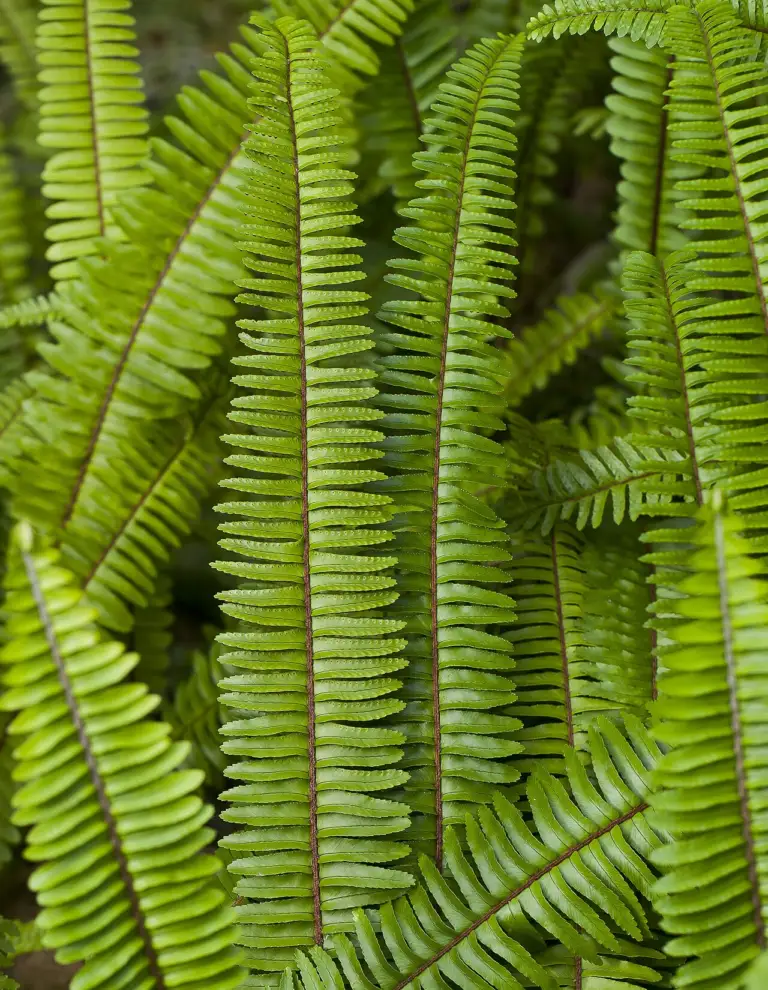
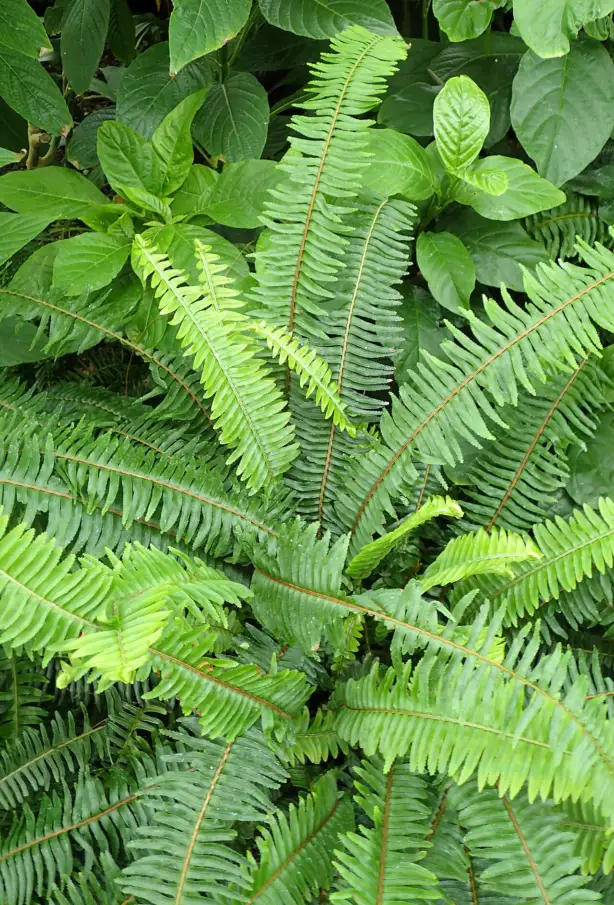
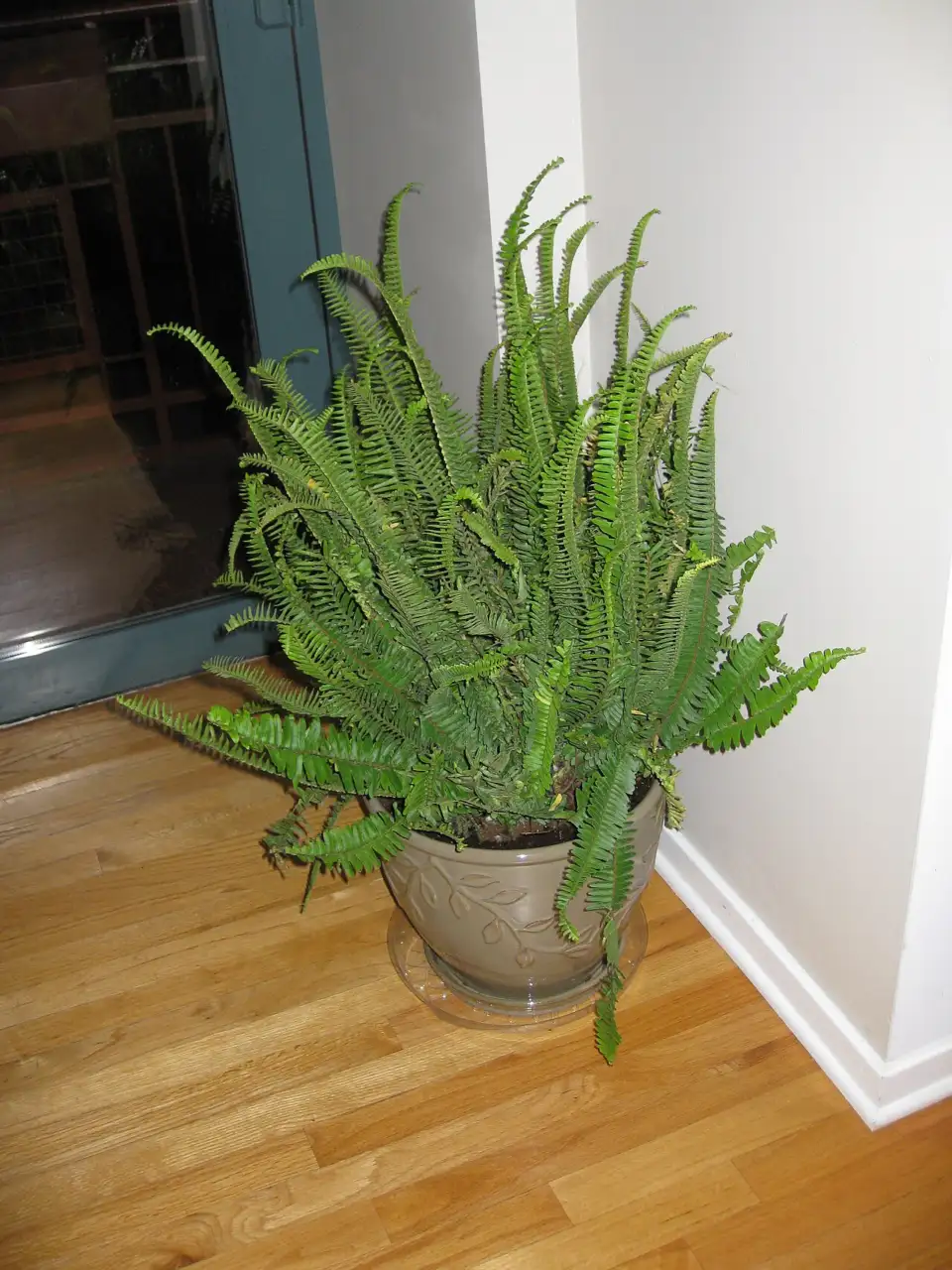
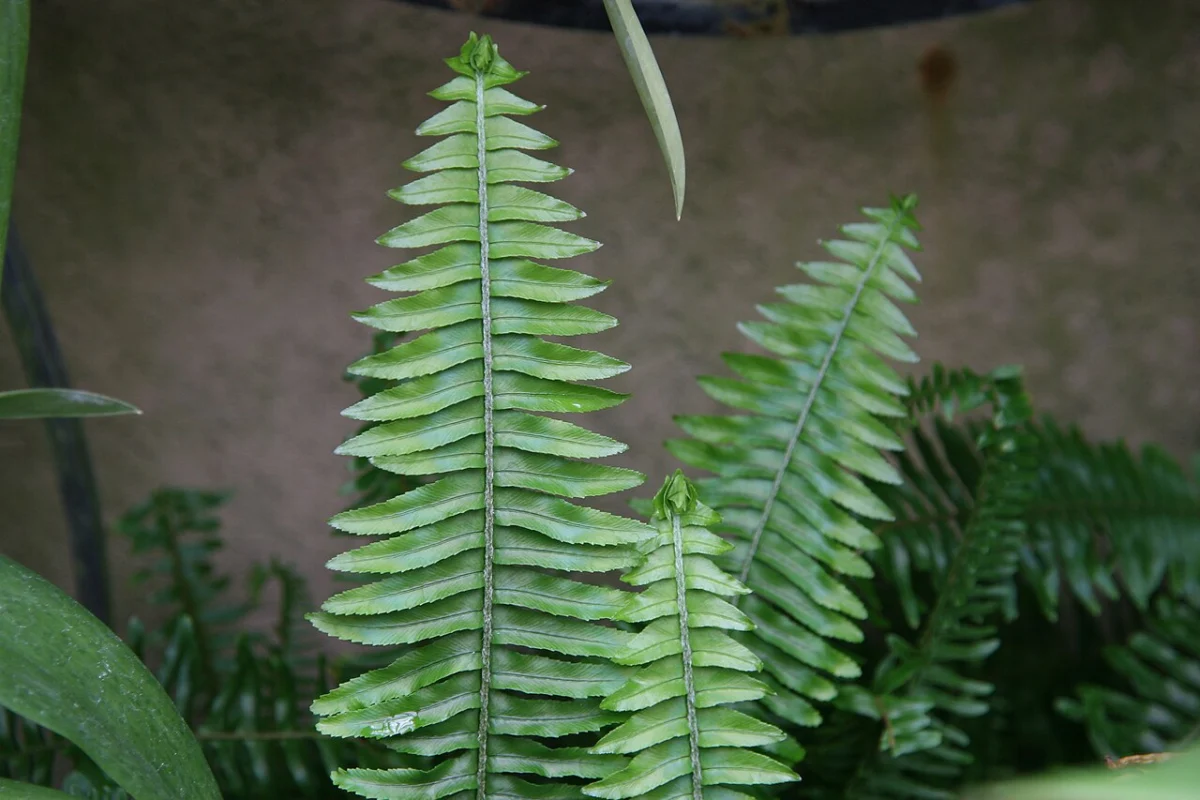
You can recognize it by its stiff, upright, sword-shaped fronds that grow in a dense vase-shaped clump about 2 to 3 feet (60 to 90 cm) tall and wide, according to Proven Winners. Each frond is a central stem lined with many narrow, deep green leaflets (pinnae) arranged in two neat rows. Ferns do not flower, so you will never see blooms.
Small brown dots in tidy rows under mature leaflets are sori, the structures that hold spores. They are normal and are not scale insects. Scale bumps sit randomly along stems and leaflets and can be scraped off with a fingernail; sori sit in an even pattern near the leaflet edges.
Kimberly Queen vs Boston Fern vs Tuberous Sword Fern
Three Nephrolepis ferns get mixed up in shops and even in care guides. At least one extension page lists Kimberly Queen under the name Nephrolepis cordifolia, but that name belongs to a different species, the tuberous sword fern.
| Feature | Kimberly Queen (N. obliterata) | Boston fern (N. exaltata ‘Bostoniensis’) | Tuberous sword fern (N. cordifolia) |
|---|---|---|---|
| Frond habit | Stiff and upright | Soft, arching and drooping | Upright, narrow fronds |
| Color | Deep green | Lighter green | Medium green |
| Leaflet shedding | Low, stays tidy | Drops many leaflets indoors | Moderate |
| Underground | Rhizomes, no tubers | Rhizomes and runners | Round, scaly tubers on runners |
| Sun tolerance | Highest of the three porch ferns | Burns in sun | Grows in sun or shade |
| Concern | Ornamental | Ornamental | Listed as invasive in Florida by UF/IFAS |
The most reliable check is underground: gently pull back the soil at the edge of the clump. Small, round, scaly tubers on the runners point to the tuberous sword fern, not a Kimberly Queen. If you are unsure which fern you have, upload a clear daylight photo of one frond to our plant identifier or the leaf identifier. Photo identification, including our tool, can be wrong, so confirm with a local nursery or extension office before planting a fern in the ground in a warm climate.
Light: How Much Sun Can a Kimberly Queen Fern Take?
A Kimberly Queen fern grows best in bright, indirect light and can handle a few hours of gentle morning sun. Strong afternoon sun bleaches and scorches the fronds.
Indoors
Place the fern within a few feet of an east- or north-facing window, or set it back from a bright south or west window with a sheer curtain. Pale, thin, stretched fronds mean the plant needs more light. In my experience, moving a plant to a spot with indirect sunlight makes a visible difference in how full the new growth comes in.
If your home is dark, a full-spectrum grow light helps. Our guide to which light color is best for plant growth explains what to look for.
Outdoors on Porches and Patios
Clemson Cooperative Extension calls the Kimberly Queen the most sun-tolerant of the common porch ferns, able to grow in several hours of morning sun. Afternoon shade is still the safer choice in hot summers.
Some growers keep Kimberly Queens in full sun; the Anna’s Garden channel on YouTube describes them as the sun-loving choice among porch ferns. Full sun only works when the soil never dries out, so introduce brighter light gradually over a week or two and check moisture daily during that time.
How Often Should You Water a Kimberly Queen Fern?
Water a Kimberly Queen fern when the top inch of soil feels dry, not on a fixed calendar. That may mean every two or three days for a sunny porch pot in summer and once a week or less for an indoor plant in winter.
Fixed schedules fail because pot size, sun, wind and temperature change how fast soil dries. I have learned that checking the soil before watering is the single best way to prevent overwatering.
The Finger Test, Step by Step
- Push your index finger into the soil near the edge of the pot, down to the first knuckle (about 1 inch).
- If the soil feels damp and cool, wait and check again tomorrow.
- If it feels dry, water slowly at the base of the plant, moving fronds aside, until water runs from the drainage hole.
- After 15 minutes, empty the saucer so the roots are not sitting in water.
- Lift the pot after watering and again when dry. Learning the difference in weight lets you check hanging baskets quickly.
Water Quality and Drainage
Use a pot with a drainage hole. A pot without one traps water around the roots and leads to root rot. If tap water in your area is hard or heavily chlorinated and fronds develop brown tips, try rainwater or filtered water and flush the pot with plain water every few months to wash out salts.
Humidity and Temperature
The Kimberly Queen fern tolerates average indoor humidity better than the Boston fern, which is one reason it suits homes with heating or air conditioning. It still grows best with moderate humidity and steady warmth.
- Ideal range: 60 to 75°F (16 to 24°C).
- Slow growth: below about 55°F (13°C).
- Damage: frost and freezing temperatures kill the fronds and can kill the plant.
- Avoid: heater vents, fireplaces, air conditioner drafts and cold window glass in winter.
Misting raises humidity only for a few minutes, so it does not replace good watering. For very dry rooms, grouping plants together or using a small humidifier has a longer-lasting effect than misting.
Soil, Pots and Repotting
Use a light, moisture-holding potting mix that still drains freely. A good homemade blend is about half peat moss or coco coir, a quarter general potting mix and a quarter perlite.
Kimberly Queens are happy slightly root-bound. Repot every one to two years in spring, or when roots circle the inside of the pot or poke out of the drainage hole. Choose a pot only 1 to 2 inches (2.5 to 5 cm) wider, because a much larger pot holds extra wet soil that the roots cannot use. Our guide to growing plants in pots covers container basics that apply to ferns too.
Fertilizer: A Simple Feeding Plan
Kimberly Queen ferns are light feeders. Feed with a balanced liquid fertilizer at half the label strength about once a month from spring to late summer, and stop feeding in fall and winter.
Published advice ranges from feeding only a few times a year (Proven Winners) to monthly at half rate for porch ferns (Clemson). Both work. The monthly half-strength plan suits fast-growing porch plants in containers, while a few feedings a year are enough for indoor plants in lower light.
- Water first, then fertilize, so the roots do not burn.
- Skip feeding for four to six weeks after repotting.
- White crust on the soil or brown leaf tips after feeding are signs of too much fertilizer; flush the pot with plain water.
How to Overwinter a Kimberly Queen Fern
A Kimberly Queen fern survives winter outdoors only where it rarely or never frosts, which means USDA zones 9 to 11. In colder areas, choose one of the three options below before nights drop below 50°F (10°C), the threshold Clemson Extension recommends.
Option 1: Keep It as a Houseplant
- Check the fronds and soil surface for pests and treat them outdoors first.
- Move the fern to its brightest indoor spot away from heater vents.
- Expect some yellowing as it adjusts; trim those fronds at the base.
- Water less often, since indoor soil dries more slowly in winter, and stop fertilizing.
Option 2: Store It Dormant in a Garage or Basement
- Cut the fronds back to about 3 inches (7.5 cm) tall, as Clemson Extension advises.
- Store the pot where the temperature stays above 40°F (4°C); a garage, basement, shed or unheated greenhouse works.
- Water lightly about once a month so the roots do not dry out completely.
- In spring, after the last frost, move it back outside to a shady spot, water normally and let new fronds grow before giving it more sun.
Option 3: Leave It Outdoors (Zones 9 to 11)
In frost-free gardens the fern stays evergreen. Clemson notes that in-ground plants may return after a mild winter in zone 8. Wrapping a pot in plastic is not enough in colder zones, because cold reaches the roots from below. If you cannot move a heavy pot, some garden centers will store plants in their greenhouse for the winter.
Why Are the Fronds Turning Brown, Yellow or Pale?
Most frond problems come from water, light or temperature. Use this table to match the symptom to the likely cause before changing your care.
| Symptom | Likely cause | How to check | Fix |
|---|---|---|---|
| Crispy brown tips and edges | Soil dried out, very dry air or salt buildup | Soil dry several inches down; white crust on soil | Water more consistently, add humidity, flush salts |
| Yellow fronds with a soft or mushy base | Overwatering or root rot | Soil soggy, sour smell, brown soft roots | Let soil dry further, repot into fresh fast-draining mix |
| Pale, bleached or faded fronds | Too much direct sun | Damage on the sun-facing side | Move to afternoon shade or filtered light |
| Thin, stretched, sparse growth | Too little light | Plant sits far from any window | Move closer to a bright window or add a grow light |
| Brown, collapsed fronds after a cold night | Cold or frost damage | Damage appeared after temperatures fell below 50°F | Cut damaged fronds, keep plant above 55°F |
| Older inner fronds yellow and drop | Normal aging or a move indoors | New fronds still healthy | Trim old fronds at the base |
Yellowing has many causes beyond ferns; our guide on why plant leaves turn yellow goes deeper into each one.
Pests and How to Treat Them
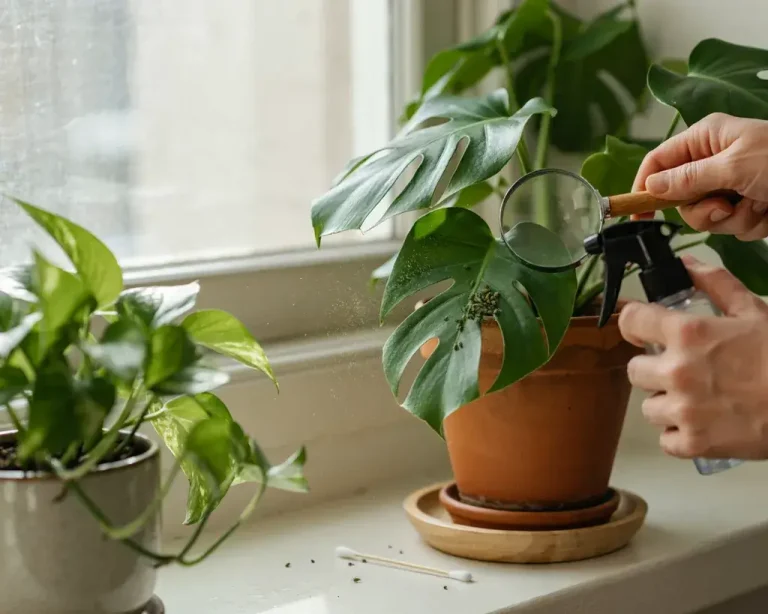
Healthy Kimberly Queens have few pest problems, but stressed plants, especially those brought indoors for winter, can pick up sap-feeding insects.
- Spider mites: fine webbing and speckled fronds in dry air. Rinse the plant in the shower and raise humidity.
- Mealybugs: white cottony clusters where leaflets meet the stem. Dab with a cotton swab dipped in rubbing alcohol.
- Scale: brown bumps scattered randomly on stems. Wipe off by hand; compare with the neat rows of sori before treating.
- Aphids: small soft insects on new growth. Wash off with water or use insecticidal soap; see our guide to getting rid of aphids on indoor plants.
- Slugs and fungus gnats: slugs chew porch ferns at night (Clemson), and gnats hover over constantly wet soil. Let the soil surface dry between waterings.
Test any spray on one frond first and wait a few days, because fern leaflets can be damaged by harsh pesticides.
How to Divide a Kimberly Queen Fern
The easiest way to get more plants is to divide the clump in spring, when new growth starts.
- Water the day before so the root ball holds together.
- Slide the plant out of its pot and loosen the soil around the edges.
- Find natural gaps between crowns and pull or cut the clump into sections, each with several fronds and healthy roots.
- Pot each section at the same depth it grew before, in fresh mix.
- Water well and keep the new divisions out of direct sun for two to three weeks while they settle.
This video from the Houseplant 101 channel walks through light, watering, soil, division and how to tell sori from pests.
Is a Kimberly Queen Fern Safe for Cats and Dogs?
The Kimberly Queen fern is not listed by name in the ASPCA plant database, but its close relative, the Boston fern (Nephrolepis exaltata), is listed by the ASPCA as non-toxic to dogs and cats. Most care sources treat the Kimberly Queen the same way.
Non-toxic does not mean a pet can eat it freely; chewing large amounts of any plant can cause vomiting or an upset stomach. If a pet or a child eats a plant and shows symptoms, contact your vet or a poison control center. For a plant that is a real concern for cats, see our article on whether snake plants are toxic to cats.
Kimberly Queen Fern Care by Climate
Hardiness zones are a US system, so here is the same advice by climate type.
| Climate | Examples | How to grow it |
|---|---|---|
| Tropical and frost-free subtropical | Florida, coastal Queensland, Southeast Asia | Outdoors year-round in part shade; water often in dry spells |
| Hot summers, mild winters | US Gulf Coast, Texas, parts of South Asia and the Middle East | Afternoon shade is essential in summer heat; check soil daily in pots; protect from rare frosts |
| Temperate with cold winters | Most of the US, Canada, northern Europe | Porch plant from late spring to fall, then houseplant or dormant storage |
| Cool, cloudy summers | UK, Ireland, Pacific Northwest | Best as a houseplant or conservatory plant; outdoors only in the warmest summer months |
What I Have Learned From Caring for Indoor Plants
I have explored different ways to care for indoor plants, and the same few habits matter for a Kimberly Queen fern. Checking the soil before watering keeps me from overwatering, and a spot with bright indirect sunlight makes a real difference in growth.
I also believe that observing a plant regularly and adjusting its care is more useful than following any fixed schedule, including the numbers in this guide. Small changes, like moving a pot a few feet from a window or watering a day later, often support healthier growth.
Key Takeaways
Give your Kimberly Queen fern bright indirect light, water it when the top inch of soil is dry, keep it between 60 and 75°F, and feed it lightly in the growing season. Plan for winter before nights fall below 50°F, and use the symptom table whenever fronds change color. If you are not sure your fern is a Kimberly Queen, check for tubers and try our plant identifier with a clear photo of one frond.
For another popular “fern” with different needs, read our asparagus sprengeri fern care guide.
Frequently Asked Questions
Can a Kimberly Queen fern take full sun?
It is the most sun-tolerant common porch fern and can take several hours of morning sun, according to Clemson Extension. Full afternoon sun usually bleaches the fronds unless the soil stays constantly moist, so afternoon shade is safer in hot climates.
How often should I water a Kimberly Queen fern?
Water when the top inch of soil feels dry. Outdoor pots in summer may need water every two or three days, while indoor plants in winter may need it once a week or less.
Can a Kimberly Queen fern stay outside in winter?
Only in frost-free areas, roughly USDA zones 9 to 11. Elsewhere, bring it indoors before nights fall below 50°F (10°C) or cut it back and store it dormant above 40°F (4°C).
What is the difference between a Kimberly Queen and a Boston fern?
Kimberly Queen has stiff, upright, deep green fronds and sheds few leaflets. Boston fern has softer, arching, lighter green fronds, needs more shade and humidity, and drops more leaflets indoors.
Is a Kimberly Queen fern toxic to cats?
It is not listed by name by the ASPCA, but the closely related Boston fern is listed as non-toxic to cats and dogs. Eating large amounts of any plant can still upset a pet’s stomach, so call your vet if symptoms appear.
What are the brown dots under the fronds?
Brown dots in neat rows under the leaflets are sori, which hold the fern’s spores. They are normal on mature plants. Randomly scattered bumps that scrape off are more likely scale insects.
Featured image: Photo: Photo by David J. Stang / Wikimedia Commons, CC BY-SA 4.0