

How Much Sun Does Tropical Hibiscus Need? A Climate-by-Climate Guide
Tropical hibiscus (Hibiscus rosa-sinensis, mallow family Malvaceae) needs at least 6 hours of direct sun a day outdoors to flower well. Indoors, it needs the brightest window you have, with at least 4 to 5 hours of direct light. The exact amount depends on your climate: where summers are mild, more sun is better, and where afternoons are very hot, morning sun with afternoon shade works best.
This guide explains why the numbers you see online range from 2 to 8 hours, and how to pick the right amount for your region, your window, and the season.
Quick Answer: How Much Sun Tropical Hibiscus Needs
Give tropical hibiscus 6 or more hours of direct sun a day outdoors, and up to 8 hours in cool or mild summers. In hot climates where afternoons regularly go above about 90°F (32°C), keep the morning sun and shade the plant in the afternoon. Indoors, use a south or west window in the Northern Hemisphere (north or west in the Southern Hemisphere) that gets at least 4 to 5 hours of direct light.
- Outdoors, mild summers: 6 to 8+ hours of direct sun.
- Outdoors, hot summers: about 6 hours, mostly before early afternoon.
- Indoors: at least 4 to 5 hours of direct sun, or a grow light for 12 to 14 hours.
- Shade: the plant survives in partial shade but flowers less.
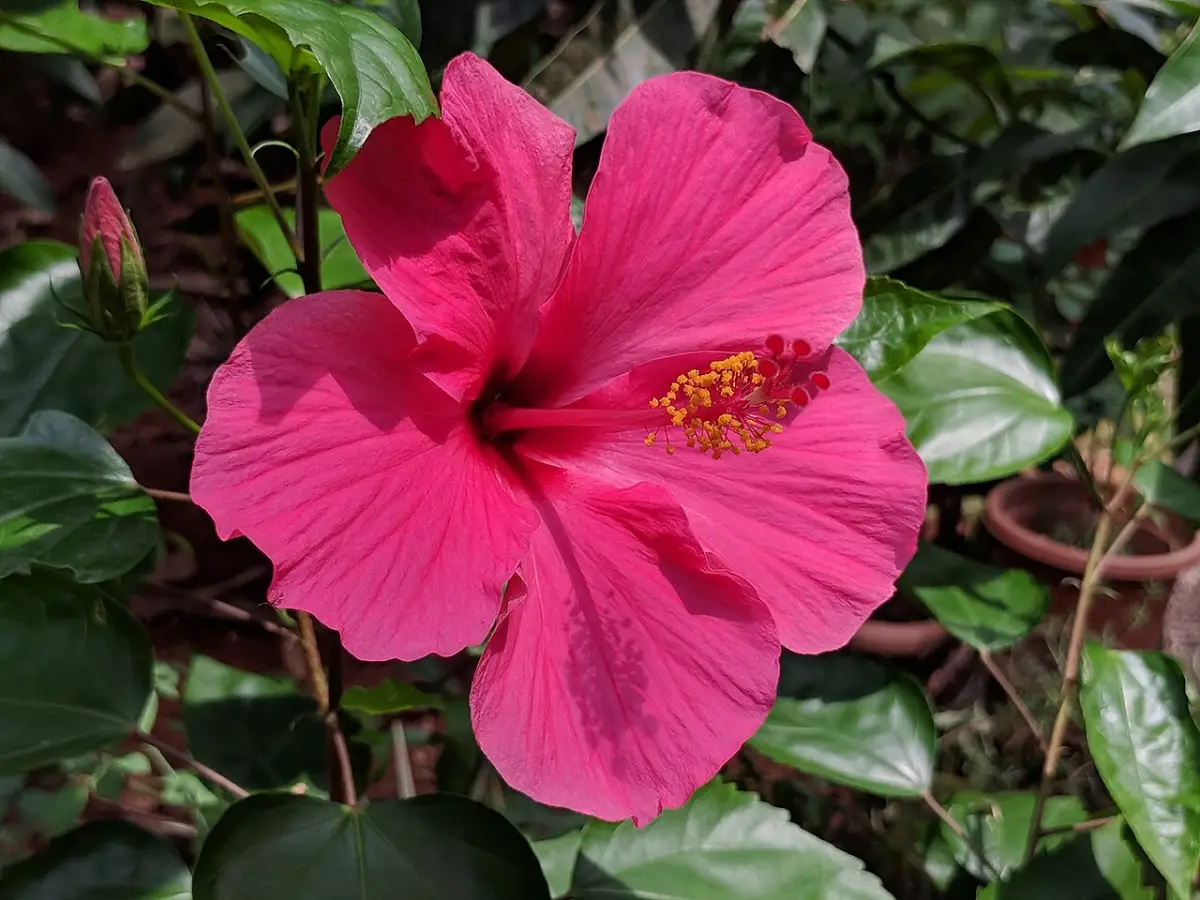
Why Sun Controls How Much Your Hibiscus Flowers
Sun is the main fuel for flowering in tropical hibiscus. The plant flowers on new growth, and each flower usually lasts only a day or two, so it needs steady energy to keep making new buds.
The Smithsonian Gardens care sheet notes that full sun is best and that more shade means fewer and likely smaller flowers. The University of Minnesota Extension also lists low light as one cause of bud drop. If your plant has healthy leaves but few flowers, light is the first thing to check, and our guide to tropical hibiscus not blooming covers the other causes.
Morning Sun vs Afternoon Sun
Morning sun is the safer choice for tropical hibiscus because it is cooler. Afternoon sun hits when air temperatures peak, so the same number of hours can cause more leaf stress after 2 pm than before noon.
In a mild climate, afternoon sun is welcome and adds flowering energy. In a hot climate, an east-facing spot or a place with afternoon shade from a tree or wall gives the plant its hours without the worst heat.
Sun Plan by Climate
The right number of sun hours changes with heat, not just with light. Use the table below to match the advice to where you live.
| Your climate | Example regions | Direct sun to aim for | Best timing | Shade rule |
|---|---|---|---|---|
| Cool or mild summer (patio plant) | Northern US, UK, northern Europe, Canada | 8+ hours | All day | Rarely needed |
| Warm temperate or Mediterranean | Coastal California, southern Europe, southern Australia | 6 to 8 hours | Morning and midday | Light afternoon shade in heatwaves |
| Humid tropical or subtropical (USDA zones 10 to 12) | Florida, Hawaii, Southeast Asia, coastal India | 6+ hours | Morning and midday | Afternoon shade if leaves bleach |
| Hot and dry, or desert | Arizona, Middle East, Pakistan and North India plains in summer | About 6 hours | Morning | Afternoon shade whenever days pass about 90°F (32°C) |
| Indoors in winter | Any region | 4 to 5+ hours | Brightest window | Keep leaves from touching hot glass |
The 90°F (32°C) line is a practical guide, not a fixed limit. Garden Design warns that temperatures above 90°F may cause bud drop, while Costa Farms links long spells above about 100°F (38°C) to bud loss. Humidity, wind, and watering all shift the point where your own plant starts to struggle.
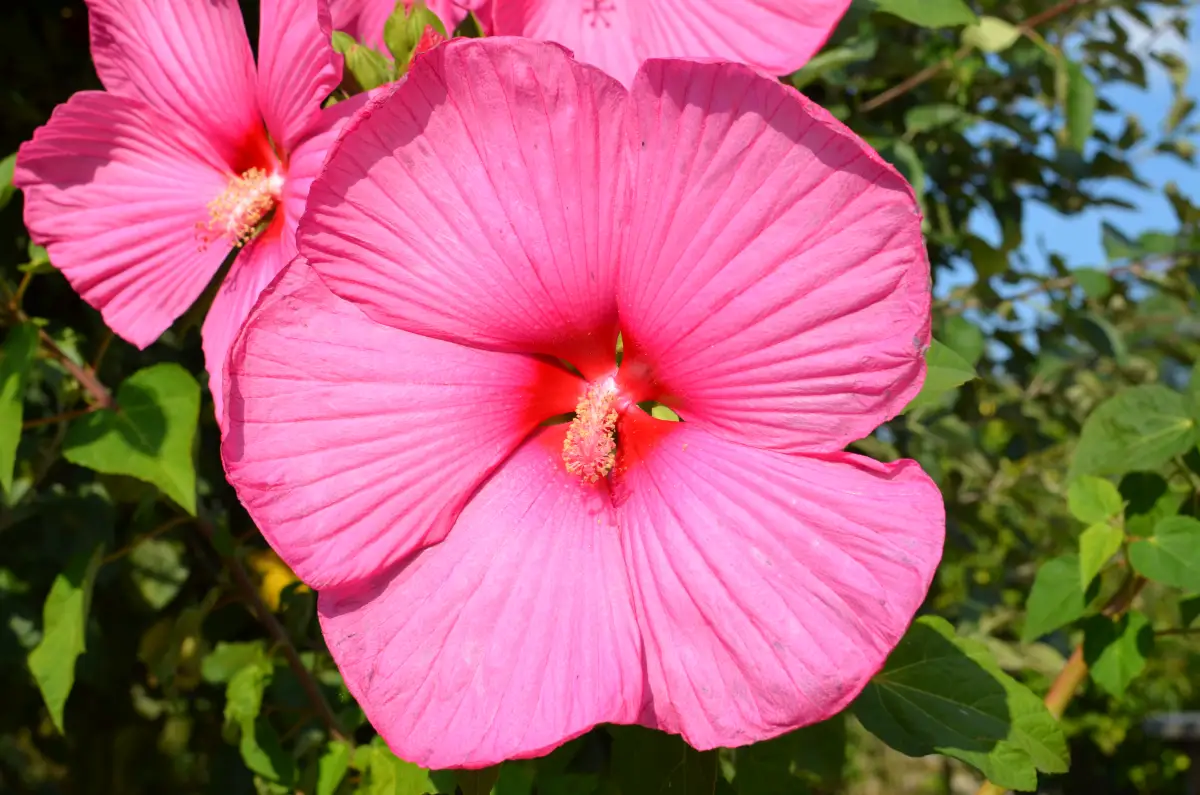
Tropical hibiscus is hardy outdoors only in about USDA zones 9 to 12, according to the Smithsonian care sheet. Everywhere colder, it is a summer container plant that comes inside before nights drop toward 50°F (10°C). If you grow it in a pot, our tips on growing flower plants in pots help with containers and drainage.
How Much Light Tropical Hibiscus Needs Indoors
Indoors, tropical hibiscus needs very bright light and at least 4 to 5 hours of direct sun from a south or west window, according to the University of Minnesota Extension. A plant kept in lower light usually stays green but flowers little or not at all.
| Window facing (Northern Hemisphere) | Same light in the Southern Hemisphere | Fit for tropical hibiscus |
|---|---|---|
| South | North | Best: longest direct sun |
| West | West | Very good: strong afternoon sun, watch for heat |
| East | East | Fair: morning sun only, often too few hours in winter |
| North | South | Poor: almost no direct sun, add a grow light |
Glass can concentrate heat. The National Gardening Association warns that direct sun through glass can burn foliage, so keep leaves a short distance from the pane. The Aloha Plant Life channel suggests a simple check: hold your hand between the glass and the plant in the afternoon, and if it feels hot, pull the pot back a little.
Using Grow Lights in Winter
A grow light can replace missing winter sun. The National Gardening Association suggests running a grow light for 12 to 14 hours a day, placed a few inches above the plant, when the brightest window is not enough.
- Use a full-spectrum LED, which gives off little heat.
- Put it on a timer so the plant gets the same hours every day.
- Raise the light if the top leaves look pale or bleached.
To understand which light colors matter for plants, read our guide to what color light is best for plant growth.
Signs of Too Much Sun vs Too Little Sun
Too much sun shows up first on the most exposed leaves, while too little sun shows up as stretched, sparse growth. Use the table to match what you see to the likely cause.
| What you see | Likely cause | What to do |
|---|---|---|
| Bleached, pale or papery patches on the top, sunniest leaves | Sunscald from too much direct sun or sudden exposure | Add afternoon shade; acclimate more slowly |
| Crispy, curled leaf edges with wilting at midday, even in moist soil | Heat plus strong sun | Shade after early afternoon; water in the morning |
| Lower or side leaves turning fully yellow during a heatwave | Heat stress | Keep soil evenly moist; give temporary shade |
| Long bare stems with wide gaps between leaves | Too little light (legginess) | Move to a sunnier spot; prune to encourage branching |
| Yellowing interior leaves and few or no flowers | Too little light | Increase direct sun hours or add a grow light |
| Buds dropping before they open | Low light, heat, cold, or uneven watering | Check all four, starting with light and temperature |
These patterns match what Epic Gardening describes for sun-stressed and light-starved hibiscus. Drooping alone is not a clear signal: the Aloha Plant Life channel points out that a tropical hibiscus may droop when it is thirsty, too hot, or too cold, so check the soil and the temperature before you move it.
Yellow leaves have many causes beyond light, so see our guide to why plant leaves turn yellow. Sticky leaves and curled new growth can point to aphids instead, covered in how to get rid of aphids on indoor plants.
How to Move a Hibiscus Into More Sun Without Shock
Move tropical hibiscus into stronger light gradually, over about 2 to 3 weeks. A sudden jump from an indoor window to full outdoor sun is a common cause of sunscald and dropped leaves.
- Wait until nights stay above about 50 to 55°F (10 to 13°C) before moving the plant outside.
- Start in bright shade, such as a covered porch, for 3 to 4 days.
- Move it to filtered light, such as under a tree, for the next few days.
- Give it morning sun only for about a week.
- Move it to its final full-sun spot, and check the top leaves daily for bleaching.
- In fall, reverse the steps so the plant gets used to lower light before it comes indoors.
The University of Minnesota Extension recommends the same porch, filtered shade, then full sun sequence, and Epic Gardening suggests spreading the change over two to three weeks.
Check That Your Plant Is a Tropical Hibiscus
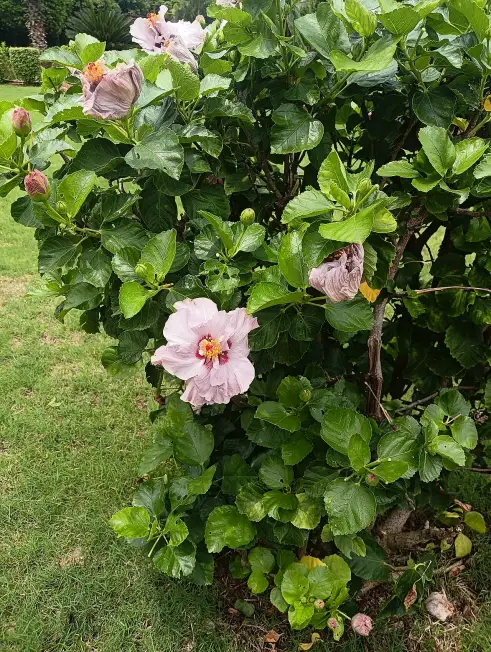
Sun advice depends on which hibiscus you have. Hardy types such as rose of Sharon (Hibiscus syriacus) and rose mallow (Hibiscus moscheutos) also love sun, but they lose their leaves or die back in winter and handle cold that would kill a tropical hibiscus.

| Feature | Tropical hibiscus (H. rosa-sinensis) | Rose of Sharon (H. syriacus) | Rose mallow (H. moscheutos) |
|---|---|---|---|
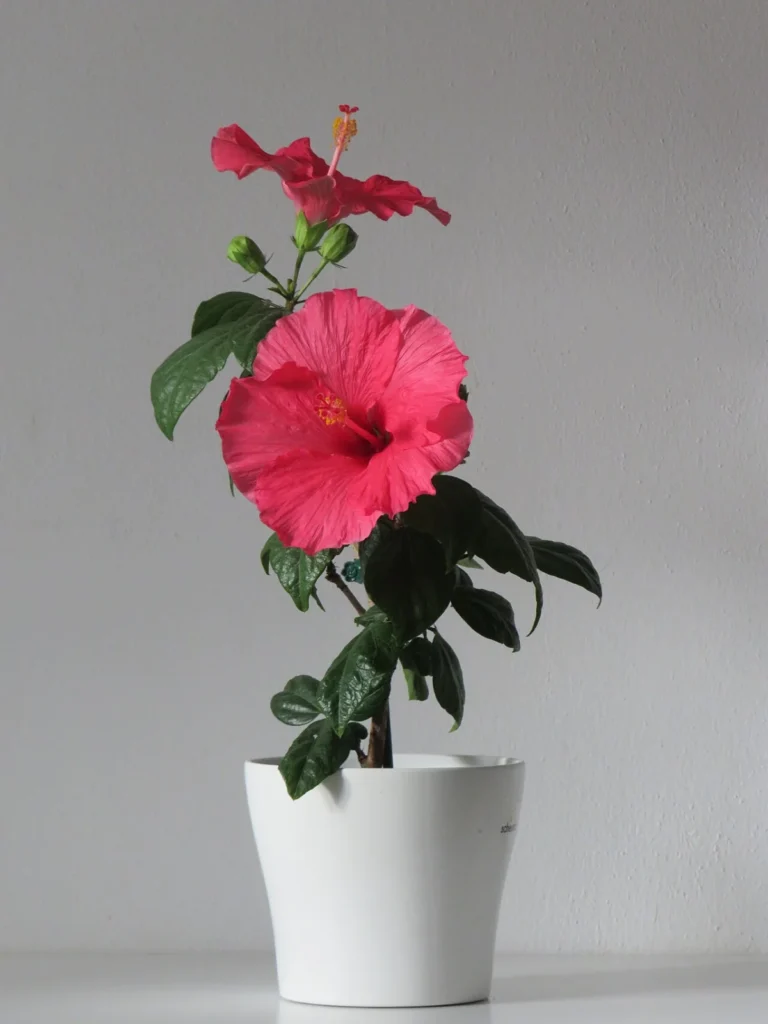
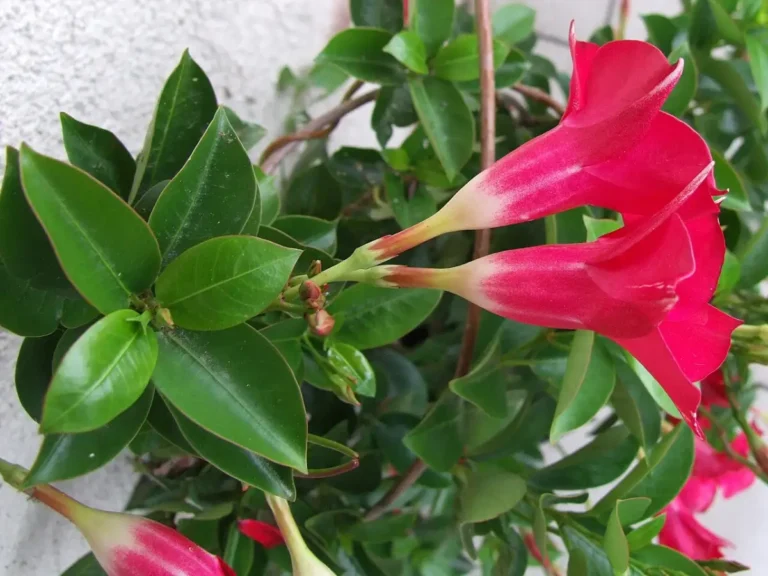
| Leaves | Dark green, glossy, oval with toothed edges | Smaller, dull green, often three-lobed | Large, soft, matte, heart-shaped to oval |
| Flowers | 5 petals; red, pink, orange, yellow, or mixed; prominent central column | 5 petals; pink, purple, blue, or white, usually with a darker eye | Very large, plate-sized; white, pink, or red |
| Winter | Evergreen; damaged by cold near freezing | Woody shrub; drops leaves | Dies back to the ground, regrows in spring |
| Outdoor hardiness | About USDA zones 9 to 12 | Much colder winters | Much colder winters |
For a full walk-through of leaves, flowers, and look-alikes, read how to identify hibiscus. You can also upload a clear photo to our flower identifier, or a leaf photo to the leaf identifier. Photo identification, including our tool, can be wrong, so ask a local nursery or extension office when it matters.
How to Measure the Sun in Your Own Spot
The fastest way to know whether a spot is right is to count its direct sun hours on one clear day. Direct sun means the plant’s leaves are in full sunlight with a sharp shadow, not just bright shade.
- Pick a clear day in the season you care about, since summer and winter sun differ a lot.
- Check the spot every hour from morning to evening and note whether it is in direct sun.
- Add up the hours, and note how many fall after about 2 pm.
- Compare the total with the climate table above.
- Check the plant again after 2 weeks: new buds and deep green leaves mean the spot works.
I have found that observing plants regularly and adjusting their care according to what they show me matters more than any single number. Growing indoor plants has taught me that small changes, like moving a pot a little closer to a brighter window, can support healthier growth.
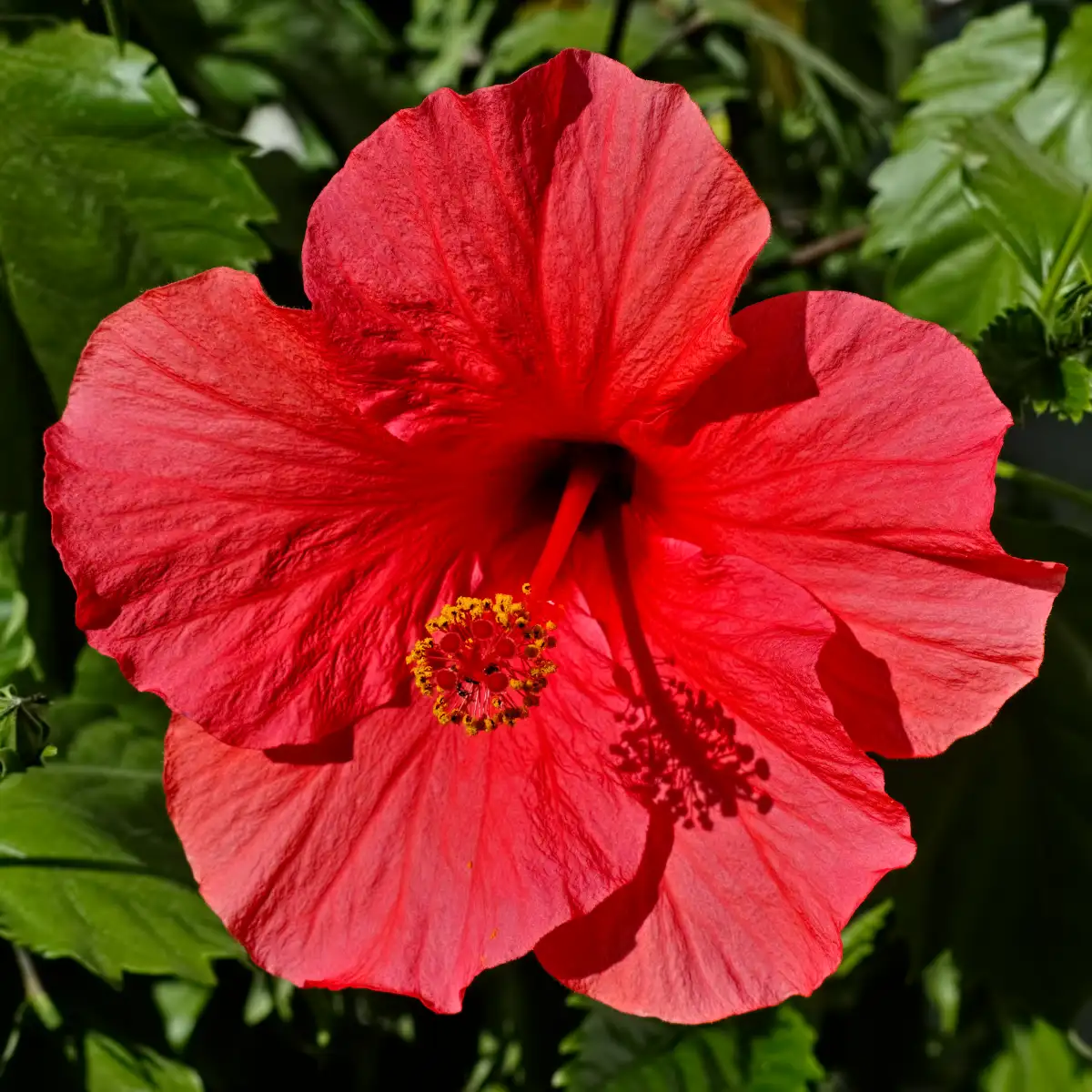
More sun also means more water. A pot in 6 or more hours of summer sun can dry out far faster than one in shade, so check the top inch of soil often, and water before the leaves wilt.
Is Tropical Hibiscus Safe Around Pets?
The ASPCA lists hibiscus (its entry is Hibiscus syriacus) as non-toxic to dogs, cats, and horses, and it does not have a separate entry for H. rosa-sinensis. The IVIS veterinary plant guide notes that dogs that chew hibiscus can still get vomiting and diarrhea, though no toxin has been identified.
If a pet or person eats a plant and shows symptoms, contact your vet or local poison control right away.
Watch: Tropical Hibiscus Light and Care Explained
This video from Aloha Plant Life shows how to place a tropical hibiscus in a bright window and how to read its drooping and leggy growth.
Key Takeaways
- Tropical hibiscus needs at least 6 hours of direct sun outdoors to flower well, and up to 8 or more in mild summers.
- In hot climates, give morning sun and afternoon shade once days pass about 90°F (32°C).
- Indoors, use a south or west window (north or west south of the equator) with 4 to 5+ hours of direct sun, or a grow light for 12 to 14 hours.
- Bleached top leaves mean too much sun; leggy stems and no flowers mean too little.
- Change light levels gradually over 2 to 3 weeks.
Start by counting the sun hours in your chosen spot this week, then adjust using the climate table.
Frequently Asked Questions
Can tropical hibiscus get too much sun?
Yes. In hot weather, strong afternoon sun can bleach and crisp the top leaves and cause bud drop. Keep morning sun and add afternoon shade once days pass about 90°F (32°C).
Can tropical hibiscus grow in shade?
It can survive in partial shade, but it flowers less and the flowers are often smaller. For regular blooms, aim for at least 6 hours of direct sun outdoors.
Is morning or afternoon sun better for hibiscus?
Morning sun is safer because it is cooler. In mild climates afternoon sun is fine, but in hot climates morning sun with afternoon shade gives the best results.
Is 4 hours of sun enough for a tropical hibiscus?
Indoors, 4 to 5 hours of direct sun from a south or west window is usually the minimum for flowering. Outdoors, 4 hours keeps the plant alive but gives fewer blooms than 6 or more.
Can I grow tropical hibiscus under a grow light?
Yes. A full-spectrum LED grow light run for 12 to 14 hours a day, a few inches above the plant, can replace missing winter sun.
How do I know if my hibiscus needs more light?
Long bare stems, yellowing inner leaves, and few or no flowers usually mean the plant needs more direct sun. Move it gradually to a brighter spot over 2 to 3 weeks.
Featured image: Photo: Diego Delso / Wikimedia Commons, CC BY-SA 3.0
2 Comments