

Dipladenia vs Mandevilla: How to Tell Them Apart and Pick the Right One
You picked up a plant with pink trumpet flowers, and the tag says “Dipladenia.” The one next to it looks almost the same but is labeled “Mandevilla.” Are they different plants, and does it matter which one you take home?
The short version: dipladenia is a mandevilla. The real difference is how the plant grows, and that decides where it belongs in your garden and how you care for it. This guide shows you how to tell the two forms apart with your own eyes, which plants get confused with both, and what each one needs.
Quick Answer
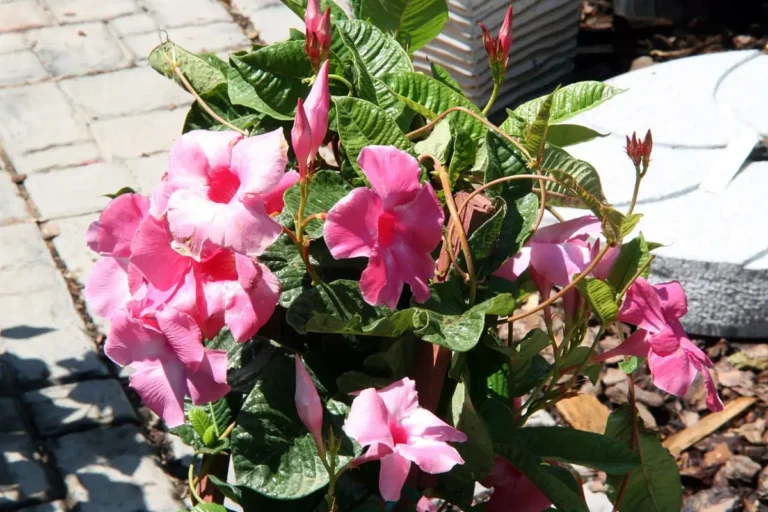
Dipladenia and mandevilla belong to the same genus, Mandevilla, in the dogbane family (Apocynaceae). “Mandevilla” on a tag usually means a vigorous twining vine that needs a trellis. “Dipladenia” usually means a compact, bushy type with smaller leaves and flowers that suits pots and hanging baskets.
- Mandevilla (vining type): stems twist around supports, larger leaves, larger flowers, can climb several meters.
- Dipladenia (compact type): short stems that arch or trail, smaller glossy leaves, smaller flowers, stays under about 60 cm (2 ft) tall before it drapes.
- Same care basics: full sun, well-drained soil, warm temperatures. Both are hardy outdoors only in USDA zones 10 to 11 and die in frost.
Are Dipladenia and Mandevilla the Same Plant?
Botanically, yes. In 1933 the American botanist Robert E. Woodson revised the group and moved the genus Dipladenia into Mandevilla, which is why the plant once called Dipladenia sanderi is now Mandevilla sanderi (Wikipedia, Mandevilla sanderi). NC State Extension lists “Dipladenia” as a former name of the genus (NC State Extension Plant Toolbox).
So “dipladenia vs mandevilla” is not a comparison of two genera. It is a comparison of two growth forms inside one genus. The University of Florida says compact plants such as ‘Rio Pink’ and Sun Parasol ‘Burgundy’ were once classed as Dipladenia and are now back in Mandevilla (UF/IFAS Gardening Solutions).
The main species behind the names are:
- Mandevilla sanderi (Brazilian jasmine, old name Dipladenia sanderi): compact, glossy leaves up to about 6 cm long, native to Rio de Janeiro State, Brazil. This is the classic “dipladenia.”
- Mandevilla splendens (old name Dipladenia splendens): a twining vine to about 3 m with leaves up to 20 cm long and rose-pink flowers.
- Mandevilla × amabilis ‘Alice du Pont’: the well-known pink climbing mandevilla.
- Mandevilla boliviensis: a white-flowered climber.
Why Nurseries Still Use Both Names
Garden centers keep “dipladenia” as a handy trade label for the bushy, basket-friendly plants. Breeders have also crossed the forms, so hybrid series such as Rio, Sun Parasol and Sundaville can sit anywhere between bush and vine.
That is why tags are not always reliable. Mississippi State University Extension notes that plants labeled Mandevilla often do not climb, and that hybrids add to the mislabeling (MSU Extension). Even the National Garden Bureau, describing the Sun Parasol range, says dipladenia is often treated as the bushier, basket-type form of mandevilla (National Garden Bureau).

Dipladenia vs Mandevilla: Side-by-Side Comparison
The table below compares the two forms by the features you can actually see and measure. Values are typical ranges; individual hybrids can fall between them.
| Feature | Mandevilla (vining type) | Dipladenia (compact type) |
|---|---|---|
| Main examples | M. splendens, M. × amabilis ‘Alice du Pont’, M. boliviensis | M. sanderi and its hybrids (Rio, many Sun Parasol and Sundaville lines) |
| Growth habit | Twining vine; stems wrap around supports | Bushy mound; stems arch or trail rather than twine |
| Height | Commonly 3 to 10 ft (about 1 to 3 m); vigorous types more in one season in the tropics | Usually under about 2 ft (60 cm) before stems drape |
| Stem spacing (internodes) | Long gaps between leaf pairs | Short gaps, so leaves look crowded |
| Leaves | Larger, opposite, often textured or wrinkled with visible veins; up to 20 cm in M. splendens | Smaller, opposite, thick, glossy and smooth; about 6 cm in M. sanderi |
| Flowers | Larger trumpets, often 7 to 10 cm, five lobes | Smaller trumpets, about 4 to 7 cm, five lobes, often many open at once |
| Colors | Pink, red, white | Pink, red, white, coral, plus newer purple-toned and yellow-toned hybrids |
| Best use | Trellis, fence, arch, mailbox post | Pots, hanging baskets, window boxes, bedding |
| Support needed | Yes | No, though a short stake can help young plants |
| Hardiness | USDA zones 10 to 11; killed by frost | USDA zones 10 to 11; killed by frost |
| Sap | Milky latex, can irritate skin | Milky latex, can irritate skin |
Sizes and zones come from NC State Extension, the Mandevilla splendens and M. sanderi species accounts, and the National Garden Bureau.
How to Identify Your Plant in 5 Checks
You can tell which form you have in a few minutes, even without a tag. Work through these checks in order, because growth habit is the most reliable sign and color is the least.
- Look for twining. Find the newest stem tips. If they spiral around a stake, railing or neighboring stem, you have a vining mandevilla. UF notes that the vine twines in one direction around upright supports.
- Measure the gaps between leaf pairs. Long, bare stretches of stem point to the vine. Leaves packed close together point to the compact dipladenia type.
- Check leaf size and surface. Small (thumb-length), thick, very glossy leaves suggest M. sanderi types. Large leaves with a textured, veined surface suggest climbing types such as ‘Alice du Pont’.
- Compare flower size. Trumpets the width of your palm lean toward the vine. Smaller blooms, crowded all over the plant, lean toward dipladenia.
- Read the tag for the series name. Names like Rio or Sun Parasol Original usually mean compact forms, while ‘Alice du Pont’ or ‘Red Velvet’ (which UF says can reach 20 feet in a season) mean climbers. When the tag and the plant disagree, trust the plant.
Do not rely on flower color. Both forms come in pink, red and white, and breeders keep adding new shades. Leaf descriptions online also conflict, because hybrids mix traits, so always combine leaf checks with habit.
If you still are not sure, take a clear daylight photo of a flower and another of a leaf, then try our flower identifier or leaf identifier. Photo identification, including our tool, can be wrong, so treat the result as a strong hint and confirm it with the checks above.
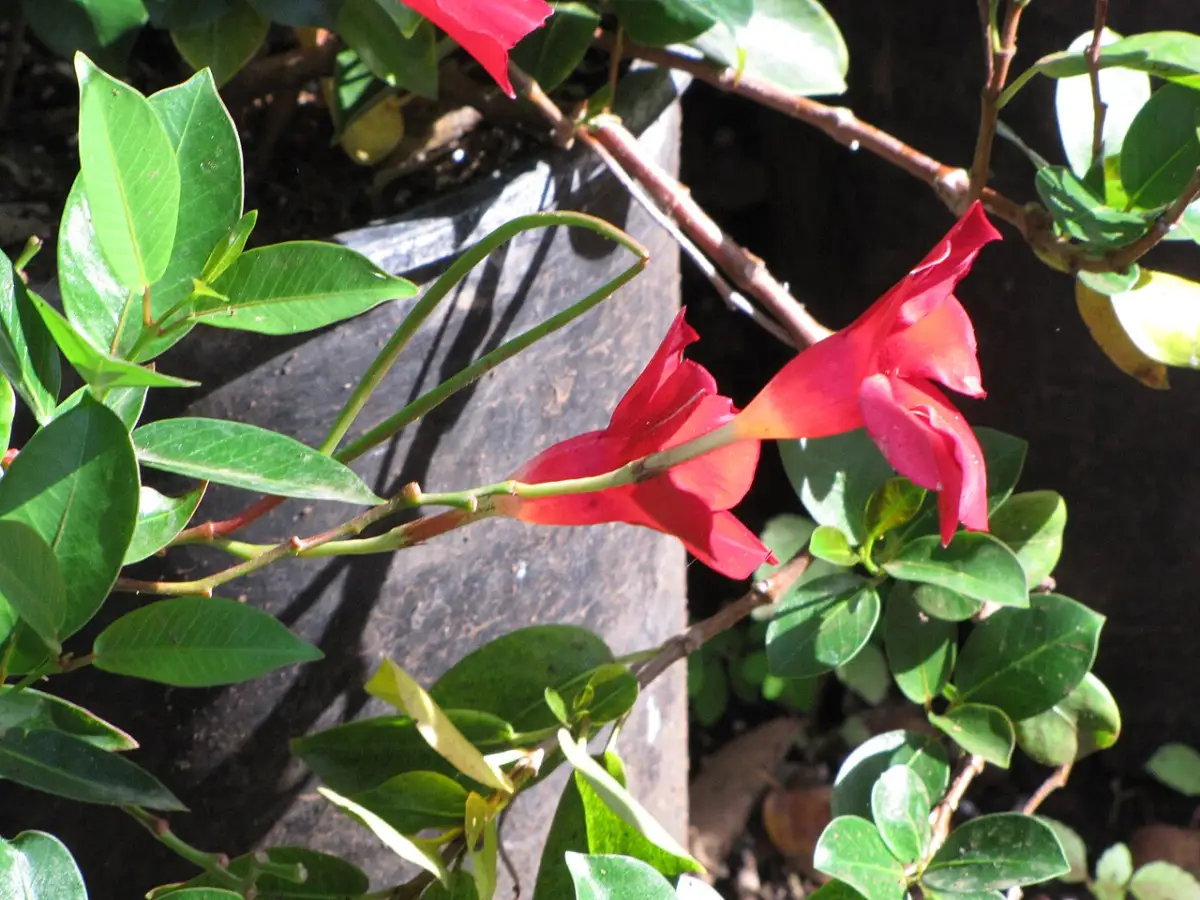
Watch: Bushy vs Climbing Mandevilla
This short video from Groovy Plants Ranch shows a compact “dipladenia” next to a long-stemmed climbing mandevilla, so you can see the difference in habit side by side.
Plants Often Mistaken for Mandevilla
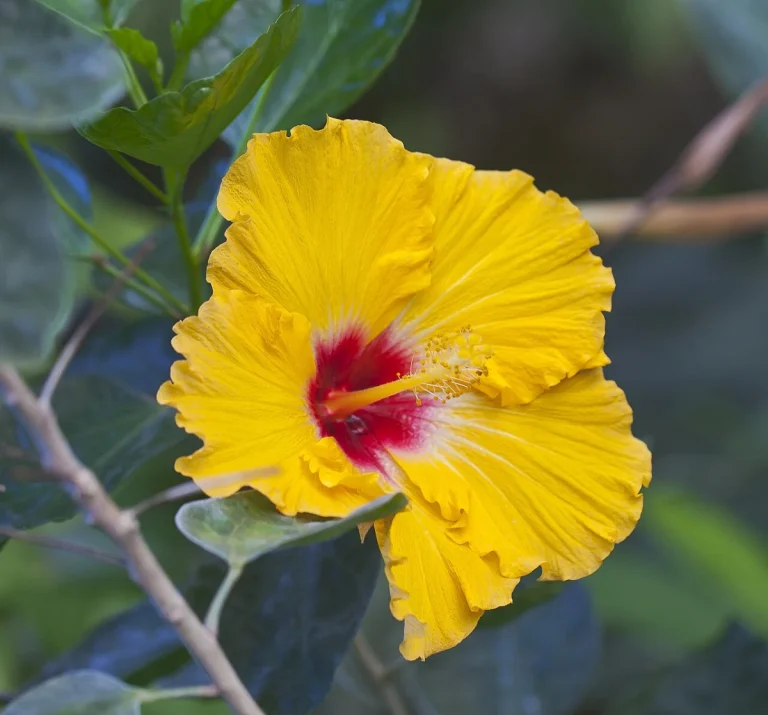
Two yellow-flowered relatives in the same family are regularly sold or shared under the mandevilla name, and tropical hibiscus gets confused with it too. Yellow flowers are the first clue that you may not have a mandevilla at all.
| Plant | Scientific name | How to tell it from mandevilla |
|---|---|---|
| Golden trumpet, allamanda | Allamanda cathartica (Apocynaceae) | Bright yellow flowers; leaves usually in whorls of three or four around the stem instead of opposite pairs; spiny seed capsules |
| “Yellow mandevilla,” wild allamanda | Pentalinon luteum (syn. Urechites lutea) | Yellow trumpets on a twining vine; UF notes it is a different plant, not a true Mandevilla |
| Tropical hibiscus | Hibiscus rosa-sinensis (Malvaceae) | Open, saucer-shaped flowers with a long central column of stamens; toothed leaves arranged alternately |
Leaf arrangement is the quickest test. Mandevilla leaves grow in opposite pairs, while allamanda leaves usually circle the stem in groups. If the flowers are flat with a long stamen column, read our guide on how to identify hibiscus instead.

Care Differences That Actually Matter
Day-to-day care is almost identical for both forms. The real differences are support, training and where you place the plant.
Support and Training
A vining mandevilla needs a trellis, obelisk or wire from the day you plant it. Guide new shoots onto the support in the direction they already twist; UF notes that forcing them the other way does not work.
A compact dipladenia needs no climbing support. It looks best spilling over the edge of a pot or basket, and you can pair it with other heat lovers in mixed containers. If you want a little height, a short stake is enough, but it will never cover a fence.
Light, Water and Soil
Both need at least 6 hours of direct sun for heavy flowering, according to MSU Extension. In very hot climates, such as the US Gulf Coast, South Asia or the Middle East, a little afternoon shade helps prevent scorch, especially for vines on south-facing walls.
Use fast-draining soil or a quality potting mix with drainage holes in the pot. NC State lists a soil pH of about 6.0 to 8.0. Water deeply, then let the top few centimeters dry before watering again. In my experience, checking the soil before watering is the simplest way to prevent overwatering, and it matters here because soggy roots are the most common reason these plants collapse.
For more container basics, see our guide on how to grow flower plants in pots.
Pinching, Pruning and Feeding
Both bloom on new growth, so spring pruning does not cost you flowers. Pinch young vining mandevillas to encourage side shoots, and trim leggy dipladenia stems to keep the mound tidy. MSU notes that mandevilla tolerates heavy pruning.
Feed with a water-soluble fertilizer for flowering plants every two to three weeks in the growing season, and stop in winter. For a full month-by-month routine for the compact type, read our dipladenia care guide.
Hardiness and Winter Care by Climate
Neither form is hardier than the other. Both are tropical perennials rated for USDA zones 10 to 11 (NC State Extension), and M. sanderi dies when exposed to frost.
- Frost-free climates (South Florida, Hawaii, coastal Southern California, much of the tropics): grow either form outdoors all year. UF notes some bloom year-round in zones 10 and 11.
- Light-frost climates (zone 9, parts of the Mediterranean): plants may die back and regrow from the roots, as MSU describes, but losses are common. Mulch heavily or move pots under cover.
- Cold-winter climates (most of the US, Canada, northern Europe): treat them as summer annuals, or bring pots indoors before nights fall below about 10 °C (50 °F).
To overwinter indoors, check for pests first, then place the plant in the brightest window you have. Cut watering back so the soil dries more between drinks, and expect some leaf drop as it adjusts. Compact dipladenias are easier to move and fit indoors than large vines, which is a practical reason to choose them in cold regions.
Common Pests and Problems on Both
The two forms share the same pests because they are the same genus. NC State lists mites, aphids, thrips and whiteflies, and UF adds scale and mealybugs.
- Aphids: clusters on new tips and buds. See how to get rid of aphids on indoor plants.
- Spider mites: fine webbing and speckled leaves, worst on dry indoor plants in winter.
- Mealybugs and scale: white cottony spots or brown bumps on stems; insecticidal soap is the usual first step, according to UF.
- Yellow leaves: usually cold, soggy soil or a sudden move indoors. Our guide on why plant leaves turn yellow walks through the causes.
Observing plants regularly and adjusting care to what they show you is the habit I rely on most, and it is how you catch these pests before they spread.
Are Dipladenia and Mandevilla Toxic?
Both forms produce a milky latex sap that can irritate skin, and UF says the sap may be toxic if swallowed (UF/IFAS Gardening Solutions). The M. sanderi species account also describes the latex as toxic and skin-irritating (Wikipedia).
- Adults: wear gloves when pruning and wash off any sap that touches skin.
- Children: keep plants out of reach; chewing leaves or flowers may cause mouth irritation or stomach upset.
- Dogs and cats: published sources disagree on how harmful mandevilla is to pets, and reliable veterinary data is limited. Until that is clearer, treat it as potentially harmful and keep it away from pets that chew plants. A hanging basket is an easy way to do that.
If a person or pet has eaten part of the plant and shows symptoms, contact your local poison control center or your veterinarian right away. Never eat any part of a plant based on an article or an app result.
Which One Should You Choose?
Choose by the space you want to fill, not by the name on the tag.
- Covering a trellis, fence, arch or post: pick a vining mandevilla such as ‘Alice du Pont’ or another large-leaved climber.
- Hanging baskets, window boxes or a small balcony: pick a compact dipladenia type such as the Rio or Sun Parasol Original lines.
- Windy, hot, full-sun spots: the compact type is the safer pick; Anna’s Garden Home & Wellness describes it as heat tolerant and able to take wind, and it has no long stems to whip around.
- Cold winters and limited indoor space: the compact type is easier to bring inside.
- Pets that chew plants: either form in a hanging basket, out of reach.
Once you know which form you have, give it the right support and a sunny, well-drained spot, and both will flower from early summer until the first cold nights.
Frequently Asked Questions
Is dipladenia the same as mandevilla?
Yes, botanically. Dipladenia was merged into the genus Mandevilla in 1933, so plants sold as dipladenia are compact mandevillas, mostly Mandevilla sanderi and its hybrids. The name survives as a trade label for the bushy form.
Can dipladenia climb a trellis?
Only a little. Compact dipladenia types do not twine strongly and usually stay under about 60 cm before their stems arch over. If you want to cover a trellis or fence, choose a vining mandevilla instead.
Which is hardier, dipladenia or mandevilla?
Neither. Both are tropical plants hardy outdoors only in USDA zones 10 to 11 and are killed by frost. In colder climates grow them as summer annuals or bring them indoors before nights drop below about 10 °C (50 °F).
How can I tell dipladenia leaves from mandevilla leaves?
Dipladenia types have small, thick, very glossy leaves packed closely on short stems. Vining mandevillas have larger leaves, often with a textured, veined surface, spaced farther apart. Hybrids mix traits, so check growth habit too.
Is mandevilla or dipladenia toxic to dogs and cats?
Both have a milky sap that irritates skin and may be toxic if swallowed, according to UF/IFAS. Pet-specific data is limited and sources disagree, so keep plants out of reach and call your vet if a pet eats some and shows symptoms.
Why is my mandevilla not climbing?
It is probably a compact dipladenia-type hybrid sold under the mandevilla name. Mississippi State University Extension notes that plants labeled mandevilla often do not climb. Check for twining stem tips and long gaps between leaf pairs.
Featured image: Photo: Jerzy Opioła / Wikimedia Commons, CC BY-SA 4.0

One Comment