Why Are My Plant Leaves Turning Yellow
Seeing plant leaves turn yellow can be worrying, especially when your plants with rich green leaves usually beautify your world from your living room to your yard. This yellowing, also called chlorosis, happens when something affects your plant’s chlorophyll, the plant pigment behind its gorgeous green color.
Yellow leaves are often a call for help, and by taking the right steps, you can fix yellow leaves, improve plant health, and prevent their return. In my experience, early attention to leaf discoloration helps identify the real problems before they become serious.
Poor Drainage or Improper Watering
Water issues are a leading reason behind yellow leaves, and both too much water and too little water can stress your plant. When your plant’s soil becomes overly wet soil, roots cannot breathe properly, causing them to suffocate, shut down, and stop delivering water and nutrients that plants need.
On the other hand, underwatering or drought creates a similar end result through a different mechanism with too little water to carry dissolved nutrients to the roots, plants struggle to take up nutrients and essential elements become unavailable.
If you’re unsure whether thirst or another issue is behind your plant’s symptoms, you can identify your plant and check its specific care needs in seconds.
To fix water problems and prevent water-related problems, start by checking your soil and planting conditions. In your yard, avoid low-lying spots where rain, irrigation, and puddles stick around. Improving native soil, soil health, and soil structure helps create well-draining soil.
Products like Pennington Full Season Potting Mix help revitalize native garden soil with essential plant nutrients, Earth-friendly ingredients, earthworm castings, bio-stimulants, and sustainably sourced peat to create a healthy soil environment that nurtures plant roots.
For plants that grow in containers, choose containers, pots, and drainage holes carefully, while keeping saucers free from excess water. A premium potting soil mix designed for containers with nourishing ingredients, revitalizing ingredients, garden soil mix, wetting agent, and water-holding crystals can help optimize water and break the cycle.
Before watering, use the finger test or moisture meters by placing your index finger into the soil depth. As a general rule, water only when the soil feels dry, then water thoroughly and deeply. If the soil feels cool and moist soil, wait a few days, allow soil to dry slightly, and water again.
Root Damage or Compacted Roots
Root damage can happen due to wayward trowels, shovels, root rot, or disease, leaving damaged roots that struggle to deliver what your plant needs. Outdoors, compacted landscape soil affects the movement of water, oxygen, and nutrients.
Container plants can also develop compacted roots when they outgrow pots, causing roots to stop function properly and yellow leaves to reveal the problem.
For in-ground plantings, you can improve soil structure and soil compaction by incorporating Pennington Rejuvenate Natural & Organic Garden Soil Mix into the planting site. Garden gypsum can help improve compaction, especially in heavy clay soils, and keep leaves green.
To check containers for damaged roots or compacted roots, gently slide plant from the pot. For a large plant, ask for friend help, then turn container on its side and ease root ball out for an up-close look at soil moisture.
Healthy plant roots are whitish-yellow roots, while dark roots or rotting roots may smell foul and indicate rotten roots or diseased roots. If there is a compaction problem, prune unhealthy roots, loosen roots, and repot into a larger container with Pennington Full Season Potting Mix. When roots cannot recover, consider a new plant.
Inappropriate Soil pH
Sometimes yellow leaves are caused by soil pH problems. In yard and garden plantings, soil pH influences how plants access nutrients because nutrient availability changes as the soil pH scale moves up or moves down.
Most garden veggies and pollinator-friendly flowers grow best in a neutral range to slightly acidic range of pH 6.0 to 7.0, while acid-loving plants like rhododendrons and blueberries prefer soil near 4.5 to 6.0 pH.
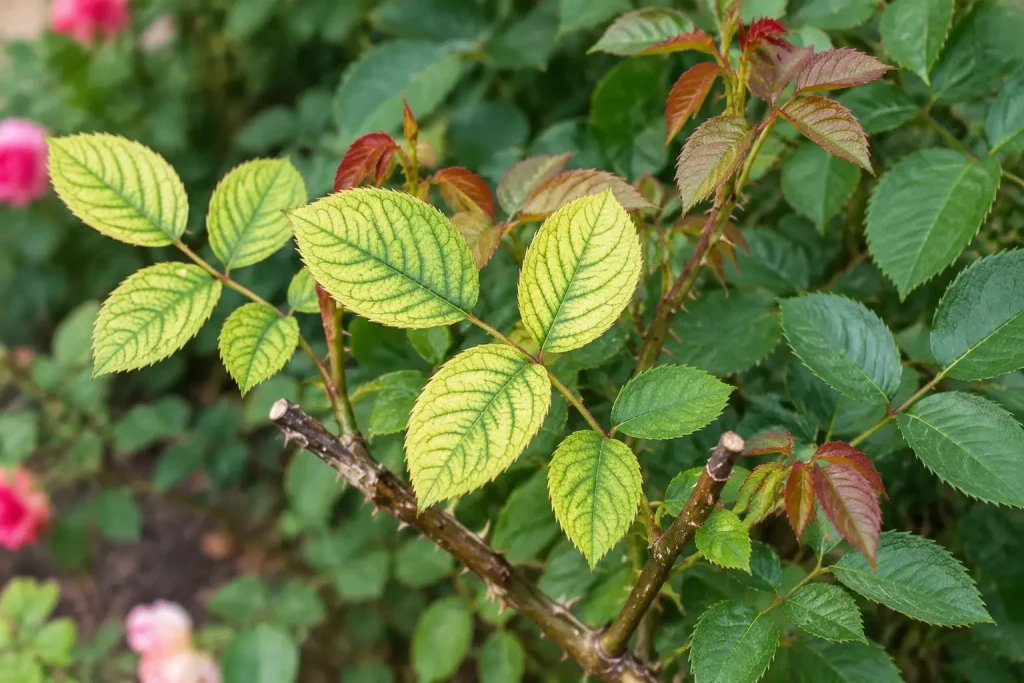
When pH is outside the optimal range, preferred nutrients become less available nutrients, causing leaves turn yellow.
A simple soil test helps with soil pH testing, recommendations, and soil amendments to restore pH balance and bring green leaves back on track.
Lack of Needed Nutrients
Even when soil pH is spot on, yellow leaves can indicate a true nutrient deficiency. Nutrients like nitrogen are mobile in soil, so they can move through soil and leaches away, causing nitrogen deficiencies that make plant leaves look yellow or pale green.
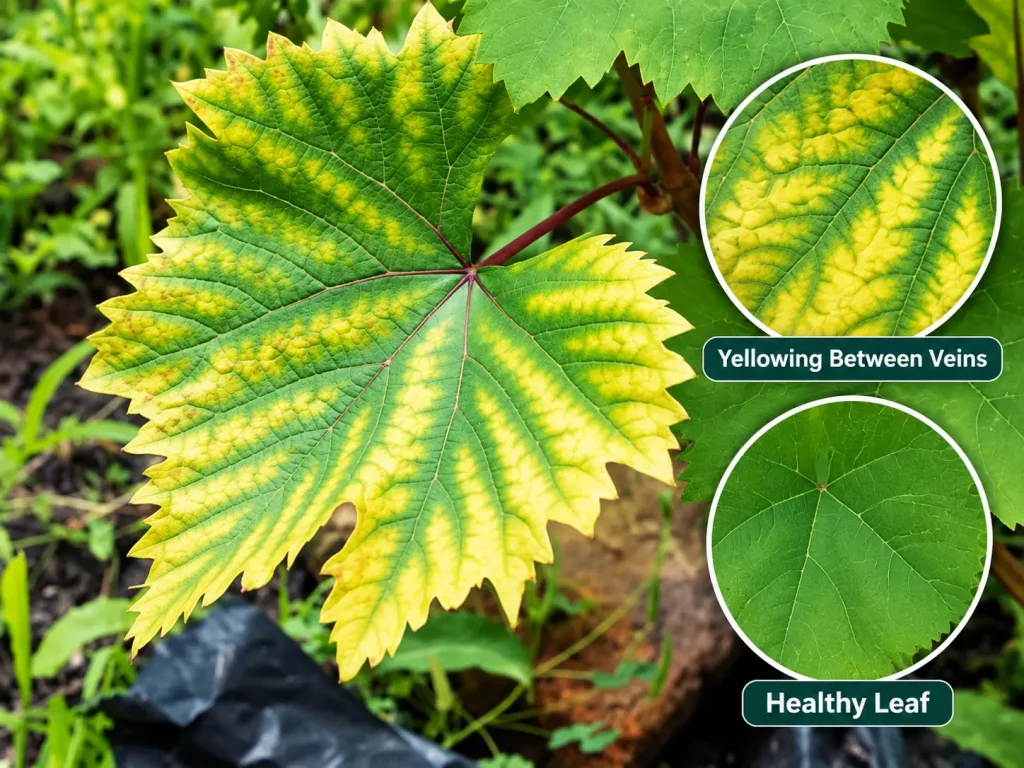
Different nutrient deficiencies show different signs: nitrogen deficiency causes general yellowing, potassium deficiency creates bright yellow leaf edges, magnesium deficiency causes yellow patches near leaf veins, iron deficiency affects young leaves, and sulfur deficiency turns newest leaves yellow throughout.
Proper fertilization, premium plant foods, and products like Pennington Full Season All Purpose Plant Food 10-10-10 help provide balanced nutrition, improve nutrient uptake, and support vigorous growth.
For specific needs, Pennington Rejuvenate Plant Food Evergreen & Azalea 4-3-3, Pennington Epsom Salt, and iron-containing fertilizers help restore nutrients and keep beautiful foliage healthy.
Quick Guide to Identifying the Cause of Yellow Leaves
| Symptom | Possible Cause |
|---|---|
| Yellow lower leaves | Nitrogen deficiency / natural aging |
| Yellow new leaves | Iron deficiency / soil pH issue |
| Yellow leaves + wet soil | Overwatering |
| Yellow leaves + dry soil | Underwatering |
| Yellow spots | Pest or disease |
| Yellow edges | Nutrient imbalance / fertilizer issue |
Other reasons for yellow leaves
Sometimes yellow plant leaves are linked to soil conditions rather than nutrients. A soil mix that is too wet or becomes boggy soil can deprives roots of oxygen, affecting root health and causing the plant turn yellow.
Even with MM-mix, garden boxes with good drainage are important to avoid a drainage problem. However, non-stop rain for weeks can create excess moisture and waterlogged soil that even a Makkelijke Moestuin raised bed may not cope with rain.
Sunlight
Plants need enough sunlight because sunlight helps them generate nutrients and produce their own nutrients for healthy plant growth. Too much shade from shade-makers can affect nutrient generation, especially when bean plants like beans that grow 40-50 cm tall are placed incorrectly in a garden box.
Keep taller plants at the back of garden box so lettuce heads and other small seedlings do not get too much shade when growing in front. I have seen plants like parsley struggle when wedged between beans, chard, beets, and cucumbers, showing how important proper garden placement is for vegetables.
Nutrients
Plants need nutrients to stay healthy because they produce nutrients and also draw nutrients from the soil. A lack of nitrogen can create weak plants and yellow plants due to poor soil nutrients.
The MM-mix provides a balance of nutrients for all plants, but you need to replenish it with plant food after a harvested patch is completely harvested and ready to sow again. Plants growing in the same patch for a long time, such as tomatoes and zucchinis, need an extra scoop of plant food every 4-5 weeks.
Simply add nutrients at the foot of plant on the top of MM-mix, gently rake, and water to support plant growth, nutrient supply, soil fertility, and plant health.
Peas and sugar snaps
When a plant reaches the beginning of summer and is starting to bloom, it follows the natural process of how a plant works. Like plants, animals, and distant ancestors, the major goal is to produce offspring by creating fruits, flowers, and seeds.
As the plant puts more energy into these parts, the leaves may begin to change. With snow peas and sugar snaps, when pods appear, the leaves at the bottom of the plant can turn yellow and wither.
Picking snow peas while the plant is still young can encourage it to produce more flowers and more snow peas, but after two or three weeks, once you have harvested the pods, it may be time to remove the plant and free the patch for something new. Tall snow pea plants can still produce new side shoots with flowers, but the harvest may reduce.
Potatoes, onions and garlic
When potato plants are turning yellow, it is often a good sign that it is time to dig. The same applies to onions and garlic, as their leaves turn yellow and wither when they are ready. For Uien, the blad becomes verdort and vergeelt, while the loof may omvallen as they become rijp and ready to oogsten.
Age
As a plant gets older, it naturally produces more leaves, and the oldest leaves may turn yellow because they have done their job. When the plant no longer needs them, it is better to remove them to keep the plant looking healthy.
Tomatoes, beans, and zucchinis
Tomato, beans, and zucchini leaves can turn yellow in early summer, especially when it is colder during the day and wetter at night. These summer vegetables don’t like cold and wet weather, but when conditions become nice and warm, plants usually do well and start growing.
I have seen during cold Junes that some summer vegetables seemed like they didn’t make it, as they didn’t grow much, became yellowish, and the stem dried out. However, just before you give up, they can sometimes recover and have a major growth spurt.
When should you step in?
In hot weather, some vegetables may naturally develop yellow leaves like trees do. You can simply cut them off when the upper parts of the plant still look good, as it may not be a serious problem. If you notice a yellow leaf, there is no need to panic because the plant may still comeback with healthy growth.
Are yellow leaves a sign a plant’s dying?
A yellowing leaf does not always mean your plant is damaged, dying, or dead. In many cases, an occasional yellow leaf is normal and not a reason for panic stations. It does not mean the entire plant will drop dead, but yellow leaves can sometimes be a warning of imminent death.
As a general rule, do not ignore this cry for help, because it may be a dooms-day sign or just a subtle hint that something’s wrong. Often, there is nothing to worry about, and it can be an easy fix.