

What Color Light Is Best For Plant Growth
Choosing the wrong light can slow down your plants’ progress, but the right spectrum can transform growth. Plants use photosynthesis, a crucial biological process, to produce energy and stay healthy.
Different colors of light create varying light effects on plant growth, plant development, and overall plant health.
The growth light spectrum matters because each wavelength supports different stages, including flowering and leaf growth.
Today’s LED grow lights help control light quality and provide the right light spectrum based on specific plant needs, making it easier to achieve better development, stronger energy production, and improved results by selecting the best color light for your plants.
What Color Light is Best for Plant Growth?
The right light can decide how well your plants perform. Plants use photosynthesis to photosynthesize and produce energy, making essential light necessary for healthy plant growth. The vital growth spectrum of blue light and red light has a major impact on different stages of growth.

Blue light supports the germination process and vegetative growth, while red light helps during the flowering stage and fruiting stage. These growth light spectrums influence the plant lifecycle, growth stages, and overall plant health by providing the correct light requirement throughout the entire growth process.
Blue Light
A strong start for plants begins with the right blue light, especially during early growth stages. Blue light supports healthy leaf growth, strong root development, and improves overall plant vigor by helping chlorophyll absorb light for photosynthesis. It is highly beneficial for seedlings and young plants because it encourages compact growth and sturdy growth.
Blue wavelengths also influence plant hormone levels, growth regulation, and phototropism, helping with proper plant orientation toward light sources. With effective light absorption, blue light promotes balanced leaf growth and root development for healthier plants.
Red Light
When plants enter their blooming stage, red light becomes an important source for improving plant growth and flower production.
It supports photosynthesis by encouraging chlorophyll production and helping with the conversion of light energy into chemical energy.
Red wavelengths play a key role in the flowering process, providing growth stimulation that enhances plant development and encourages abundant blooms.
As an essential light source, red light improves light conversion, supports chlorophyll activity, and promotes healthy bloom production.
Blue Light vs Red Light: Which Is Better?
Choosing between blue light and red light depends on the plant’s growth needs. Both wavelengths support different plant growth stages, making a balanced combination of blue and red light the best option for most indoor plants.
| Feature | Blue Light | Red Light |
| Best Stage | Seedling stage and vegetative stage | Flowering stage |
| Main Benefit | Supports seedling growth, leaf production, and stronger structure | Encourages the flowering process and bloom production |
| Effect on Plants | Improves compact and healthy growth | Boosts flowering and fruit development |
| Role in Growth | Helps with early plant development | Supports reproductive growth |
| Light Spectrum | Blue wavelength | Red wavelength |
| Growth Focus | Leaf growth and plant structure | Flowers and fruit production |
| Ideal Use | Young plants and vegetative growth | Mature plants during blooming |
| Best Solution | Combine with red light for balance | Combine with blue light for complete growth |
A proper light ratio and light control using full-spectrum LED grow lights can help plants receive the benefits of both wavelengths. This proportional combination allows growers to adjust different light stages, improve plant development, and maximize light potential for healthier growth.
What Color Light Is Worst for Plant Growth?
While most plants can use different wavelengths, green light is often considered the worst color light for plant growth because plants mainly reflect it instead of absorbing it, creating their natural green appearance. Due to limited green light absorption, it has a lower impact on plant growth compared to other wavelengths.
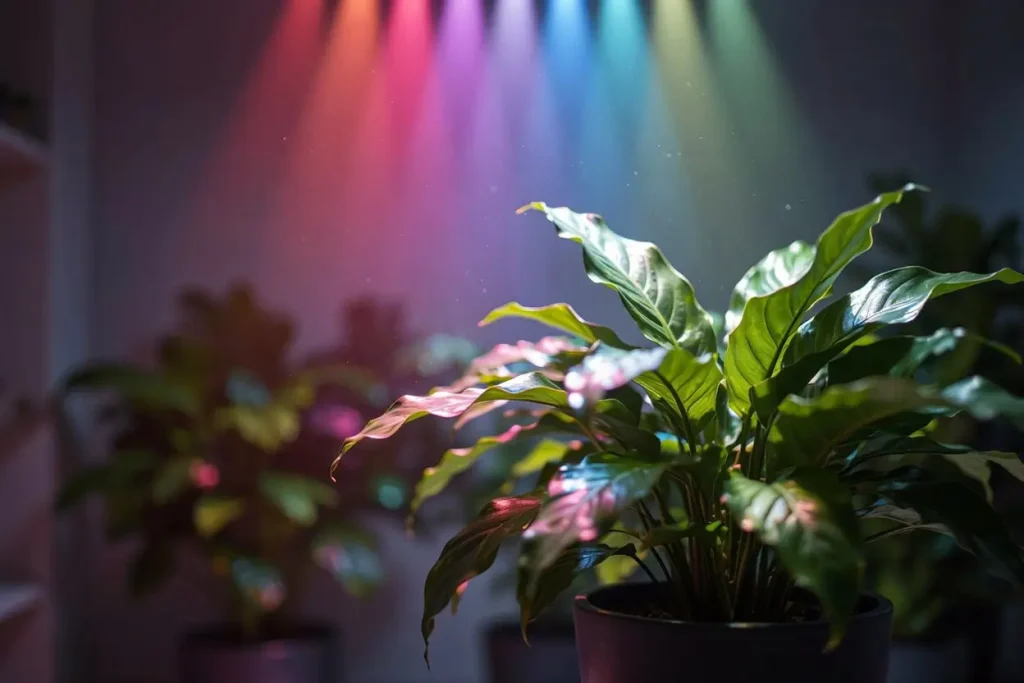
Although some green light can reach lower leaves and support limited photosynthetic activity, its overall contribution to photosynthesis remains minimal. Understanding how light absorption, light reflection, and the light spectrum affect plants helps growers choose better lighting for healthy growth.
How do I Place and Use the Light?
- Proper light placement helps improve plant growth by ensuring plants receive the right amount of exposure.
- Place the use the light above plants for better sunlight simulation and even coverage, while side lighting and top lighting can be useful in limited spaces.
- Different bulbs require different positions: incandescent lights need more light distance, while fluorescent lights and LED lights can be placed closer due to lower heat signature.
- Keep incandescent lights around 24 inches above plants, fluorescent lights around 12 inches above plants, and LED lights around 6 inches above plants for safer growth.
- Regularly adjust light according to plant growth changes and maintain the correct light height to protect plants from damage.
- Monitor light exposure, light intensity, and light absorption to maintain plant safety and avoid burned plants.
- Flowering varieties and vegetables usually need around 12-16 hours of light daily, followed by an 8-hour darkness period during nighttime.
- This rest period supports energy breakdown and keeps plants balanced through their natural growth cycle.
- Use grow lights with timers and choose the right LED bulb or incandescent bulb to control light duration and provide consistent growth conditions.
How Long Should Grow Lights Be On?
The ideal grow light schedule depends on the plant type, growth stage, and available existing light. Most plants perform well with 8 to 10 hours of daily light exposure, while some fruiting plants may need up to 18 hours of light for better development.
The correct light duration should match your plant’s daily light requirement and natural plant growth cycle with the help of a plant identifier for accurate plant identification.
After the lighting period, plants need a respiration period and darkness period as a necessary break from grow lights. Seedlings usually require around 6 hours of darkness, whereas mature plants benefit from 8 to 10 hours of darkness to recover and maintain healthy growth. A proper light schedule helps meet plant needs without causing stress from excessive exposure.
LED Grow Lights for Indoor Plants
For successful indoor gardening, LED grow lights provide a reliable way to recreate natural sunlight and support consistent plant growth. Modern LED grow lights offer customizable light spectra, allowing growers to adjust light intensity, light spectrum, and the blue-to-red light ratio according to specific plant requirements. These lights create an ideal growing environment for indoor plants, including vegetables, LED grow lights for seedlings, and succulent grow lights.
With full-spectrum LED grow lights and dimming options, you can manage different growth stages like the seedling stage, vegging stage, and flowering stage with precise control.
From my experience, quality lighting such as Spider Farmer grow lights helps improve growing outcomes and makes plant cultivation easier and more effective.
Conclusion
Choosing the right light color is essential for successful indoor growing and stronger plant growth. A refined combination of blue light and red light supports healthy plant development, while other light spectrums like green light, yellow light, and IR light can also contribute to balanced growth.
Using a full-spectrum LED grow light with a scientific combination of wavelengths helps improve overall plant growth, plant yield, and plant health. With proper light application and quality grow lights like Spider Farmer full-spectrum light, growers can achieve better growth enhancement and create an ideal environment for their plants.



3 Comments