

How to Identify Hibiscus: Leaves, Flowers, Types and Look-Alikes
A plant sold as “hibiscus” can be a frost-tender tropical shrub, a perennial that vanishes underground each winter, or a woody shrub that survives snow. Here is how to identify hibiscus with checks you can do yourself, and how to rule out look-alikes.
Quick Answer: How to Identify Hibiscus
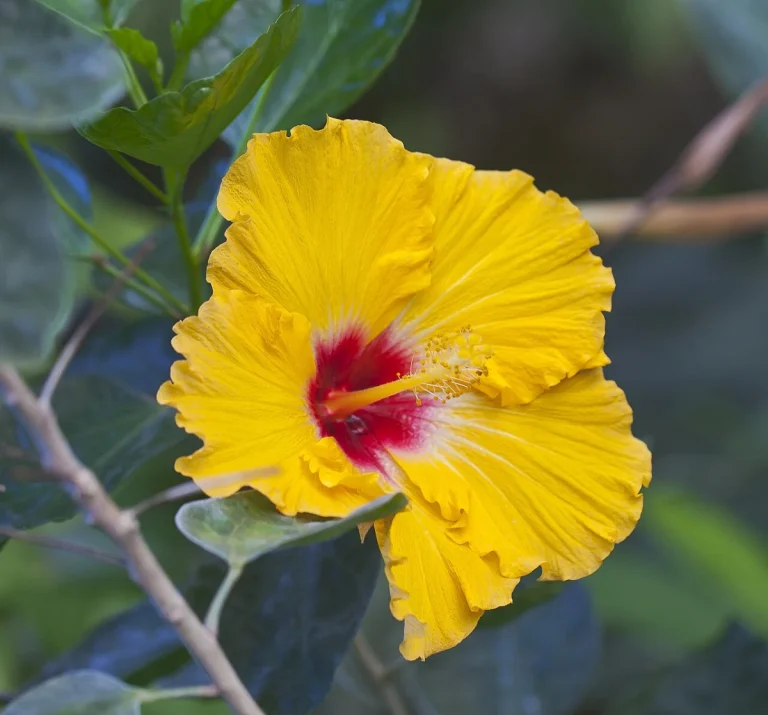
A hibiscus has a large funnel-shaped flower with five petals and a long central tube of fused stamens (the staminal column). Leaves are alternate and usually toothed. Then check leaf shine, winter behavior and stems:
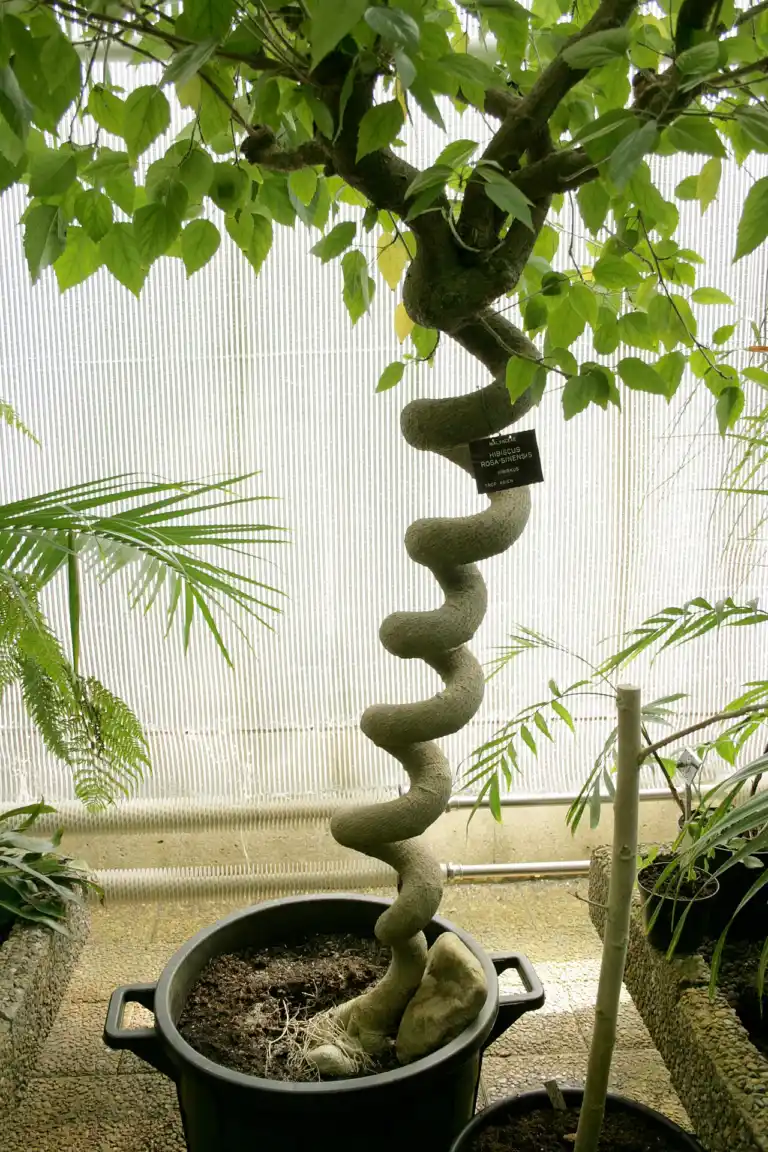
- Tropical hibiscus (Hibiscus rosa-sinensis): glossy dark green evergreen leaves; killed by frost.
- Hardy hibiscus (Hibiscus moscheutos): dull matte leaves, huge flowers; dies to the ground each winter.
- Rose of Sharon (Hibiscus syriacus): woody shrub that drops its leaves but keeps its branches.
Have a clear photo? Our flower identifier gives a fast first suggestion to check against these traits.
Is It a Hibiscus? Check the Mallow Family Traits
All hibiscus belong to the mallow family, Malvaceae. The Atlas of Florida Plants notes that many mallows have stamens joined in a column and an epicalyx, an extra ring of bracts under the sepals. Look for:
- Five separate petals forming a funnel or saucer.
- A long staminal column with the stigma branches at the tip.
- An epicalyx of narrow green bracts behind the flower.
- Alternate leaves, often palmately veined, toothed or lobed.
- A dry, five-part seed capsule after flowering.

How to Identify Hibiscus in 6 Checks
- Read the tag. A scientific name settles it. Names like “patio hibiscus” say nothing about hardiness.
- Study a flower. Find the five petals and staminal column. Do not rely on color, because hybrids blur it.
- Feel the leaves. Glossy means tropical; dull, matte, often heart-shaped means hardy. Our leaf identifier helps when there are no flowers.
- Check the stems. Rose of Sharon has firm gray-brown woody branches; hardy hibiscus has thick stems that die back.
- Watch winter. Evergreen but frost-damaged: tropical. Gone underground: hardy perennial. Leafless woody shrub: rose of Sharon.
- Note size and setting. Patio pot, wet border or hedge each point to a different group.
The Three Main Hibiscus Groups
Tropical hibiscus is an evergreen shrub from Asia. NC State Extension lists glossy, toothed leaves 3 to 6 inches long, one-day flowers 3 to 6 inches across, and USDA zones 9a to 11b.
Hardy hibiscus (rose mallow) is a North American perennial. UNL Extension describes dull leaves and flowers 3 to 12 inches wide, with new shoots only once soil reaches about 70 degrees F.
Rose of Sharon keeps a woody frame through winter and blooms late summer to fall, says Garden.org. Green tissue under scratched bark means a bare branch is alive.
| Feature | Tropical | Hardy perennial | Rose of Sharon |
|---|---|---|---|
| Leaves | Glossy, dark green | Dull, broad, heart-shaped | Smaller, often three-lobed |
| Flower size | 3 to 6 in | 3 to 12 in | Smaller |
| Winter | Evergreen, frost-tender | Dies to the ground | Leaves drop, wood stays |
| Height | 4 to 10 ft | 3 to 6 ft | 8 to 12 ft |
| USDA zones | 9a to 11b | 4 to 9 | About 5 to 9 |
Hibiscus Look-Alikes
| Plant | How it differs |
|---|---|
| Hollyhock (Alcea rosea), Malvaceae | Flowers stacked up one tall spike |
| Musk mallow (Malva moschata), Malvaceae | Low perennial, much smaller flowers |
| Norfolk Island hibiscus (Lagunaria patersonii), Malvaceae | Tree with flowers about 2 in wide |
| British “rose of Sharon” (Hypericum calycinum), Hypericaceae | Yellow groundcover, no staminal column |
Where You Live Changes the Answer
In frost-free regions such as much of South Asia, tropical hibiscus grows outdoors all year, so rely on leaf gloss and flower size. The RHS rates hardy H. moscheutos Southern Belle Group H4 in the UK. Elsewhere tropical hibiscus is often grown in containers; see how to grow flower plants in pots. In my experience, checking the soil before watering prevents overwatering indoor plants.
Is Hibiscus Safe for Pets?
The ASPCA lists rose of Sharon as non-toxic to dogs, cats and horses. Check other species separately. If a person or pet eats a plant and shows symptoms, contact poison control or a vet.
Photo Tips and Common Mistakes
Photograph the flower front and back, one leaf top and underside, and the whole plant in daylight, then try our plant identifier. Photo ID can be wrong and is no substitute for an expert when safety matters.
- Do not judge by flower color alone.
- Do not dig up a bare hardy hibiscus in May; it wakes late.
- Yellow leaves signal care problems, not a new species: see why plant leaves turn yellow.
- Check for sap-suckers; see getting rid of aphids.
Frequently Asked Questions
How do I know if my hibiscus is tropical or hardy?
Tropical hibiscus has glossy evergreen leaves and is killed by frost. Hardy hibiscus has dull leaves and dies back to the ground in winter, then regrows in late spring.
Is rose of Sharon a hibiscus?
Yes, it is Hibiscus syriacus. In Britain the name often means Hypericum calycinum, which is not a hibiscus.
Why has my hibiscus not come back in spring?
Hardy hibiscus waits until the soil warms to about 70 degrees F. On rose of Sharon, green tissue under scratched bark means it is alive.
How long does a hibiscus flower last?
Most individual hibiscus flowers last about one day, but healthy plants keep making new buds.
Is hibiscus toxic to dogs and cats?
The ASPCA lists rose of Sharon as non-toxic to dogs, cats and horses. Check other species separately and call a vet if your pet shows symptoms.

2 Comments