Canna Lily Care: Sun, Water, Feeding, Winter and Problem Fixes for Every Climate
Canna lilies reward simple, consistent care with months of bold flowers, but most problems come from a few avoidable mistakes: too little sun, the wrong fertilizer, cold soil at planting, and rhizomes lost over winter. This guide covers what cannas need in beds and pots, how to read the warning signs on the leaves, and what to do before frost in your climate.
Quick Answer: How to Care for Canna Lilies
Canna lily care comes down to five things. Give the plant at least 6 hours of direct sun, keep the soil evenly moist but never waterlogged, feed it regularly during summer, cut off finished flower spikes, and protect the rhizomes from frost. Plant rhizomes only when the soil has warmed to about 60 to 65°F (16 to 18°C).
In frost-free and mild climates, cannas can stay in the ground all year. Where the ground freezes, lift the rhizomes after the first frost and store them somewhere cool and frost-free until spring.
First, Make Sure Your Plant Is a Canna
Care advice only helps if you have the right plant, and the name “canna lily” causes real confusion. Cannas are not lilies at all. The garden canna (Canna × generalis) and Indian shot (Canna indica) belong to the family Cannaceae, which is related to bananas and gingers.
Check these features with your own eyes:
- Leaves: large, smooth, waxy, paddle-shaped blades with an entire (unbroken) edge, arranged alternately and wrapping the stem at the base. NC State Extension describes Canna indica leaves as 12 to 24 inches long.
- New leaves: emerge rolled into a tight tube and unfurl as they grow.
- Flowers: clustered at the top of an upright stalk, in red, orange, yellow, pink or cream. The showy “petals” are actually modified stamens called staminodes, so the flower looks slightly irregular.
- Fruit: a rounded capsule covered in soft spines, holding very hard, round black seeds.
- Underground: thick, knobby rhizomes, often sold as “bulbs”.
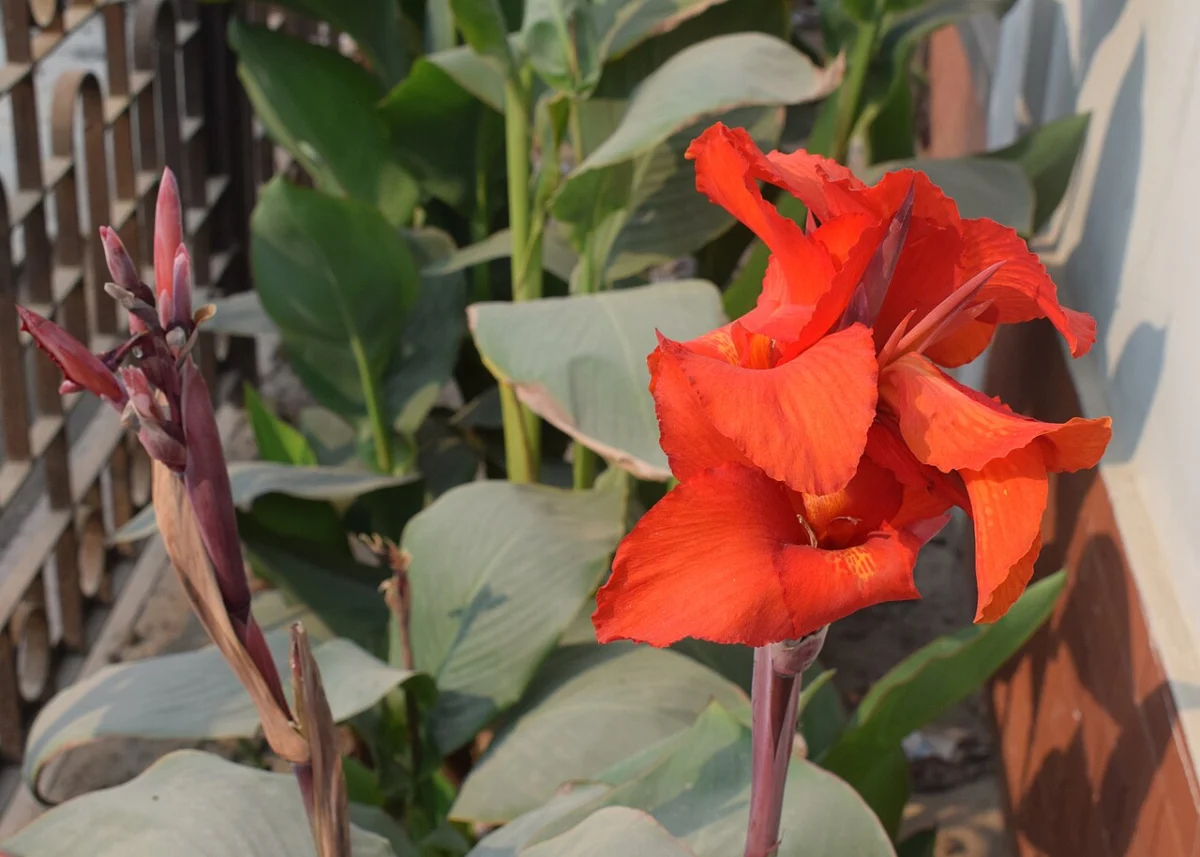
If you are not sure, take a clear photo of a whole leaf and a flower in daylight and try our flower identifier or leaf identifier. Photo identification, including our tool, can be wrong, so confirm with an expert when pet or child safety depends on the answer.
Canna vs Calla Lily vs True Lily
These three plants share a common name but differ in family, look and safety. The table shows how to separate them.
| Feature | Canna (Canna spp.) | Calla lily (Zantedeschia aethiopica) | True lily (Lilium spp.) |
|---|---|---|---|
| Family | Cannaceae | Araceae | Liliaceae |
| Leaves | Huge paddle-shaped blades up a tall stalk | Arrow or heart-shaped leaves on long stalks from the base | Narrow leaves spaced along an upright stem |
| Flower | Irregular cluster of petal-like staminodes at the top of the stalk | One funnel-shaped spathe around a central spike | Six tepals, usually symmetrical and trumpet or bowl-shaped |
| Underground part | Rhizome | Rhizome | Scaly bulb |
| Pet safety | Listed non-toxic to dogs, cats and horses by the ASPCA | Toxic to dogs and cats (calcium oxalate crystals) | Toxic to cats; the ASPCA lists kidney failure as a sign |
Canna Lily Care at a Glance
| Need | What cannas want |
|---|---|
| Light | Full sun, 6 to 8 hours of direct sun; light afternoon shade only in very hot, dry summers |
| Water | Evenly moist soil; roughly 1 to 2 inches (2.5 to 5 cm) a week in beds, more in pots and heat waves |
| Soil | Rich in organic matter, moisture-holding but draining; pH about 6.0 to 6.5 |
| Feeding | Balanced or slow-release fertilizer at planting, then again in midsummer; diluted liquid feed for pots |
| Planting | Soil at 60 to 65°F (16 to 18°C), rhizomes 3 to 4 inches (7 to 10 cm) deep, eyes up |
| Spacing | 18 to 24 inches (45 to 60 cm) for standard types; 12 to 18 inches (30 to 45 cm) for dwarfs |
| Height | About 2 feet for dwarf cultivars to 8 feet or more for giants such as ‘Musifolia’ |
| Bloom time | Midsummer until frost; year-round in frost-free climates |
| Winter | Leave in the ground where soil does not freeze; lift and store elsewhere |
How Much Sun Do Canna Lilies Need?
Cannas need at least 6 hours of direct sun a day to flower well, and 8 hours is better in cool, cloudy regions. In shade they grow tall, weak stems and lush leaves with few or no flower spikes. Too little light is the most common reason a healthy-looking canna does not bloom.
Very hot, dry climates are the exception. In places such as the Punjab plains, the Middle East or the desert Southwest of the United States, a little afternoon shade protects leaves from scorching without stopping flowers. Shelter from strong wind also matters, because the broad leaves tear easily.
The YouTube channel Plant Vibrations with Devin Wallien makes a useful point about nursery plants: leave a newly bought canna in light shade for a couple of days before moving it into full sun. You cannot know how much sun it received at the nursery, and a sudden move can scorch the leaves.
Watering Canna Lilies in Beds and Pots
Cannas are thirsty plants that like steady moisture, but rhizomes rot in soil that stays soggy. Aim for soil that feels like a wrung-out sponge a couple of inches down.
How Often to Water
- Just planted: water well once, then water lightly until shoots appear. Cold, wet soil before growth starts is a common cause of rot.
- Beds in summer: give about 1 to 2 inches (2.5 to 5 cm) of water a week, including rain. In heat waves, a deep soak every two or three days is normal.
- Pots in summer: water whenever the top inch is dry. In peak heat that can mean daily.
- Mulch: a 2 to 3 inch (5 to 7 cm) layer of bark, straw or compost keeps moisture even.
I have learned that checking the soil before watering is the simplest way to prevent overwatering. Push a finger into the soil near the stems: if it is still damp at knuckle depth, wait a day and check again. Watering by touch rather than by calendar adjusts automatically to heat, rain and pot size.
Best Soil and pH for Cannas
Cannas grow best in rich soil with plenty of organic matter that holds moisture but lets excess water drain. They tolerate clay and sand, according to NC State Extension, especially if you work in 2 to 4 inches of compost before planting. A slightly acidic to neutral pH of about 6.0 to 6.5 suits them.
Water cannas such as Canna glauca and its hybrids can grow at pond edges with their roots in shallow water. Most garden hybrids are not bred for that and may rot in waterlogged ground, so check the cultivar before planting in a bog.
Fertilizer: Feed for Flowers, Not Just Leaves
Cannas are heavy feeders, but the type of fertilizer matters more than the amount. Too much nitrogen gives huge leaves and few flowers.
- At planting: mix a balanced granular fertilizer (such as 10-10-10) or a slow-release feed into the bed, following the label rate.
- Midsummer: side-dress beds once more with the same fertilizer, or top-dress with compost.
- Pots: feed every 2 to 3 weeks with a water-soluble fertilizer at half strength, and flush the pot with plain water every few weeks to clear salts.
- Stop: stop feeding about six weeks before your first expected frost so the plant can slow down for winter.
Avoid high-nitrogen lawn fertilizer near cannas. If the plant is in full sun, well watered and still not flowering, try cutting back on fertilizer rather than adding more.
How to Plant Canna Rhizomes
Plant rhizomes outdoors only after the last frost, once the soil is at least 60 to 65°F (16 to 18°C) and nights stay above about 50°F (10°C). A soil thermometer pushed 2 inches (5 cm) down gives a reliable reading.
- Choose firm, plump rhizomes with at least 2 or 3 eyes (the small growth buds). More eyes mean more stems in the first year.
- Loosen the soil 12 inches (30 cm) deep and mix in 2 to 4 inches of compost.
- Set each rhizome flat, 3 to 4 inches (7 to 10 cm) deep, with the eyes pointing up. If you cannot tell which side is up, lay it on its side; the shoots will find their way.
- Space standard cannas 18 to 24 inches (45 to 60 cm) apart and dwarfs 12 to 18 inches (30 to 45 cm) apart.
- Cover, firm the soil and water once thoroughly.
- Expect shoots in about 2 to 6 weeks, depending on soil warmth, and the first flowers roughly 10 to 12 weeks after planting.
In regions with short summers, start rhizomes in pots indoors 4 to 6 weeks before your last frost date and plant them out once the weather settles. If some rhizomes have not sprouted after several weeks, dig one up gently: a firm rhizome with swelling buds is alive, while a soft, hollow one has rotted.
Growing Cannas in Pots
Cannas grow very well in containers, which also makes winter storage easier. Size the pot to the variety:
- Dwarf cultivars (about 2 to 3 feet tall, such as ‘Lucifer’ or ‘Picasso’): a pot at least 12 to 14 inches (30 to 35 cm) wide.
- Full-size cultivars (4 to 6 feet tall): a pot at least 18 inches (45 cm) wide and deep for one rhizome.
- Mix: use a quality potting mix, not garden soil, in a pot with drainage holes.
- Weight: heavy ceramic or stone pots stop tall cannas from blowing over.
A canna that stops growing in midsummer may be root-bound. When Plant Vibrations repotted a root-bound nursery canna into a larger container with fresh mix, the plant took a few weeks to recover before flowering again, so repot early in the season if you can. For more general tips, see our guide to growing flower plants in pots.
Deadheading and Trimming
Deadheading keeps cannas tidy and pushes the plant to make new flower spikes instead of seeds. Each stalk can carry more than one spike, so look before you cut.
- When the flowers on a spike fade, check for a smaller bud or side spike below it. If there is one, cut just above it.
- When the stalk has no buds left, cut it down to the first large leaf below the spent spike, so the leaves keep feeding the rhizome.
- Remove old, torn or browning leaves at the base whenever they look tired. New leaves grow from the center of the clump.
- Pick up fallen flowers that land on the leaves, because they can rot and mark the foliage.
In warm regions, deadheading also limits seeding. NC State Extension notes that Canna indica has naturalized in parts of the southeastern United States, Europe, Africa, Asia and the Pacific, so avoid letting seeds wash into waterways.
Common Canna Problems and How to Fix Them
Most canna problems show up first on the leaves. Match the pattern you see to the table, then use the check column to confirm the cause before you treat anything.
| What you see | Likely cause | How to check | Fix |
|---|---|---|---|
| Big healthy leaves, no flowers | Too little sun, small or new rhizome, too much nitrogen | Count hours of direct sun; review what fertilizer you used | Move to 6+ hours of sun; switch to balanced feed; give young divisions a season |
| New leaves stuck shut, chewed or held with silk | Canna leafroller caterpillars | Unroll a leaf and look for a caterpillar or webbing inside | Cut affected stalks off and bin them; Bt on young caterpillars |
| Ragged holes, slime trails | Slugs and snails | Inspect at dusk or after rain | Hand-pick; clear debris around stems |
| Leaves eaten to a lace of veins | Japanese beetles (in North America) | Look for metallic green and copper beetles | Hand-pick into soapy water in the morning |
| Brown, crispy edges on older leaves, new leaves fine | Dry soil, salt build-up, low humidity or scorch | Check soil moisture; note heat and reflected sun | Water deeply and slowly; leach beds monthly in dry climates |
| Orange or rusty raised spots | Canna rust (fungal) | Rub a spot; orange powder comes off | Remove infected leaves; improve spacing and airflow |
| Yellow streaks or mottling on every new leaf, stunting | Virus | See the virus section below | Remove and destroy the whole plant |
| Yellowing and browning in autumn | Natural dormancy | Cool nights, end of season | Normal; prepare for winter care |
For yellowing on other garden and indoor plants, our guide to why plant leaves turn yellow covers the general causes.
Leafrollers, Slugs and Japanese Beetles
Two caterpillars cause most of the rolled, shredded canna leaves in the Americas. The larger canna leafroller is the larva of the Brazilian skipper butterfly (Calpodes ethlius), and the lesser canna leafroller is a small moth (Geshna cannalis). Both hide inside rolled or folded leaves, which is why sprays often miss them.
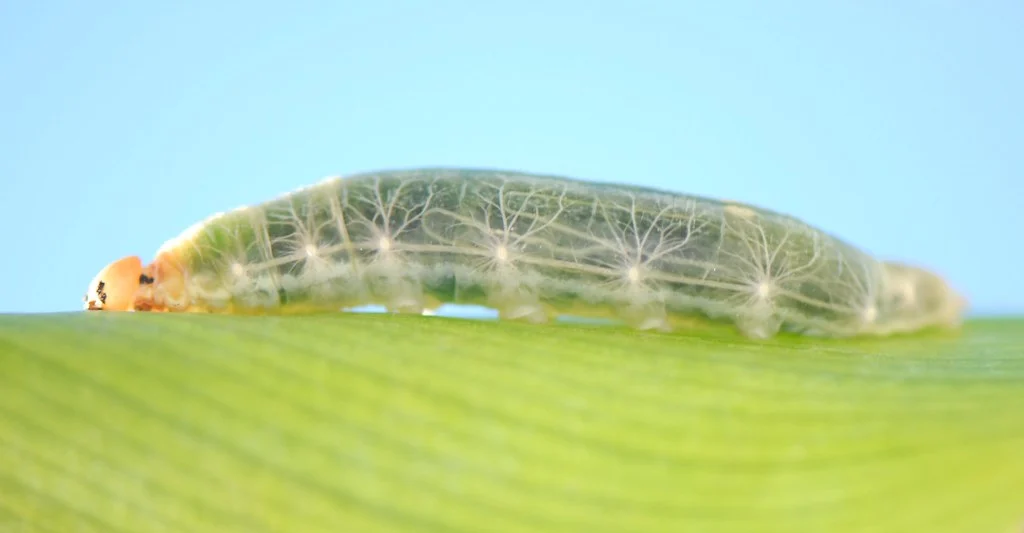
- Small infestations: unroll leaves and remove caterpillars by hand.
- Heavy infestations: cut affected stalks to the ground and bag them. Cannas regrow quickly in summer heat.
- Prevention: spray new growth with Bacillus thuringiensis (Bt), a caterpillar-specific biological insecticide, while caterpillars are small, and repeat as the label directs.
- End of season: remove and destroy old foliage so pests do not overwinter in it.
Rust and Viruses: How to Tell a Virus From Variegation
Cannas can carry several viruses, including canna yellow mottle virus, canna yellow streak virus and bean yellow mosaic virus. None can be cured. Iowa State University Extension advises digging up and destroying cannas with virus symptoms.
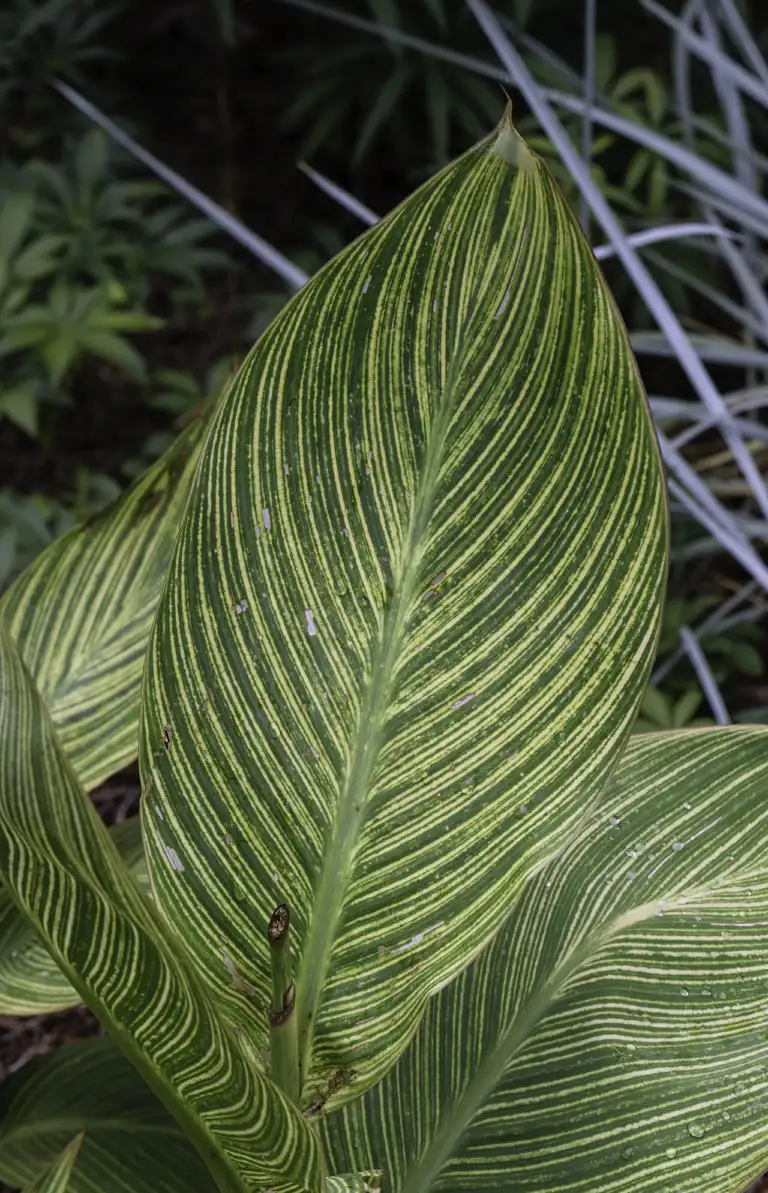
The challenge is that many popular cultivars, such as ‘Pretoria’ (also sold as ‘Bengal Tiger’) and ‘Tropicanna’, have striped leaves on purpose. Use the differences below.
| Sign | Natural variegation | Likely virus |
|---|---|---|
| Pattern | Clean, even stripes that follow the veins | Blotchy mottling, broken streaks or speckles |
| Leaf shape | Flat and normal | Often crinkled, cupped or distorted |
| Growth | Normal height and vigor | Stunted plant, poor or deformed flowers |
| Over time | Pattern stays the same or fades evenly as leaves mature | Each new leaf emerges with the same damage, and it worsens |
| Label | Matches the cultivar description | Plant was sold as plain green but now streaks |
A useful rule from the National Gardening Association is to watch the timeline. Problems caused by light, water or feeding improve within about four to eight weeks after you correct them, while virus symptoms persist and get worse.
If you confirm a virus, remove the whole plant, rhizome included, and put it in the trash, not the compost. Disinfect pruners and knives before touching other cannas, and keep aphids under control, since some of these viruses spread through sap-feeding insects. Our guide on getting rid of aphids covers safe control methods.
Winter Care by Climate
Whether you lift cannas depends on whether your soil freezes, not on a single zone number. Guides disagree on exact zones because cultivar, drainage and microclimate all matter, so use the table as a starting point.
| Your climate | Examples | What to do |
|---|---|---|
| Frost-free tropical and subtropical | USDA 10 to 11, much of South and Southeast Asia, coastal northern Australia | Leave in the ground; cannas may grow and flower year-round. Cut old stalks back and divide crowded clumps |
| Mild winters, ground rarely freezes | USDA 8 to 9, sheltered gardens in southern UK | Cut stems back after frost blackens them, then mulch 4 to 6 inches (10 to 15 cm) deep. Expect occasional losses in hard or wet winters |
| Borderline | USDA 7 | Mulch heavily in a sheltered, well-drained spot, or lift a few rhizomes as insurance |
| Cold winters, ground freezes | USDA 6 and colder, most of the UK, northern Europe, Canada | Lift rhizomes after the first frost and store indoors |
Pots are the easy option in cold climates. After frost blackens the leaves, cut stems back to a few inches and move the whole pot into a frost-free garage or basement, keeping the mix almost dry until spring.
How to Lift and Store Canna Rhizomes
- Wait until the first frost blackens the leaves, then cut stems down to about 4 to 6 inches (10 to 15 cm).
- Dig about 12 inches (30 cm) from the stems and lift the clump gently with a fork.
- Shake off loose soil but do not wash the rhizomes. Let them dry in a sheltered, frost-free place for a few days.
- Pack them in a box with barely damp peat moss, vermiculite, coir or wood shavings so the rhizomes do not touch each other.
- Store at roughly 40 to 55°F (4 to 13°C), somewhere dark and frost-free.
- Check monthly. Remove anything soft or moldy, and mist the packing lightly if rhizomes start to shrivel.

Most winter losses come from storage that is too wet (rot) or too dry and warm (shriveling or early sprouting). Label each batch by color before you store it, because dormant rhizomes all look alike.
Dividing Cannas for More Plants
Canna clumps grow quickly and flower less once they become crowded. Divide them every three to four years, or whenever flowering slows and the clump looks congested.
- Divide in early spring before planting, or in autumn when you lift for storage.
- Cut the rhizome mass with a clean, sharp knife so that each piece has at least one or two eyes and some roots.
- Let the cut surfaces dry for a day before planting to reduce rot.
- Use only healthy-looking stock, since dividing an infected plant spreads virus to every new piece.
Cannas are related to bananas and share their love of heat, water and food. If you grow both, our Musa basjoo banana care guide covers similar winter protection.
Are Canna Lilies Safe for Pets and People?
The ASPCA lists the garden canna (Canna × generalis) as non-toxic to dogs, cats and horses. NC State Extension also tags Canna indica as non-toxic for dogs, cats and horses. Eating a large amount of leaf can still upset a pet’s stomach, as with most plant material.
The real danger is mistaken identity. True lilies (Lilium species) can cause kidney failure in cats, according to the ASPCA, and calla lilies are toxic to dogs and cats as well. Confirm that your plant is a canna before you rely on its safety listing.
Some Canna species, especially Canna edulis (achira), are grown as food crops for their starchy rhizomes. Do not eat ornamental garden cannas, which are not grown or treated as food. If a person or pet has eaten a plant and shows symptoms, contact poison control, your doctor or a vet right away; in the United States, the ASPCA Animal Poison Control Center is (888) 426-4435.
Watch: Canna Care in Practice
This video from Plant Vibrations with Devin Wallien shows grooming old leaves, deadheading spent spikes and repotting a root-bound canna.
Keep It Simple: A Season of Canna Care
Healthy cannas need sun, steady moisture and regular food, plus a plan for winter. In my experience, observing plants regularly and adjusting care to what they show you works better than any fixed schedule. A quick look at the newest leaf each week tells you most of what you need to know.
Start by placing your canna in the sunniest spot you have, check the soil before every watering, and use the problem table whenever something changes. If you are still not sure what you are growing, upload a clear photo to our flower identifier first.
Frequently Asked Questions
Do canna lilies need full sun?
Yes. Cannas flower best with at least 6 hours of direct sun a day, and 8 hours in cool or cloudy regions. In very hot, dry climates, light afternoon shade helps prevent leaf scorch without stopping flowers.
How often should I water canna lilies?
Keep the soil evenly moist. Beds usually need about 1 to 2 inches of water a week including rain, while pots may need water daily in peak summer heat. Check the top inch of soil before watering and avoid waterlogged ground.
Why is my canna lily not blooming?
The most common causes are too little sun, small or newly divided rhizomes, too much nitrogen fertilizer, and dry soil. If the plant has full sun, good water and balanced feeding and still fails to flower over a full season, check new leaves for virus streaking.
Do cannas come back every year?
They come back where the soil does not freeze, such as USDA zones 8 to 11 and other frost-free or mild climates. In colder areas, lift the rhizomes after the first frost and store them frost-free, then replant in spring.
Are canna lilies poisonous to dogs and cats?
The ASPCA lists the garden canna (Canna x generalis) as non-toxic to dogs, cats and horses. True lilies and calla lilies are toxic, so confirm your plant is a canna, and contact a vet if a pet eats a plant and shows symptoms.
Featured image: Photo: Rjcastillo / Wikimedia Commons, CC BY-SA 3.0