Mona Lavender Care: Light, Water, Winter Blooms and Fixes for Every Climate
Mona Lavender is one of the few houseplants that saves its big flower show for autumn and winter. Get the light, water and night length right and it covers itself in purple spikes when most plants are resting. Get them wrong and it turns leggy, drops lower leaves and never blooms.
This guide gives you clear numbers, explains why the plant behaves the way it does, and shows you how to fix the problems people ask about most.
Quick Answer: How to Care for Mona Lavender
Mona Lavender (Plectranthus ‘Mona Lavender’, family Lamiaceae) needs bright indirect light with a few hours of gentle morning sun, soil that stays evenly moist but drains well, and temperatures between 60°F and 80°F (16°C to 27°C). It flowers when autumn nights get long, so keep it away from lamps after dark from early autumn and stop fertilizing when buds appear.
- Light: bright east or south window indoors; part shade or morning sun outdoors.
- Water: water when the top 1 inch (2.5 cm) of soil feels dry; never let the whole root ball dry out.
- Soil: rich, well-drained potting mix with organic matter, in a pot with drainage holes.
- Temperature: 60°F to 80°F (16°C to 27°C); no frost.
- Feeding: half-strength balanced fertilizer every 2 weeks while it grows; none while it flowers.
- Bloom trigger: short days and long, uninterrupted nights in autumn.
- Size: 1 to 2 feet (30 to 60 cm) tall and wide.
What Is Mona Lavender (and Why It Is Not a Lavender)?
Mona Lavender is a hybrid spurflower, not a true lavender. It was bred in the late 1990s at Kirstenbosch National Botanical Garden in South Africa by horticulturist Roger Jaques, according to SANBI’s PlantZAfrica profile. Its parents are two South African species, Plectranthus saccatus and Plectranthus hilliardiae, as noted by NC State Extension.
It belongs to the mint family (Lamiaceae), like coleus and Swedish ivy. You may also see it sold as Lavender Spur Flower or under its registered cultivar name, Plectranthus ‘Plepalila’. The genus name comes from Greek words for “spur” and “flower”, because each bloom has a small spur at its base.
The name matters for care. True lavender (Lavandula angustifolia) wants full sun and dry, gritty soil. Treat Mona Lavender that way and it will wilt and scorch. It is a thirsty, shade-tolerant plant from the same family as mint.
How to Identify Mona Lavender
You can confirm Mona Lavender by checking the stem, the leaf underside and the flower shape. These are the features NC State Extension and the NCSU Annuals plant ID video highlight:
- Stem: square in cross section and dark purple, a classic mint-family trait.
- Leaves: opposite pairs, glossy dark green on top, deep purple underneath, oval (ovate) with toothed edges, about 1 to 3 inches (2.5 to 7.5 cm) long. They often fold up slightly along the midrib.
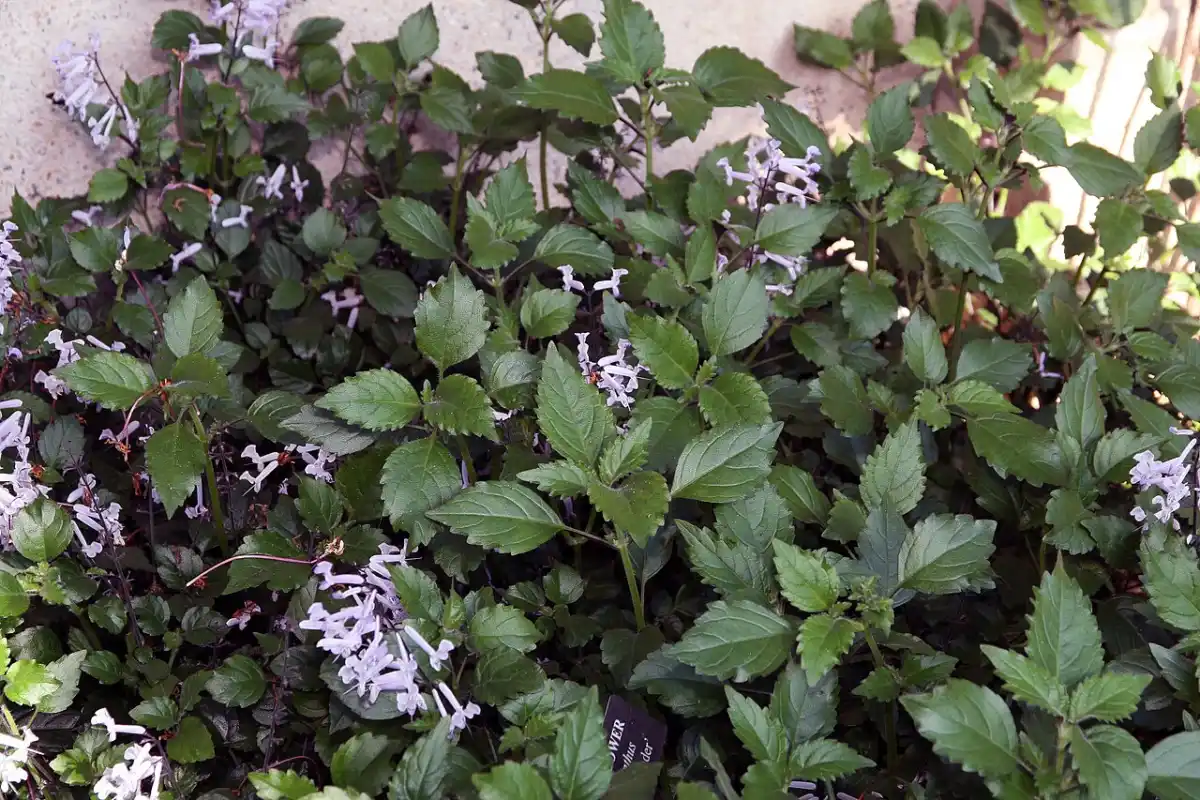
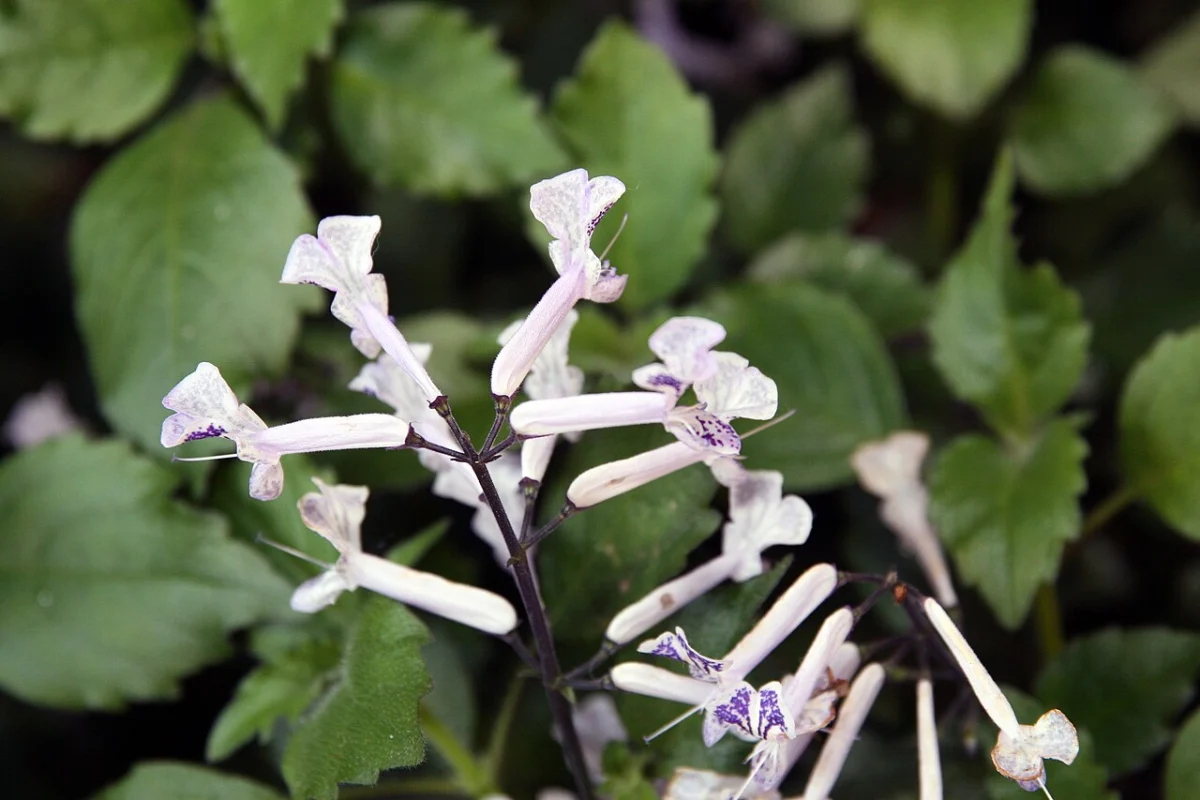
- Flowers: lavender, tubular and two-lipped, under 1 inch (2.5 cm) long, with darker purple speckles inside, held in whorls on upright spikes above the leaves.
- Habit: upright at first, then a rounded, dense mound.
If you are not sure what you have, you can upload a clear photo of the flower to our flower identifier, or a photo of a leaf top and underside to the leaf identifier. Photo identification, including our tool, can be wrong, so check the features above too.
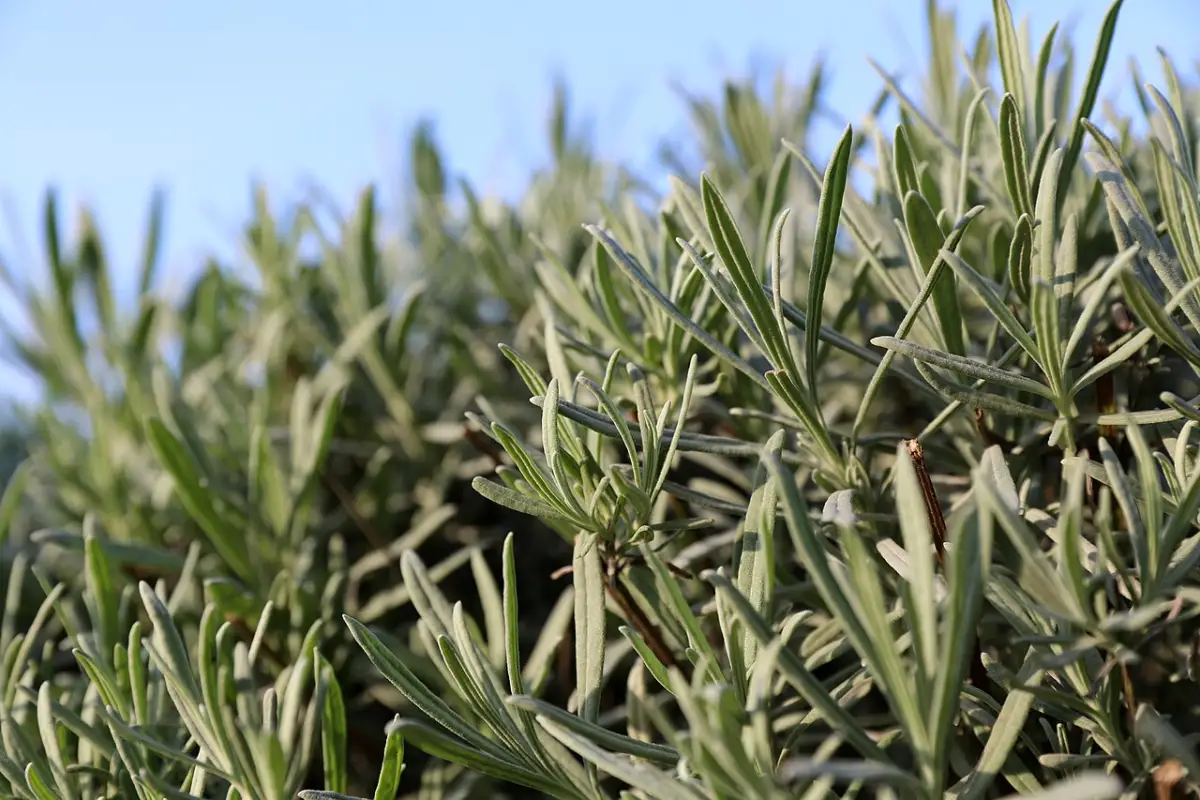
| Feature | Mona Lavender (Plectranthus ‘Mona Lavender’) | English lavender (Lavandula angustifolia) | Swedish ivy (Plectranthus australis) |
|---|---|---|---|
| Family | Lamiaceae | Lamiaceae | Lamiaceae |
| Leaves | Broad, glossy, toothed, purple underneath | Narrow, grey-green, strongly scented | Rounded, scalloped, green on both sides |
| Stem | Square, purple, soft | Woody at the base | Square, green, trailing |
| Flowers | Two-lipped lavender tubes with dark speckles, autumn to spring | Small purple flowers in dense spikes, summer | Small pale flowers, not grown for blooms |
| Light | Bright indirect or part shade | Full sun | Bright indirect |
| Water | Evenly moist | Dry between waterings | Moderately moist |
| Pets (ASPCA) | Not listed | Listed toxic to dogs, cats, horses | Listed non-toxic |
For true lavender care, see our guide on how to plant lavender.
Light: How Much Sun Mona Lavender Needs
Mona Lavender grows best in bright light with a little direct morning sun and shade from harsh afternoon sun. Light is also the main driver of leaf color: the brighter the spot, the deeper the green on top and the purple underneath, and the more compact the plant stays.
Indoors
Place it in or near an east-facing or south-facing window. A north window is usually too dim. The New York Botanical Garden plant information service advised one grower whose plant was leggy in a north window to move it to an east window with at least 4 hours of direct sun. Behind a sheer curtain in a south window works well in hot climates.
I have found that the right spot with indirect sunlight makes a visible difference to how indoor plants grow, and Mona Lavender is a good example. If you only have dim windows, a grow light can keep it compact through the day, as long as it switches off at night (more on that in the bloom section). Our article on what color light is best for plant growth explains how to choose one.
Outdoors by Climate
- Mild coastal and subtropical climates (Florida, coastal California, South Africa, Singapore, eastern Australia): part shade or dappled shade under trees.
- Hot, dry summer climates (inland California, Texas, the Middle East, Pakistan and northern India): morning sun only, with full shade after midday. UC Master Gardeners in San Luis Obispo recommend shade or semi-shade in hot California summers.
- Cool temperate climates (UK, northern Europe, Canada, northern US): a sheltered patio with morning sun in summer, then back indoors before nights fall toward freezing.

Watering: The Rule That Ends the Confusion
Water Mona Lavender when the top 1 inch (2.5 cm) of soil feels dry, and never let the whole root ball dry out. This one rule reconciles the two pieces of advice you will find online: “keep it moist” and “let the top dry”.
Both are partly right. SANBI describes the plant as thirsty and says to water every few days to keep it fresh, and NYBG links lost lower leaves to roots drying too much between waterings. At the same time, soil that stays soggy leads to root rot. Letting only the top layer dry gives the roots air while the lower soil stays moist.
- Push a finger into the soil up to the first knuckle.
- If it feels dry, water slowly until water runs out of the drainage holes.
- Let the pot drain fully. Empty the saucer or decorative outer pot so the plant never sits in water.
- If the soil still feels damp, check again the next day.
In my experience, checking the soil before watering is the simplest way to avoid overwatering, and it works better than a fixed schedule. As a rough guide, a pot in a warm, bright room in summer may need water every 2 to 3 days, while the same pot in a cool winter room may go a week.
Signs to watch: curling or drooping leaves usually mean the plant is thirsty. Yellowing lower leaves with wet soil usually mean too much water or poor drainage. Our guide to why plant leaves turn yellow covers both patterns.
Soil, Pots and Repotting
Use a rich, well-drained potting mix with plenty of organic matter. NC State Extension lists high organic matter and good drainage as the plant’s needs. A peat-free or peat-based houseplant mix with added perlite works well, and many growers use African violet mix. A slightly acidic to neutral pH (about 5.6 to 6.5) suits it.
- Always use a pot with drainage holes.
- Repot in spring, after flowering, into a pot only 1 to 2 inches (2.5 to 5 cm) wider.
- A young plant can fill a 10-inch (25 cm) pot within a few months in good conditions, according to SANBI, so expect to repot every year or two.
- Outdoors, dig compost into the bed before planting.
For general container tips, see how to grow flower plants in pots.
Temperature, Humidity and Hardiness by Region
Mona Lavender is happiest between 60°F and 80°F (16°C to 27°C) and does not tolerate frost. NC State Extension lists it for outdoor growing year-round in USDA zones 10 and 11. HGTV and UF/IFAS note it can survive a brief light frost in zone 9b or 10a, but a cold snap can damage it, so cover or move plants when frost is forecast.
| Where you live | How to grow it |
|---|---|
| USDA zones 10 to 11 and frost-free climates | Garden perennial in part shade; flowers through the cool season |
| Zone 9b and areas with rare light frost | Garden or pot; cover or move it on frosty nights |
| Zones 9a and colder (most of the UK, Europe, Canada, northern US) | Houseplant, or outdoors in summer and indoors before nights drop below about 50°F (10°C) |
Average indoor humidity of 40 to 50% is enough. If winter heating makes the air very dry, group plants together or use a humidifier.
Feeding Calendar: When to Fertilize and When to Stop
Feed Mona Lavender while it is growing leaves and stop while it is flowering. UC Master Gardeners recommend a balanced fertilizer at half strength twice a month during non-flowering months and none during flowering. SANBI also advises feeding before and after, but not during, the bloom period.
- Spring to late summer (active growth): half-strength balanced liquid fertilizer every 2 weeks.
- When flower buds appear: stop feeding.
- When flowering tapers off: resume feeding.
Why the pause? Extra nitrogen pushes leafy growth, which can come at the cost of flowers. Some care sheets suggest feeding through the bloom, so treat this as a sensible default rather than a strict law. If your plant flowers well with year-round feeding, there is no need to change. Always water before fertilizing to avoid burning the fine roots.
How to Get Mona Lavender to Bloom
Mona Lavender is a short-day plant: it starts flowering when nights become long in autumn. This is the single most important fact for getting blooms, and it explains most failures.
The plant measures the length of uninterrupted darkness. NYBG warns that artificial light at night, even a lamp in the room or a street light outside, can stop it from flowering. So a plant in a bright living room that stays lit until midnight may never get the signal.
- Give it bright light during the day so it has the energy to bloom.
- From early autumn, keep it in a room that goes fully dark at night, or move it each evening.
- Stop fertilizing once buds show.
- Pinch tips through spring and summer, because flowers form at branch tips.
- Deadhead spent spikes to encourage more.
Be patient after moving a plant outdoors in spring. Toronto Master Gardeners explain that growth slows as summer days lengthen, and the plant rebuilds roots and leaves before blooming again as days shorten.
Month-by-Month Care for Both Hemispheres
In Florida, UF/IFAS reports the heaviest flowering from August to April. The table below follows that short-day pattern. The Southern Hemisphere column simply shifts the seasons by six months, so treat it as an approximate guide.
| Season | Northern Hemisphere | Southern Hemisphere | What to do |
|---|---|---|---|
| Spring | Mar to May | Sep to Nov | Repot, resume feeding, take cuttings, pinch tips |
| Summer | Jun to Aug | Dec to Feb | Shade from afternoon sun, water more often, keep pinching until late summer |
| Autumn | Sep to Nov | Mar to May | Dark nights, stop feeding when buds form, bring pots indoors before frost |
| Winter | Dec to Feb | Jun to Aug | Enjoy flowers, deadhead, brightest window, water when the top inch is dry |
Pinching, Pruning and Deadheading
Regular pinching is what keeps Mona Lavender bushy and full of flowers. Every pinched tip splits into two new shoots, and each shoot can carry a flower spike.
- From spring to late summer, pinch off the top 0.5 to 1 inch (1 to 2.5 cm) of each growing tip, just above a pair of leaves.
- Repeat every few weeks on young plants and on any stem that grows much longer than the rest.
- Stop pinching by late summer so new tips have time to set buds.
- When a flower spike fades, cut it back into the foliage.
- If an older plant is very leggy in spring, cut stems back by up to half to restart growth.
Expect some thinning with age. NYBG notes that older plants become sparser even with good care. Rooting a few cuttings each year is the easiest way to keep a young, full plant on hand.
How to Propagate Mona Lavender From Cuttings
Stem cuttings root quickly and give you plants identical to the parent. Seed collected from your plant will not come true, because Mona Lavender is a hybrid.
- Cut a healthy tip about 4 inches (10 cm) long, just below a leaf pair. Spring and summer give the fastest results.
- Remove the lower leaves so 2 or 3 pairs remain at the top.
- Stand it in a glass of water or push it into moist potting mix.
- Keep it warm and in bright indirect light, out of direct sun.
- Pot water-rooted cuttings once roots reach about 1 inch (2.5 cm).
- Pinch the new plant once it starts growing so it branches from the base.
Overwintering in Cold Climates
If frost reaches your area, bring Mona Lavender indoors before night temperatures drop near freezing, or take cuttings in late summer and grow them on inside. Check for pests before the plant comes in.
Indoors, give it your brightest window and dark nights so it can flower. If your home is dim in winter and the plant struggles, NYBG suggests an alternative: a winter rest in a cooler room around 55°F to 60°F (13°C to 16°C), no feeding, and just enough water to keep the soil damp. Plants that rest this way usually bloom less that winter but come back stronger in spring. A similar rest-then-regrow pattern works for other tropical bloomers such as bleeding heart vine.
Common Problems and Fixes
Most Mona Lavender problems trace back to light, water or night lighting. NC State Extension lists no significant pest or disease problems for this plant, which makes care mistakes the usual cause.
| Symptom | Likely cause | Fix |
|---|---|---|
| Long, floppy stems with gaps between leaves | Too little light; no pinching | Move to a brighter window, cut back by up to half, pinch new tips |
| No flowers in autumn or winter | Lights at night, low daytime light, too much fertilizer | Dark nights from early autumn, brighter spot, stop feeding at bud stage |
| Drooping or curling leaves | Dry root ball | Water thoroughly; check soil more often |
| Lower leaves dropping | Roots drying too much between waterings | Do not let the whole pot dry out |
| Yellow leaves with soggy soil, black stem base | Overwatering, poor drainage, root or stem rot | Repot into fresh mix in a draining pot; remove rotten parts |
| Pale or faded leaf tips, dull color | Low light or stress | More light, steady watering |
| Brown, crisp patches | Hot afternoon sun or frost | Shade after midday; protect from cold |
Pests and Diseases
Indoors, watch for aphids, whiteflies and spider mites, especially in warm, dry rooms. Check leaf undersides and new tips weekly. Rinse light infestations off in the shower, and use insecticidal soap or horticultural oil for heavier ones; our guide on how to get rid of aphids on indoor plants walks through the steps. Leaf spot and stem or root rot are more likely in dense, wet soil and stagnant air, so drainage and airflow are the best prevention.
Is Mona Lavender Safe for Pets?
There is no specific toxicity listing for Mona Lavender from the ASPCA, so its safety for pets is not formally established. Two related plants in the same genus are listed by the ASPCA as non-toxic to dogs, cats and horses: Swedish ivy (Plectranthus australis) and candle plant (Plectranthus coleoides). That is reassuring, but a relative’s listing is not proof for this hybrid.
Do not confuse it with true lavender. The ASPCA lists lavender (Lavandula angustifolia) as toxic to dogs, cats and horses. This is another reason to confirm which plant you actually have.
Keep any houseplant out of reach of pets that chew leaves, and keep children from eating plants. If a person or pet ate a plant and shows symptoms, contact poison control or a vet right away. For another common pet question, see are snake plants toxic to cats.
How to Check Your Mona Lavender’s Needs Yourself
I believe that watching a plant regularly and adjusting its care is what keeps indoor plants healthy, and small changes often make the biggest difference. A two-minute weekly check covers almost everything Mona Lavender needs:
- Soil: finger test the top inch; water only if dry.
- Leaves: look for droop (thirst), yellowing (too wet), pale color or stretched stems (too little light).
- Undersides: scan for aphids, whiteflies or fine webbing.
- Tips: pinch any stem racing ahead of the rest (spring and summer only).
- Night light: from early autumn, make sure the room goes dark at night.
- Turn the pot a quarter turn so all sides get even light.
Watch: Identifying Mona Lavender Up Close
This short video from the NCSU Annuals channel, made for a plant identification course with Longwood Gardens, shows the square purple stem, opposite leaves and two-lipped flowers that set Mona Lavender apart from coleus.
The Takeaway
Mona Lavender care comes down to three things: bright light by day, steady moisture at the roots, and long dark nights in autumn. Pinch it through summer, stop feeding when buds appear, and keep it above 60°F (16°C). Do that and this South African spurflower will give you purple flower spikes right through the darkest months of the year.
Mona Lavender Care FAQs
Is Mona Lavender a real lavender?
No. Mona Lavender is Plectranthus ‘Mona Lavender’, a hybrid spurflower in the mint family (Lamiaceae) bred at Kirstenbosch in South Africa. True lavender is Lavandula. They need opposite care: Mona Lavender likes partial shade and moist soil, while lavender wants full sun and dry soil.
Why is my Mona Lavender not flowering?
The most common causes are too little daytime light, lamps or street lights breaking the long nights it needs in autumn, and too much nitrogen fertilizer. Move it to a bright east or south window, keep it in a room that goes dark at night from early autumn, and stop feeding once buds appear.
Can Mona Lavender grow in full sun?
It handles morning sun well, and some direct sun makes the leaves more colorful and the plant more compact. Hot afternoon sun, especially in hot summer climates, can scorch it and dry the soil fast, so give it shade after midday outdoors.
Is Mona Lavender a perennial or an annual?
It is a tender perennial. NC State Extension lists it for USDA zones 10 to 11 outdoors year-round. In colder areas it is grown as a houseplant or treated as a summer bedding plant that is brought inside or replaced by cuttings before frost.
Can I root Mona Lavender cuttings in water?
Yes. Stem tip cuttings about 4 inches (10 cm) long root easily in a glass of water or in moist potting mix. Remove the lower leaves, keep the cutting in bright indirect light, and pot it up once roots are about 1 inch (2.5 cm) long.
Featured image: Photo: Photo by David J. Stang / Wikimedia Commons, CC BY-SA 4.0