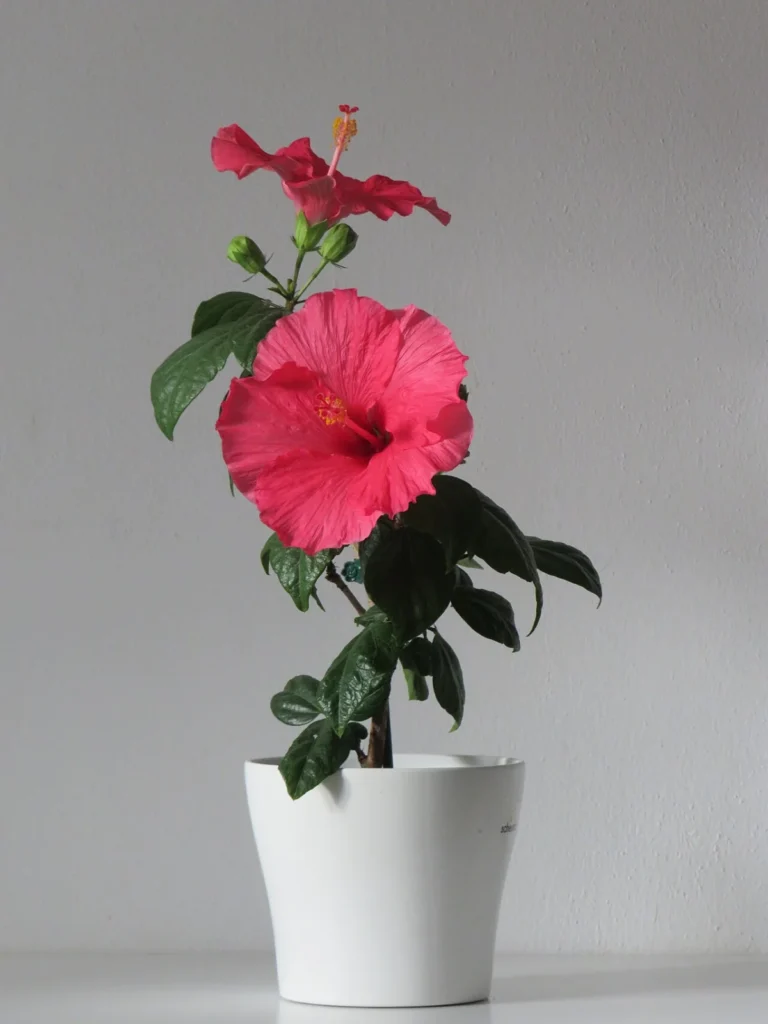
Tropical Hibiscus Tree vs Bush: Same Plant, Different Shape
You see two tropical hibiscus plants side by side at the garden center. One is a bushy pot of leaves and flowers, the other has a bare trunk with a round head on top, and it costs more. This guide explains what is really different between a tropical hibiscus tree and a bush, which one suits your space and climate, and how care changes once your hibiscus is a tree.
Quick Answer
A tropical hibiscus tree and a tropical hibiscus bush are the same plant: Chinese hibiscus, Hibiscus rosa-sinensis, in the mallow family (Malvaceae). The tree is simply a bush that a grower has trained to grow on one bare trunk (or a braided trunk) with a ball of branches on top, a shape gardeners call a “standard.”
Flowers, leaves, light, water and cold sensitivity stay the same. What changes is shape, footprint and maintenance: a tree needs suckers removed, a stake against wind and careful pruning of the head, while a bush is fuller, sturdier and more forgiving.
What Makes a Tropical Hibiscus a “Tree”?
A hibiscus tree is a pruning style, not a separate species. Hibiscus rosa-sinensis naturally grows as an erect, woody, evergreen shrub 4 to 10 feet tall and 5 to 8 feet wide, according to NC State Extension. Growers turn that shrub into a tree by keeping one strong stem as a trunk and removing everything else below the head.
A retailer selling a braided red hibiscus tree describes it as a plant that “has already been pruned into a small tree from its flowering shrub form.” That matches what you will see in the pot: the same glossy leaves and the same flowers, just lifted onto a stem.
Single-trunk and braided standards
The University of Washington Miller Library describes a single-trunk hibiscus as a standard and notes that braided and spiral trunks are also possible. A braided trunk is made by twisting three flexible young stems together while they are soft, and twisted trunks generally need a support or frame while they harden.
- Single-trunk standard: one straight stem, the classic “lollipop” shape.
- Braided standard: three stems woven together, the most common tree form in stores.
- Bush or shrub: several stems from soil level, a rounded mound of leaves down to the pot rim.
Tropical Hibiscus Tree vs Bush at a Glance
The table below compares the two forms of Hibiscus rosa-sinensis on the points buyers ask about most. Heights are typical ranges from extension and retail sources, and your plant will vary with pot size, climate and pruning.
| Feature | Hibiscus tree (standard) | Hibiscus bush (shrub) |
|---|---|---|
| Species | Hibiscus rosa-sinensis | Hibiscus rosa-sinensis |
| Shape | Bare trunk, round head of branches on top | Many stems, leafy from the base up |
| Typical size | Often sold at 3 to 4 feet tall; a Gardening Know How expert says trees “normally don’t get much taller than 5-6′” | 4 to 10 feet tall in the ground in warm climates (NC State Extension) |
| Footprint | Narrow at ground level; good for small patios | Wide; good for hedges, screens and borders |
| Flowers | Same flowers, held at eye level | Same flowers, spread over the whole plant |
| Wind stability | Top-heavy; needs a stake | Low and stable |
| Extra maintenance | Remove suckers and trunk shoots; keep the head shaped | Occasional shaping only |
| Cold hardiness | Same as bush: not frost hardy | Same as tree: not frost hardy |
| If damaged | Losing the trunk or head ruins the tree shape | Regrows from several stems |
| Price | Usually higher, because training takes the grower extra time | Usually lower for the same pot size |

The one point that surprises many buyers: a tree form is not tougher in cold weather. Both forms are the same tropical plant, so both need the same winter protection.
First, Make Sure It Is a Tropical Hibiscus
Before you compare tree and bush, confirm the plant is tropical hibiscus and not a cold-hardy relative trained the same way. Rose of Sharon (Hibiscus syriacus) is also sold as a standard tree, and its care is completely different.
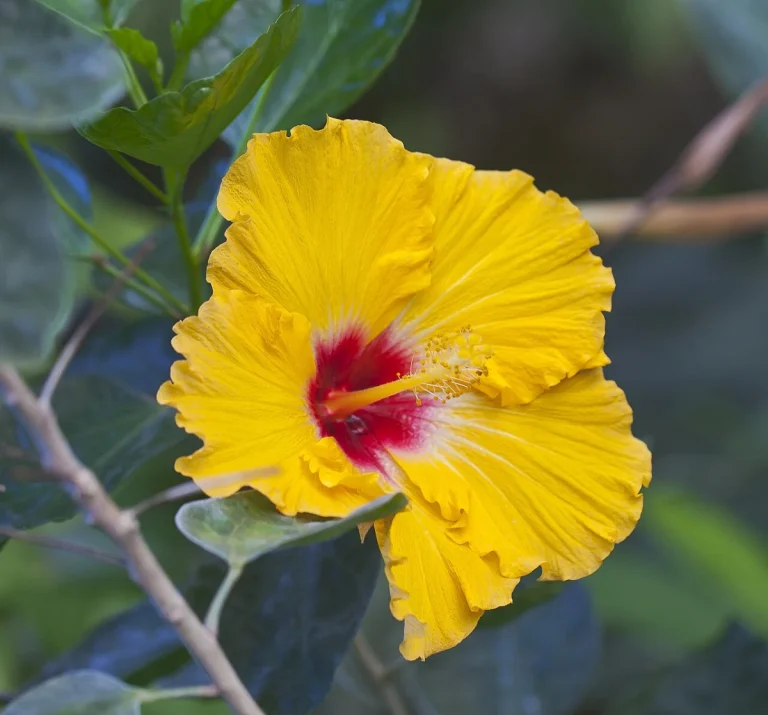
Tropical hibiscus has glossy, dark green, alternate leaves 3 to 6 inches long with toothed edges, according to NC State Extension. Its flowers are funnel-shaped, 3 to 6 inches across, with 5 petals (more in double types) and a long central column of stamens, and each flower lasts only one day.

Use this checklist on the plant in front of you:
- Leaves are shiny and deep green, not dull or matte.
- Leaves stay on the plant year-round in warm conditions (evergreen).
- Flowers are 3 to 6 inches wide, often in red, pink, orange, yellow, white or bicolors.
- The plant tag says Hibiscus rosa-sinensis, Chinese hibiscus or tropical hibiscus.
- The plant is sold as a patio or summer plant rather than a hardy shrub.
- Stems are woody; the plant does not die back to the ground in winter.
If you are still unsure, snap a clear photo of a leaf and a flower and run it through our flower identifier, then compare the result with our full guide on how to identify hibiscus. Photo identification, including our tool, can be wrong, so treat it as a first check, not a final answer.
Tropical hibiscus vs hardy hibiscus vs Rose of Sharon trees
Three different hibiscus groups end up labeled “hibiscus tree” or “hibiscus bush.” The table shows how to tell them apart and why it matters for winter.
| Plant | Scientific name | Growth habit | Leaves | Flowers | USDA zones |
|---|---|---|---|---|---|
| Tropical hibiscus | Hibiscus rosa-sinensis | Evergreen woody shrub, often trained as a tree | Glossy, dark green, toothed | 3 to 6 in, many colors, one day each | 9 to 11 (some sources say 12) |
| Hardy hibiscus (rose mallow) | Hibiscus moscheutos | Herbaceous perennial that dies back to the ground each winter | Duller, lighter green | Very large, “dinner plate” size | About 4 to 9 |
| Rose of Sharon | Hibiscus syriacus | Deciduous woody shrub or small tree, also sold as standards | Drop in fall | White, pink, purple or blue shades | About 5 to 9 |
Zone ranges come from Gardenia.net and Smithsonian Gardens. If your “hibiscus tree” drops all its leaves every fall and comes back in spring outdoors in a cold area, it is probably Rose of Sharon, not tropical hibiscus.

Pros and Cons of Each Form
Neither form is better overall. Each one solves a different problem.
Hibiscus tree: pros and cons
- Pro: Lifts flowers to eye level and looks formal beside doors, steps and pools.
- Pro: Small footprint, so you can underplant the pot with low annuals.
- Pro: Fits narrow balconies and patios where a wide shrub would block the path.
- Con: Top-heavy and easy to blow over in a light pot.
- Con: Needs regular sucker removal and head shaping to keep its look.
- Con: Damage to the single trunk is hard to recover from.
- Con: Usually costs more for the same pot size.
Hibiscus bush: pros and cons
- Pro: More stems usually means more branch tips, and hibiscus flowers on new growth (NC State Extension).
- Pro: Stable in wind and forgiving of heavy pruning.
- Pro: Works as a hedge, screen or border plant in frost-free climates.
- Pro: Cheaper, and you can train it into a tree later if you want.
- Con: Takes up more floor or bed space.
- Con: Can look shapeless without some pruning.
Which One Should You Choose?
Choose by space, climate and how much maintenance you enjoy. Use these quick rules:
- Small patio, balcony or entryway: choose a tree for height without width.
- Hedge, privacy screen or garden bed in zones 9 to 11: choose a bush.
- Windy, exposed site: choose a bush, or stake a tree firmly.
- Cold winter climate where the plant comes indoors: a tree fits through doors and into a sunny window more easily, but a compact bush works too.
- Beginner who wants low maintenance: choose a bush.
- On a budget but want a tree: buy a bush and train it yourself (steps below).
How Caring for a Hibiscus Tree Differs From a Bush
Light, soil and feeding are the same for both forms: full sun to light shade and rich, moist, well-drained soil, per Smithsonian Gardens. See our guides to how much sun tropical hibiscus needs and the tropical hibiscus watering guide for the basics. The differences below apply to the tree form.
Remove suckers and trunk shoots
A hibiscus tree keeps trying to become a bush again. Any shoot that appears on the trunk below the head, or comes up from the roots, should be cut off as soon as you see it, which is what a care sheet for a tropical hibiscus tree sold by QVC recommends. If you leave them, they steal energy from the head and the trunk slowly disappears inside new growth.
Stake the trunk and shelter it from wind
All the weight of a hibiscus tree sits on top of one thin stem. Staking at planting keeps the tree upright and helps it root firmly, especially in windy spots, according to the same care sheet. Use a heavy pot, a soft tie in a loose figure eight, and check ties each season so they do not cut into the bark.
Prune the head, not the trunk
Shape the head into a rounded ball and keep it balanced so the tree does not lean. The UW Miller Library suggests cutting back the longest third of the branches, waiting 4 to 6 weeks for regrowth, then trimming the next third, always cutting just above a node.
Because tropical hibiscus blooms on new wood, pruning delays flowers but does not stop them (Smithsonian Gardens). If your tree has leaves but few flowers, our guide on tropical hibiscus not blooming covers the common causes.
Water and pot size
Water needs are the same for both forms, but a top-heavy tree in a small pot can dry out quickly in summer heat. Smithsonian Gardens advises keeping the root ball evenly moist, because hibiscus does not like to dry out.
I have learned that checking the soil before watering helps prevent overwatering and keeps plants healthy, and that habit matters even more with a potted hibiscus tree. Push a finger into the soil first, and water when the top layer feels dry rather than on a fixed schedule. Yellow leaves can mean too much or too little water; our post on why plant leaves turn yellow helps you sort out which.
Overwintering Trees and Bushes Outside Zones 9 to 11
Both forms need the same winter protection. Tropical hibiscus prefers temperatures above 50°F (10°C), and damage or death is likely below 35°F (about 2°C), according to Smithsonian Gardens. This applies whether you garden in the northern United States, the UK, central Europe or any region with frost.
- Check the forecast and plan to move the plant indoors before nights drop below about 45 to 50°F (7 to 10°C).
- Inspect leaves and stems for pests such as aphids, whiteflies and spider mites, and treat them before the plant comes inside. Our guide on getting rid of aphids on indoor plants can help.
- Trim the head or the bush lightly so it fits your space. The QVC care sheet suggests cutting each branch back by up to one third before winter.
- Place it in your brightest window, ideally south or west facing, away from heater vents and cold drafts.
- Water less often and stop fertilizing while growth is slow.
- Expect some leaf drop and few flowers indoors; this is normal in low winter light.
- After your last frost date, move it back outside gradually, starting in partial shade before full sun.
I believe that observing plants regularly and adjusting their care to their needs is essential for keeping indoor plants healthy. During winter, a quick weekly look at the leaves and soil tells you more than any fixed routine.
How to Train a Hibiscus Bush Into a Tree
You can turn a young tropical hibiscus bush into a single-trunk tree yourself. The method below follows the approach described by Epic Gardening and the UW Miller Library.
- Pick a young plant with one strong, straight, upright stem.
- Cut all the other stems off at soil level.
- Push a stake into the pot beside the chosen stem and tie it loosely.
- Remove side branches from the lower part of the stem as it grows, leaving leaves at the top so the plant can feed itself.
- When the stem reaches the height you want for the head, pinch or cut the tip so it branches.
- Pinch the new branch tips several times to build a dense, rounded head.
- Keep removing any shoots that appear on the trunk or from the roots.
For a braided tree, start with three flexible young stems, twist them gently together as they grow, and support them until they harden. Expect this to take patience: you are waiting for a stem to reach full height and then for a head to fill in, which can take one or more growing seasons depending on your climate and the plant’s vigor.
Is Tropical Hibiscus Safe for Pets and Children?
The ASPCA lists hibiscus as non-toxic to dogs, cats and horses, although its entry is written for Rose of Sharon (Hibiscus syriacus) rather than tropical hibiscus specifically. A veterinary guide on IVIS notes that dogs which chew and eat hibiscus leaves may develop vomiting, diarrhea and loss of appetite, usually mild to moderate.
In short, hibiscus is not considered seriously poisonous, but eating the plant can still upset a pet’s stomach. Tree and bush forms carry the same risk. If a pet or child eats part of any plant and shows symptoms, contact your vet, the ASPCA Animal Poison Control Center or your local poison control center.
Video: Hibiscus Tree Care Tips From a Home Grower
In this video from the channel An Old School Home, an Arizona gardener explains how a hard prune, afternoon shade during very hot weather and a steady watering routine got a struggling hibiscus tree to flower heavily.
How to Check Your Own Plant Before You Buy or Prune
A few minutes of checking prevents most tree vs bush mistakes. Use these steps at the store or at home:
- Read the tag for the scientific name; look for Hibiscus rosa-sinensis.
- Look at the base: one or three stems with a bare trunk means a tree; many leafy stems means a bush.
- Gently push the head; if the whole pot tips, the tree will need a heavier pot and a stake.
- Look for shoots low on the trunk; a tree with many suckers has not been maintained.
- Check under leaves for sticky residue, webbing or tiny insects.
- If the label is missing, photograph a leaf in daylight and use our leaf identifier or flower identifier, then confirm with a local nursery or extension office if safety matters.
The Bottom Line
A tropical hibiscus tree is the same Hibiscus rosa-sinensis as a bush, trained to a single or braided trunk. Pick a tree for height in a small space and a formal look, and a bush for screening, stability and easier care. Whichever you choose, protect it from frost, keep the soil evenly moist and, if it is a tree, keep the trunk clean of suckers and the head balanced.
Frequently Asked Questions
Is a hibiscus tree the same as a hibiscus bush?
Yes. A tropical hibiscus tree is the same species as the bush, Hibiscus rosa-sinensis, trained by a grower to grow on one bare or braided trunk with a rounded head of branches on top.
Is a hibiscus tree hardier than a bush in winter?
No. Both forms are the same tropical plant and are not frost hardy. Bring either form indoors before nights fall below about 45 to 50°F (7 to 10°C); damage is likely below 35°F (about 2°C).
How tall does a tropical hibiscus tree get?
Tree forms are often sold at 3 to 4 feet tall, and a Gardening Know How expert notes they normally stay around 5 to 6 feet. In the ground in frost-free climates, an untrained bush can reach 4 to 10 feet.
Why is my hibiscus tree growing shoots from the trunk?
The plant is naturally a multi-stem shrub, so it keeps sending up shoots on the trunk and from the roots. Cut them off as soon as you see them to keep the tree shape and send energy to the head.
Can I turn my hibiscus bush into a tree?
Yes. Choose one strong upright stem, cut the others at soil level, stake it, remove lower side branches as it grows, then pinch the tip at your chosen height so a rounded head forms. It can take one or more growing seasons.
Is tropical hibiscus toxic to dogs and cats?
The ASPCA lists hibiscus (its entry covers Rose of Sharon) as non-toxic to dogs, cats and horses, but a veterinary guide notes dogs that eat hibiscus leaves may get vomiting or diarrhea. Call your vet if a pet eats the plant and shows symptoms.
Featured image: Photo: Popperipopp / Wikimedia Commons, CC BY 3.0