

Magnolia Flower Symbolism: What Each Color, Culture and Species Means
A magnolia flower usually symbolizes dignity, perseverance and a love of nature, with purity and quiet feminine strength added in many cultures. This guide explains where each meaning comes from, what each color really says, and how to tell which magnolia you are looking at, so the message you send matches the flower you have.
It is written for gift-givers, gardeners who just noticed a tree in bloom, and anyone choosing a magnolia for a wedding, a tattoo or a name. Where a meaning is a modern florist idea rather than an old tradition, the article says so.
Quick Answer: What Does a Magnolia Flower Symbolize?
The magnolia flower symbolizes dignity, perseverance and love of nature. Those three meanings appear in 19th-century flower dictionaries and in Japan’s flower language (hanakotoba). Purity, nobility, femininity and endurance are common modern additions, and color meanings such as pink for joy are recent florist conventions.
- White magnolia: purity and new beginnings.
- Pink magnolia: joy, youth and gentle affection.
- Purple magnolia: nobility and a high-minded heart.
- Yellow magnolia: happiness and friendship.
Not sure which magnolia you have? Upload a clear daylight photo of the flower or a leaf to our flower identifier before you settle on a meaning.
What the Magnolia Flower Symbolizes, and Why
Each core meaning ties back to something real about the plant. Magnolias belong to the genus Magnolia in the family Magnoliaceae, an old lineage of trees and shrubs native to East Asia and the Americas.
Dignity and Nobility
Magnolias stand for dignity because of their size and composure. A Southern magnolia (Magnolia grandiflora) carries creamy white flowers 8 to 12 inches across on a tree that reaches 60 to 80 feet, according to NC State Extension. In Kate Greenaway’s Language of Flowers (1884), the laurel-leaved magnolia is listed for dignity.
Perseverance and Endurance
Perseverance is the magnolia’s most “earned” meaning. The same Victorian dictionary gives perseverance to the swamp magnolia, better known today as the sweetbay (Magnolia virginiana).
The biology backs it up. Magnolia flowers are pollinated by beetles rather than bees, and their thick, waxy flower parts can take a beetle’s chewing, as the UC Botanical Garden at Berkeley explains. Magnolia-like fossil flowers are tens of millions of years old, although sources disagree on the exact age of the genus itself, so treat any precise figure with caution.
Love of Nature
Greenaway lists the plain “magnolia” as love of nature, and Japan’s hanakotoba gives the magnolia the same reading. It suits a flower that often opens on bare branches before the leaves, announcing spring.
Purity and Feminine Strength
White magnolias are tied to purity, which is why they appear in bridal bouquets. In Chinese tradition the magnolia is linked with feminine beauty and gentleness, and many modern writers describe it as strength wrapped in softness. The film title Steel Magnolias (1989) made that idea famous in the United States.
Where Magnolia Meanings Come From
Magnolia symbolism has a few main sources. Knowing them helps you pick a meaning you can stand behind.
The Name: Pierre Magnol
The genus honors Pierre Magnol (1638 to 1715), a French botanist in Montpellier who helped sort plants into families. Charles Plumier gave the name to a tree from Martinique in 1703, and Carl Linnaeus adopted it formally in 1753. So “Magnolia” as a given name literally means “Magnol’s plant,” and borrows the flower’s dignity.
The Victorian Language of Flowers
Victorian flower dictionaries gave magnolias three readings: love of nature (magnolia), dignity (laurel-leaved magnolia) and perseverance (swamp magnolia). These books did not assign meanings by color. Color meanings came later.
China: The Yulan Magnolia
The Yulan magnolia (Magnolia denudata) carries white, cup-shaped, fragrant flowers on bare wood in early spring. It is the city flower of Shanghai, where it is associated with the arrival of spring. Magnolia bark (Magnolia officinalis, “hou po”) also has a long history in traditional Chinese medicine, which feeds the flower’s association with healing.
Japan and Korea
In Japanese hanakotoba, the magnolia stands for love of nature, nobility, perseverance and dignity. Star magnolia (Magnolia stellata) and kobus magnolia (Magnolia kobus) grow wild in Japan. Siebold’s magnolia (Magnolia sieboldii) is the national flower of North Korea.
The American South
In the southeastern United States, the Southern magnolia stands for hospitality and home. Mississippi and Louisiana both named the magnolia their state flower in 1900, Mississippi made it the state tree in 1952, and a white magnolia sits at the center of the Mississippi state flag adopted in 2021, according to the Mississippi Department of Archives and History.
Magnolia Color Meanings and the Magnolias That Actually Show Them
Color meanings are modern, but they are useful when you choose flowers for a person. The table below adds what most guides leave out: which magnolia gives you each color, and whether the meaning is historical or modern.
| Color | Meaning | Magnolias with this color | Origin of meaning |
|---|---|---|---|
| White / cream | Purity, new beginnings, perfection | Southern magnolia (M. grandiflora), sweetbay (M. virginiana), star magnolia (M. stellata), Yulan (M. denudata) | Modern florists; Japanese lists add mercy and nobility |
| Pink | Joy, youth, innocence, affection | Saucer magnolia (M. × soulangeana), pink star magnolia cultivars | Modern florists |
| Purple | Nobility, royalty, a high-minded heart | Lily magnolia (M. liliiflora), darker saucer magnolia cultivars | Modern florists; Japanese lists |
| Yellow | Happiness, friendship, optimism | Hybrids bred from cucumber tree, such as ‘Elizabeth’ and ‘Butterflies’ | Modern florists |
| Green | Good luck, health | Cucumber tree (M. acuminata), whose flowers are greenish yellow | Modern florists only |
| Red | Passion, romantic love | Rare red-purple hybrids such as ‘Vulcan’ | Modern florists only |
One practical point: there is no truly red or grass-green magnolia. If a bouquet shows bright red or green “magnolias,” the blooms are probably dyed, artificial or a different flower.
Which Magnolia Are You Looking At?
Matching the species to its meaning is the step most magnolia guides skip. Use the leaf, the bloom time and the flower shape together, because color alone can mislead.
| Common name | Scientific name | Leaf clue | Flower | Bloom time (Northern Hemisphere) | Best-fitting meaning |
|---|---|---|---|---|---|
| Southern magnolia | Magnolia grandiflora | Evergreen, stiff, glossy, rusty-brown fuzz underneath | Creamy white, 8 to 12 in, very fragrant | May to June, a few into summer | Dignity, hospitality |
| Sweetbay (swamp magnolia) | Magnolia virginiana | Smaller leaves, pale silvery underneath | White, lemon-scented, much smaller than Southern magnolia | Mid-spring, sporadic until frost | Perseverance |
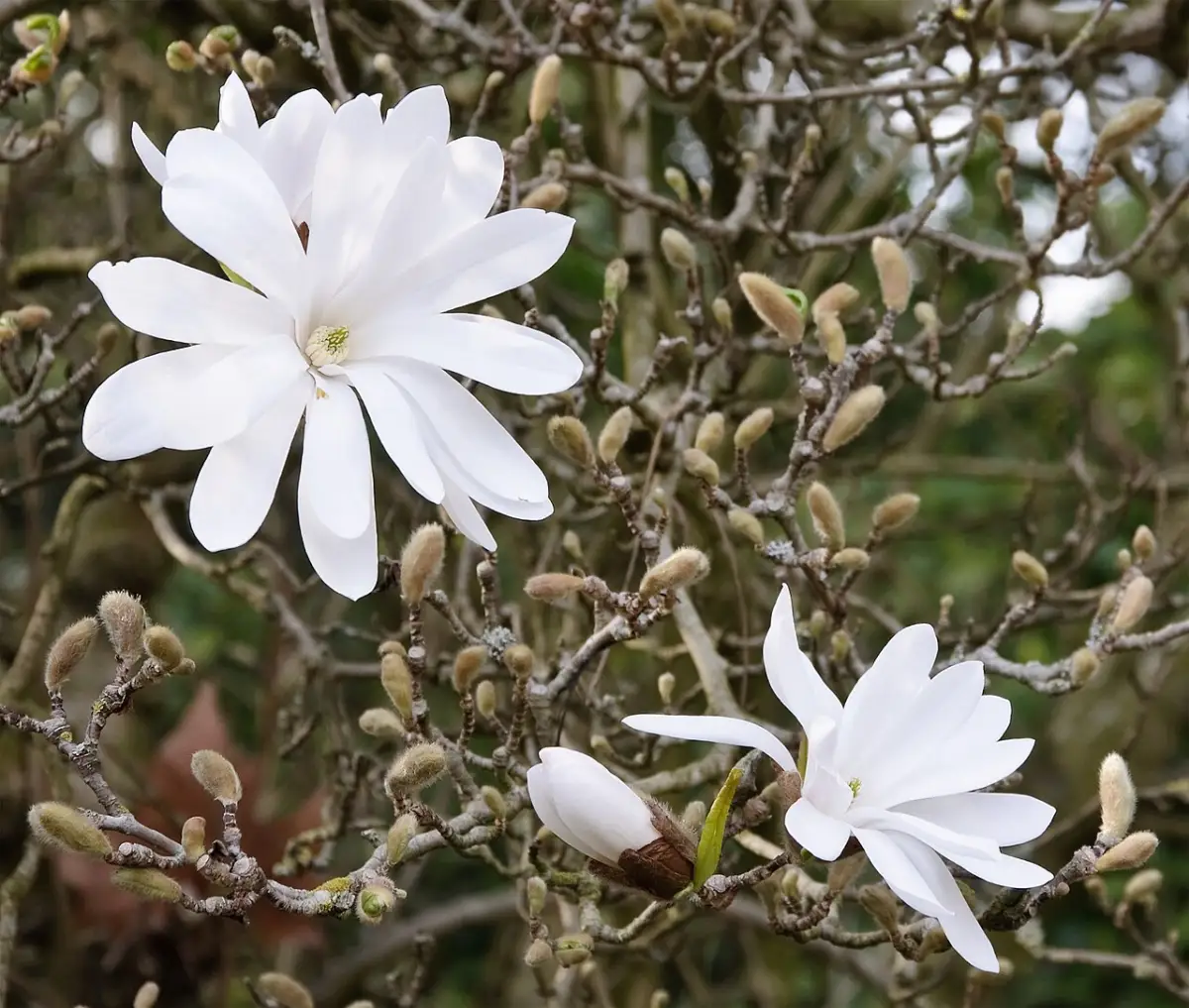
| Star magnolia | Magnolia stellata | Deciduous, small oval leaves | White or pale pink, many thin strap-like tepals | Late winter to early spring, before leaves | Purity, new beginnings |
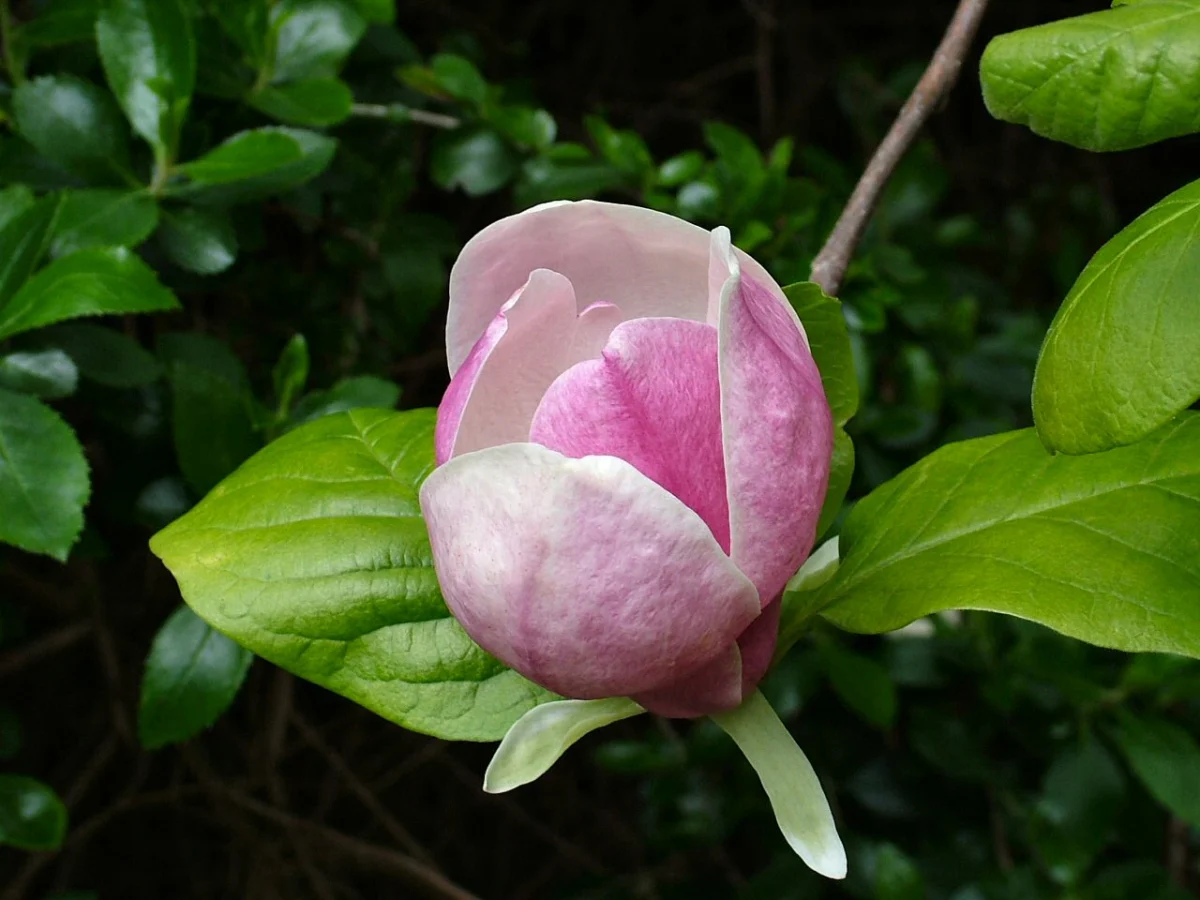
| Saucer magnolia | Magnolia × soulangeana | Deciduous, broad oval leaves | Large cups, pink to purple outside, pale inside | Late winter to early spring, before leaves | Joy, affection |
| Lily magnolia | Magnolia liliiflora | Deciduous, pointed oval leaves | Slender, deep purple, lily-like | Spring | Nobility |
| Cucumber tree | Magnolia acuminata | Deciduous, large thin leaves | Greenish yellow, high in the canopy | Late spring | Luck, health (modern) |
Readers in the Southern Hemisphere (Australia, New Zealand, South Africa, Argentina) see the same sequence about six months later, so deciduous magnolias flower there roughly from late winter into early spring, around August to October. Feature-based checks like these work the same way as our guide on how to identify hibiscus: look at several parts, not just the flower color.
Magnolia vs Tulip Tree: The Most Common Mix-Up
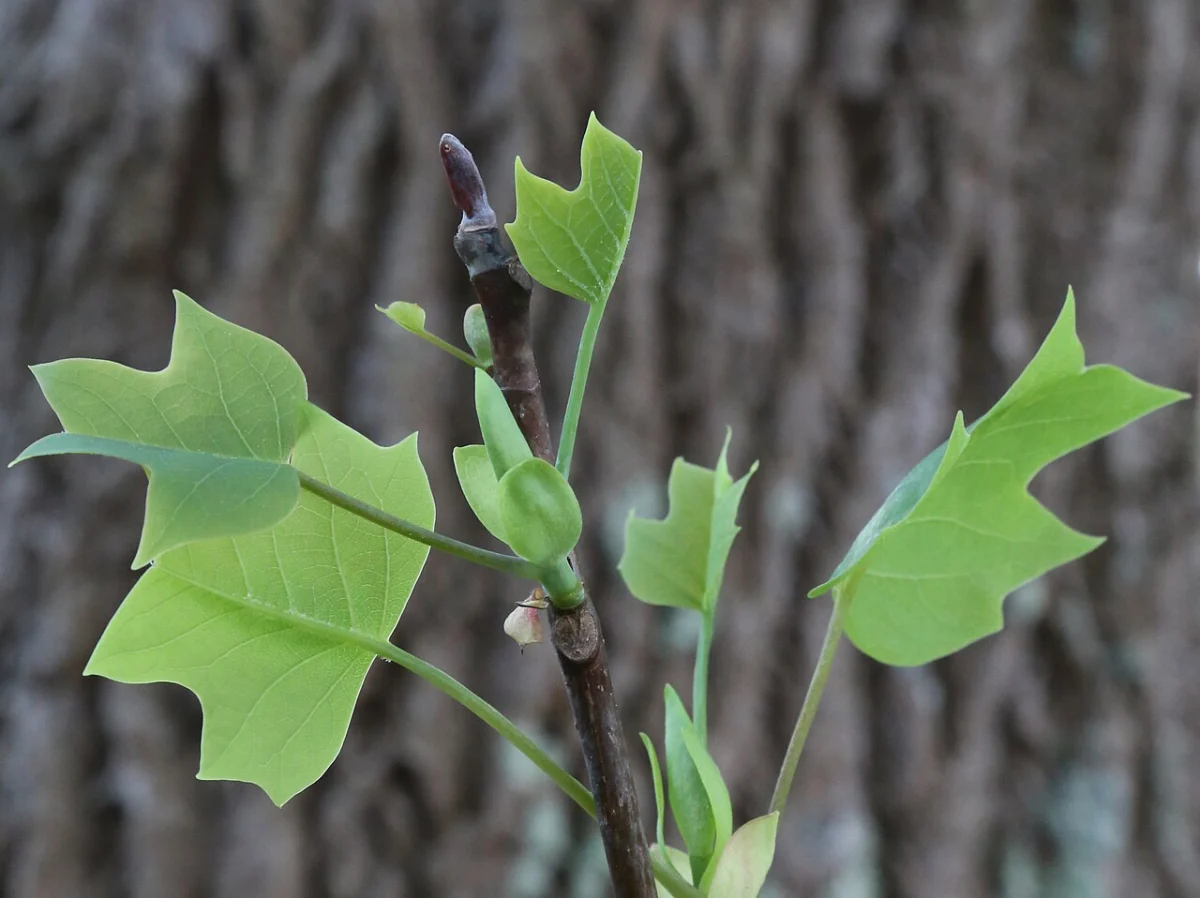
The tulip tree (Liriodendron tulipifera) is in the same family, Magnoliaceae, and is sometimes called “tulip magnolia.” To add to the confusion, the saucer magnolia is also nicknamed “tulip tree” in parts of the United States. The leaf settles it in seconds.
| Feature | Magnolia (most species) | Tulip tree (Liriodendron tulipifera) |
|---|---|---|
| Leaf shape | Simple oval or elliptic, smooth edge, pointed or rounded tip | Four lobes with a flat or notched tip, like a cut-off tulip |
| Flower color | White, cream, pink, purple, sometimes yellow | Greenish yellow with an orange band at the base |
| Flower timing | Many deciduous types bloom on bare wood | Late spring to early summer, after leaves are out |
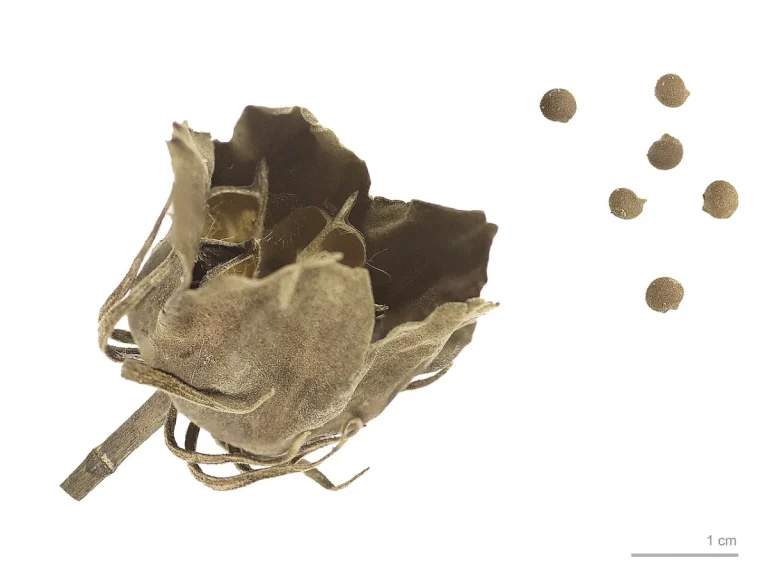
| Fruit | Cone-like cluster that splits to show red seeds (Southern magnolia) | Dry, upright cone of winged seeds |
| Symbol | State flower of Mississippi and Louisiana | State tree of Kentucky, Tennessee and Indiana |
NC State Extension’s tulip poplar profile confirms the family link and the state-tree status. If your tree has four-lobed leaves, the magnolia meanings above do not apply to it.
Choosing Magnolias for Gifts and Occasions
Magnolias suit most occasions because their core meanings are positive and dignified. The suggestions below are modern florist practice, not ancient custom.
| Occasion | Best choice | Why it fits |
|---|---|---|
| Wedding | White Southern magnolia or star magnolia stems | Purity and dignity; strong presence in a bouquet |
| New baby | White or soft pink magnolia | New beginnings and gentle joy |
| Anniversary | Pink or purple magnolia | Lasting affection and respect |
| Housewarming | A young magnolia tree or a magnolia leaf wreath | Hospitality and stability |
| Sympathy | White magnolia or Southern magnolia leaves | Dignity and endurance through a hard time |
| Encouragement | Sweetbay or any white magnolia | Perseverance, the Victorian meaning |
Cut Southern magnolia flowers bruise brown at a touch and last only a day or two in a vase. The glossy, two-toned leaves last far longer, which is why they are popular in winter wreaths. If you are giving a tree, check that it suits the recipient’s climate and the best time to plant trees where they live.
Magnolia Meanings in Tattoos, Names and Dreams
These meanings are personal and modern, so read them as interpretation rather than tradition.
- Tattoos: most people choose a magnolia for strength with grace, resilience after hardship, or as a tribute to a mother or grandmother. The color reading from the table applies if the tattoo is in color.
- Names: Magnolia as a given name carries the flower’s dignity and, in the United States, a Southern association.
- Dreams: some dream guides read a blooming magnolia as inner strength or hope. There is no historical or scientific basis for dream meanings, so treat them as reflection only.
One common claim worth questioning: popular feng shui advice says a magnolia in front of the house brings peace and one behind it brings wealth. Petal Republic, which traced magnolia meanings to their sources, notes that no classical feng shui text names the magnolia, so treat this as modern folklore.
Are Magnolias Safe Around Pets and Children?
Star magnolia (Magnolia stellata) is listed as non-toxic to dogs, cats and horses by the ASPCA. Other magnolia species are not on the ASPCA toxic or non-toxic lists, so their safety is not confirmed either way.
The ASPCA also notes that eating any plant material can upset a dog’s or cat’s stomach. Keep fallen seed pods and petals away from pets that chew, and do not let children eat any part of a magnolia, even though some species are used in cooking.
If a person or pet has eaten part of a plant and shows symptoms, contact your local poison control center or your vet right away. In the US, the ASPCA Animal Poison Control Center is at (888) 426-4435. For a plant that is genuinely dangerous to compare against, see our oleander care and safety guide, and for a common houseplant question, are snake plants toxic to cats.
How to Check Which Magnolia You Have
You can usually identify a magnolia to species in a few minutes. Follow these steps in order.
- Look at the leaves first. Simple oval leaves with a smooth edge point to a magnolia. Four-lobed leaves mean a tulip tree.
- Turn a leaf over. Rusty-brown fuzz suggests Southern magnolia; a pale, silvery underside suggests sweetbay.
- Note when it flowers. Blooms on bare branches in late winter or early spring suggest star, saucer or Yulan magnolia. Big white flowers among evergreen leaves in early summer suggest Southern magnolia.
- Look at the tepals. Many thin, strap-like tepals mean star magnolia; large cups mean saucer magnolia. Magnolias have tepals, flower parts where petals and sepals look alike.
- Check the fruit in autumn. A cone-like cluster with bright red seeds is typical of Southern magnolia.
- Take two clear photos. Photograph the flower and a single leaf (top and underside) in daylight, then run them through our flower identifier or leaf identifier.
Photo identification, including our tool, can be wrong, especially with hybrids and named cultivars. When safety matters, confirm with a local nursery, an extension office or a botanical garden.
The Takeaway
The most historically grounded message a magnolia sends is dignity, perseverance and love of nature. Add the color reading if it fits the person, check which species you have so the meaning matches the flower, and keep seed pods and petals away from pets that chew.
Frequently Asked Questions
What does a magnolia flower symbolize?
A magnolia symbolizes dignity, perseverance and love of nature, the meanings given in Victorian flower dictionaries and Japanese hanakotoba. Purity, nobility and feminine strength are common modern additions.
What does a white magnolia mean?
A white magnolia stands for purity and new beginnings, which is why white Southern magnolia and star magnolia are popular in wedding bouquets. Japanese flower lists also link white magnolias with nobility.
Are magnolias good for a funeral or sympathy gift?
Yes. White magnolias and Southern magnolia leaves carry dignity and endurance, so they suit sympathy arrangements. Cut Southern magnolia flowers bruise easily, so many florists use the long-lasting leaves instead.
Is a tulip tree a magnolia?
No. The tulip tree (Liriodendron tulipifera) is in the same family, Magnoliaceae, but a different genus. Its four-lobed leaves and greenish-yellow flowers with an orange band tell it apart from magnolias.
Are magnolias toxic to cats and dogs?
The ASPCA lists star magnolia (Magnolia stellata) as non-toxic to dogs, cats and horses. Other species are not listed either way, and eating any plant can upset a pet’s stomach, so call a vet if a pet shows symptoms.
Featured image: Photo: Ianaré Sévi / Wikimedia Commons, CC BY-SA 3.0

One Comment