Schefflera Arboricola Care: Light, Water and Leaf Drop Fixes for Dwarf Umbrella Trees
Schefflera arboricola, the dwarf umbrella tree, is one of the easiest indoor trees to keep alive, but it is also one of the quickest to drop leaves when something is off. Most problems come down to three things: not enough light, watering on a schedule instead of by feel, and cold drafts.
This guide gives you one clear routine, a way to confirm you have the right plant, and a symptom table that tells you why leaves are falling and what to change first.
Quick Answer: How to Care for Schefflera arboricola
Give Schefflera arboricola bright, filtered light for at least 3 to 4 hours a day, and keep it out of hot afternoon sun. Water thoroughly only when the top 2.5 to 5 cm (1 to 2 inches) of soil is dry, then empty the saucer. Keep it between 16 and 24°C (60 to 75°F), never below 10°C (50°F), and feed monthly in spring and summer only.
- Light: bright indirect or filtered light; variegated types need more light than green ones.
- Water: soak, drain, then wait until the top layer dries; water about half as often in winter.
- Humidity: normal room humidity works; 40 to 60% keeps spider mites down.
- Soil: fast-draining potting mix in a pot with drainage holes.
- Feeding: balanced liquid fertilizer once a month from spring to late summer.
- Safety: toxic to cats and dogs if chewed, according to the ASPCA.
Confirm You Have Schefflera arboricola
Schefflera arboricola is an evergreen shrub in the Araliaceae (ginseng and ivy) family, native to Taiwan and Hainan in southern China. Botanists now list its accepted name as Heptapleurum arboricola, but nurseries still sell it as Schefflera arboricola, dwarf schefflera, dwarf umbrella tree, Hawaiian umbrella tree or octopus tree. If you are curious about its plant family, our guide on how to identify a ginseng plant shows the same palmate leaf pattern in a wild relative.
Plant tags often just say “Schefflera”, and the larger Australian umbrella tree (Schefflera actinophylla, also listed as Heptapleurum actinophyllum) is sold under the same name. Care is similar, but size, leaf thickness and pruning needs differ, so it helps to know which one you own.
Dwarf umbrella tree vs Australian umbrella tree
The fastest way to tell them apart is the size of each leaflet. Count and measure the leaflets on one mature leaf, not on a new shoot, because young leaves have fewer and smaller leaflets.
| Feature | Dwarf umbrella tree (Schefflera arboricola) | Australian umbrella tree (Schefflera actinophylla) |
|---|---|---|
| Leaflets per leaf | 7 to 11, usually 7 to 9 | 7 or more, up to about 12 on old plants |
| Leaflet length | About 5 to 11 cm (2 to 4.5 inches) | Up to about 30 cm (12 inches) |
| Leaf texture | Thick, glossy, rounded tips | Leathery, glossy, longer and drooping |
| Indoor height | About 1.2 to 1.8 m (4 to 6 feet) | About 2.4 to 3 m (8 to 10 feet) |
| Growth habit | Bushy, many stems, easy to keep small | Upright, tree-like, fewer stems |
| Native range | Taiwan and Hainan | Australia and New Guinea |
Leaflet counts and sizes come from NC State Extension and Clemson Cooperative Extension. If you still are not sure, a clear daylight photo of one whole leaf in our plant identifier or leaf identifier can help narrow it down. Photo identification, including our tool, can be wrong, so treat the result as a starting point when safety matters.
Common cultivars you may have
Most garden-centre plants are the plain green form or one of a few named selections. NC State Extension lists these cultivars:
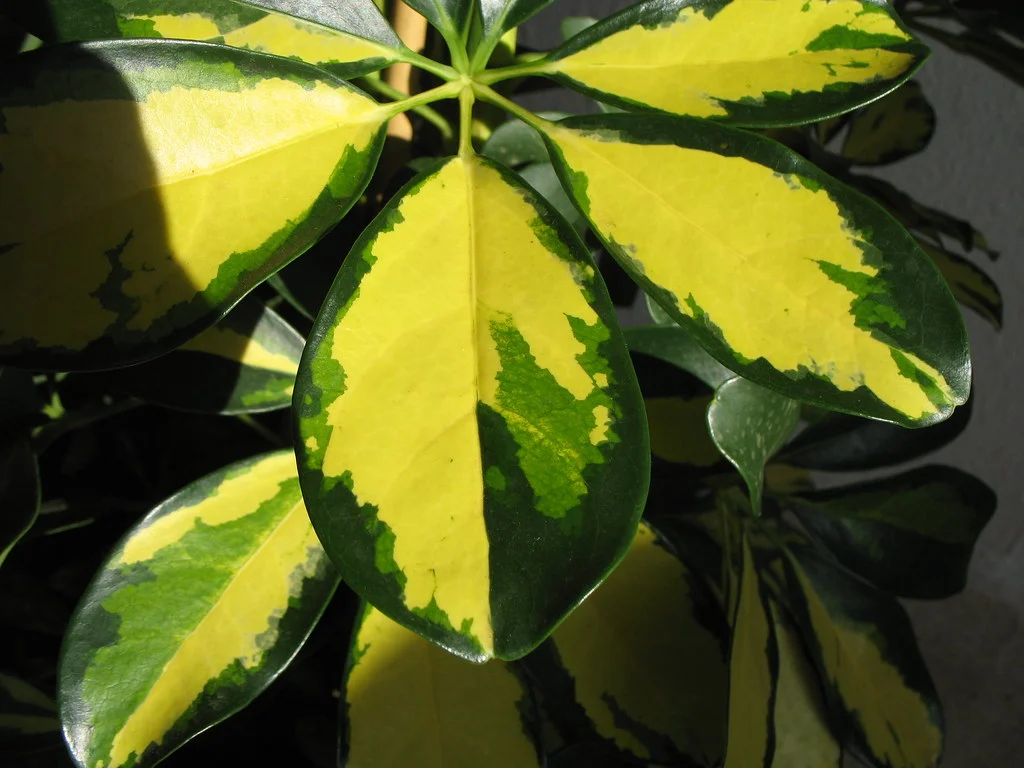
- ‘Gold Capella’: gold and green variegated leaflets.
- ‘Trinette’: cream and green variegation.
- ‘Variegata’: medium green with cream to yellow patches.
- ‘Compacta’: small plant with dense clusters of green leaves.
- ‘Dazzle’: heavily variegated, some leaves almost fully cream.
Variegated plants have less green tissue to make energy, so they need brighter light and lose leaves faster in a dim room.
Light Needs: Bright, Filtered and Steady
Schefflera arboricola grows best with 3 to 4 hours of bright, filtered light each day, such as near an east, south or west window behind a sheer curtain, as NC State Extension advises. Direct midday or afternoon sun through glass can scorch the leaflets, especially in hot climates.
Low light is the most common hidden cause of trouble. In a dim spot the plant stretches, spaces its leaves far apart, drops lower leaves and loses variegation on new growth. Clemson Extension notes that low light causes leaf yellowing with spindly, weak stems.
Stop leaning and legginess
Stems bend toward the brightest window, so a plant lit from one side grows lopsided. Turn the pot a quarter turn every week or two so every side gets light.
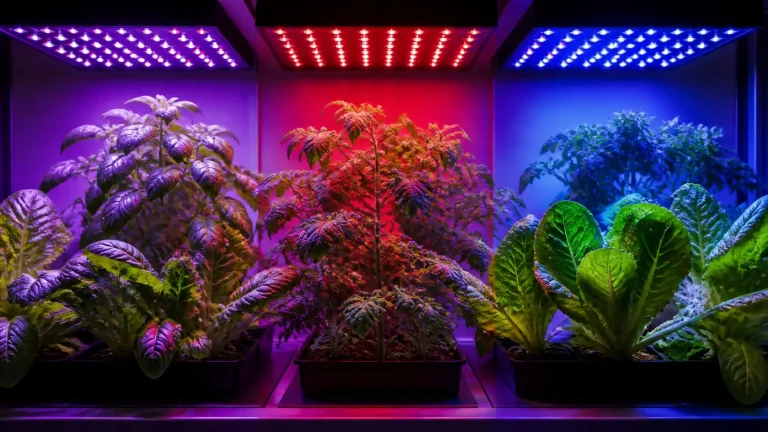
If your room is dark, a full-spectrum LED grow light 30 to 60 cm (1 to 2 feet) above the canopy for 10 to 12 hours a day can replace a weak window. Our guide on what color light is best for plant growth explains which bulbs to choose.
In my experience, placing an indoor plant in a spot with indirect sunlight makes a visible difference in how it grows. Moving a stretched plant closer to a bright window often does more than any fertilizer.
How to Water Schefflera arboricola
Water Schefflera arboricola deeply, then let the top 2.5 to 5 cm (1 to 2 inches) of soil dry before watering again. NC State Extension describes the same pattern: let the soil dry, then soak it thoroughly.
Published advice ranges from letting only the top 1 cm dry to letting the pot get nearly dry. The 2.5 to 5 cm rule sits in the middle and works for most homes, but the test below matters more than any number of days.
The finger test, step by step
- Push a finger into the soil near the edge of the pot, about 5 cm (2 inches) deep.
- If it feels dry and slightly warm, water. If it feels cool or damp, wait two or three days and test again.
- Pour room-temperature water slowly over the whole soil surface until it runs out of the drainage holes.
- After 10 to 15 minutes, empty the saucer or cachepot. Never leave the pot standing in water.
- For a large pot, a cheap moisture meter or a wooden skewer pushed to the bottom shows whether the lower roots are still wet.
I have learned that checking the soil before watering is the simplest way to prevent overwatering. It takes ten seconds and removes most of the guesswork that leads to root rot.
Adjusting by season and room
- Spring and summer: growth is fast, so the soil dries quicker. In a warm, bright room this may mean watering every 5 to 10 days.
- Autumn and winter: growth slows. Expect to water about half as often, and test before every watering.
- Low light: a plant in a dim room uses less water, so it stays wet longer and is more likely to rot.
- Hot, dry summers (for example in Pakistan, India, the Middle East or the US Southwest): pots dry very fast near windows and air conditioning. Check every 2 to 3 days rather than assuming a weekly schedule.
Overwatering shows as yellowing lower leaves, soft dark stems and leaves that turn black before falling. Underwatering shows as limp, wrinkled or crisp new leaves and soil pulling away from the pot.
Humidity and Temperature
Schefflera arboricola tolerates normal indoor humidity, but 40 to 60% relative humidity keeps leaves glossy and helps prevent spider mites. Keep the plant between 16 and 24°C (60 to 75°F) for steady growth.
- Cold limit: Clemson Extension advises keeping scheffleras above 10°C (50°F); cold exposure causes dead patches on leaves a few days later.
- Drafts: keep the pot away from air conditioning vents, heaters, radiators and doors that open to cold air.
- Raising humidity: a pebble tray (water below the top of the pebbles) or a small humidifier works better than misting. Mist evaporates within minutes, so it changes humidity only briefly.
In heated winter rooms in Europe, Canada or the northern US, the air is often drier than in summer. That is when spider mites tend to appear, so check leaf undersides more often.
Soil, Pot and Repotting
Use a well-draining potting mix rich in organic matter. A simple blend is two parts general potting soil to one part perlite or coarse bark, which holds some moisture but lets excess water drain quickly.
- Always use a pot with drainage holes.
- Choose a heavy pot (terracotta or glazed ceramic) for tall plants so they do not tip over.
- Repot every 2 to 3 years in spring, or when roots circle the pot or grow out of the holes.
- Move up only one pot size, about 2 to 5 cm (1 to 2 inches) wider. A pot that is too large stays wet and invites root rot.
- Skip fertilizer for 6 to 8 weeks after repotting, since fresh mix already contains nutrients.
Some leaf drop right after repotting is common transplant stress. Water the plant the day before repotting and disturb the roots as little as possible to reduce it.
Feeding: When and How Much
Feed Schefflera arboricola once a month in spring and summer with a balanced liquid houseplant fertilizer at the strength on the label, or at half strength if you prefer slower, more compact growth. Stop feeding in autumn and winter, when growth slows and unused salts can burn roots.
Clemson Extension notes that plants in lower light need less fertilizer than plants in bright light. If leaves are pale or the plant is leggy, improve the light first, because fertilizer cannot make up for too little light.
Every few months, flush the pot by running plain water through the soil for a minute to wash out built-up salts. White crust on the soil or pot rim is a sign it is due.
Pruning for a Fuller, Bushier Plant
Pruning is how you turn a tall, sparse schefflera into a dense shrub. New shoots grow from the nodes just below each cut, so every cut creates more branches.
- Prune in spring or early summer, when the plant can recover quickly.
- Use clean, sharp pruners wiped with rubbing alcohol.
- Cut each stem about 1 cm (half an inch) above a leaf node, where a leaf stalk joins the stem.
- Remove no more than about one third of the plant at a time.
- Pinch out the growing tips of tall stems to stop upward growth and encourage side shoots.
Wear gloves if you have sensitive skin. NC State Extension notes that the sap can cause skin irritation (contact dermatitis) in some people.
Propagating from Stem Cuttings
Stem cuttings are the easiest way to grow a new Schefflera arboricola, and your spring prunings are ideal material. Air layering and seed also work but are slower.
- Take a 10 to 15 cm (4 to 6 inch) cutting from a healthy, semi-firm stem, cutting just below a node.
- Remove the lower leaves, leaving one or two leaves at the top.
- Dip the cut end in rooting hormone (optional but helpful).
- Insert the cutting in moist, well-draining mix, or stand it in a jar of water and change the water weekly.
- Cover with a clear plastic bag or container to hold humidity, and keep it in bright, indirect light at about 18 to 24°C.
- Look for roots or new leaves after several weeks, then remove the cover and pot it up.
Leaf Drop Decoder and Other Common Problems
Leaf drop is the most common Schefflera arboricola complaint, and where the leaves fall from tells you most about the cause. Losing a few old lower leaves after you bring a plant home or move it is usually adjustment, not disease.
| What you see | Likely cause | First fix |
|---|---|---|
| Lower leaves yellow and drop, top looks fine | Overwatering, often with low light | Let the top 5 cm dry, move closer to a window |
| Many leaves drop in the first 1 to 3 weeks at home | Environmental shock from a new spot | Keep it in one bright spot, avoid moving it, water by the finger test |
| Green leaves drop suddenly in cold weather | Cold draft or chilling below about 10°C (50°F) | Move away from cold windows, doors and AC vents |
| Leaves turn black or dark before falling | Overwatering, possible root rot | Check roots; trim mushy brown roots and repot in fresh, dry mix |
| New leaves at the top dry and blacken | Severe underwatering or dry root ball | Soak the whole pot, then return to regular checks |
| Long bare stems, small sparse leaves | Too little light | Brighter spot or grow light, then prune |
| Variegation fading on new growth | Too little light | Move to brighter filtered light |
| Fine webbing, pale speckled leaves | Spider mites | Rinse leaves, raise humidity, treat with insecticidal soap |
| Sticky leaves, black sooty film | Scale or mealybugs producing honeydew | Wipe off insects, treat with soap or horticultural oil |
| Brown spots with yellow rims | Leaf spot disease from wet foliage | Remove spotted leaves, keep foliage dry, improve airflow |
For more on yellowing in general, see why are my plant leaves turning yellow. The same light and draft logic also applies in our croton petra leaf drop fixes.
How to check it yourself
Before changing anything, look at the plant for a minute and answer three questions. Is the soil wet or dry 5 cm down? Has the plant been moved, repotted or exposed to cold in the past month? Are there webs, bumps or sticky spots under the leaves?
I believe observing plants regularly and adjusting care to what they show is the most reliable approach. Change one thing at a time and give the plant two to three weeks to respond before changing something else.
Pests and Diseases
NC State Extension lists red spider mites, mealybugs and scale as the main pests of dwarf umbrella tree, and thrips also appear on indoor plants. Disease is rare indoors when leaves stay dry and the soil drains well.
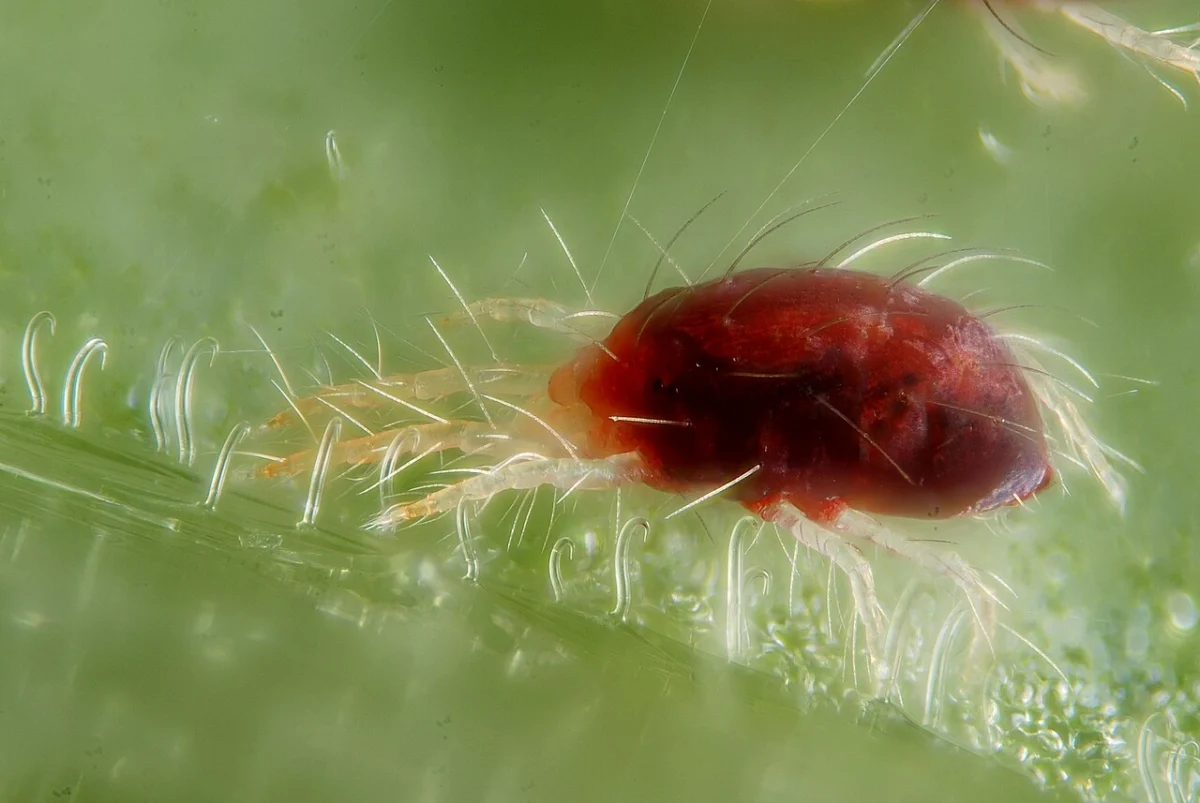
- Spider mites: tiny dots and fine webbing under leaves, with pale stippling on top. They spread fastest in warm, dry air.
- Scale insects: brown, oval, shell-like bumps along stems and leaf midribs, often with sticky honeydew.
- Mealybugs: white, cottony clusters in leaf joints and stem crevices.
- Thrips: silvery scarring and distorted new leaves.
- Leaf spot (bacterial or Alternaria): dark spots, sometimes with a yellow halo, usually after water sits on leaves.
- Root rot: wilting despite wet soil, with brown, mushy roots.
For most pests, isolate the plant, rinse the foliage in the shower, then treat with insecticidal soap or neem-based spray following the label, repeating weekly for several weeks. Dab scale and mealybugs with a cotton swab dipped in rubbing alcohol. Our guide on getting rid of aphids on indoor plants covers the same soap methods.
Is Schefflera arboricola Toxic to Pets and People?
Yes. The ASPCA lists Schefflera as toxic to dogs and cats because it contains calcium oxalate crystals. Chewing the leaves can cause intense mouth irritation, drooling, vomiting and difficulty swallowing.
- Cats and dogs: toxic if chewed or eaten (ASPCA).
- Horses: Gardeners’ World also lists the plant as toxic to horses.
- Children and adults: NC State Extension rates the poison severity as low, but chewing causes mouth and throat irritation, and the sap can irritate sensitive skin.
Keep the plant out of reach of pets and small children, and wear gloves when pruning. If a person or pet chews the plant and shows symptoms, contact a poison control center or your vet right away; in the US, the ASPCA Animal Poison Control line is (888) 426-4435. If you want pet-safe options, see whether common houseplants are safe in are snake plants toxic to cats.
Growing Schefflera arboricola Outdoors by Climate
Schefflera arboricola can live outdoors all year only where winters stay frost-free. NC State Extension lists USDA hardiness zones 9b to 12b, and outdoors it can reach 3 to 7.5 m (10 to 25 feet) in tropical areas.
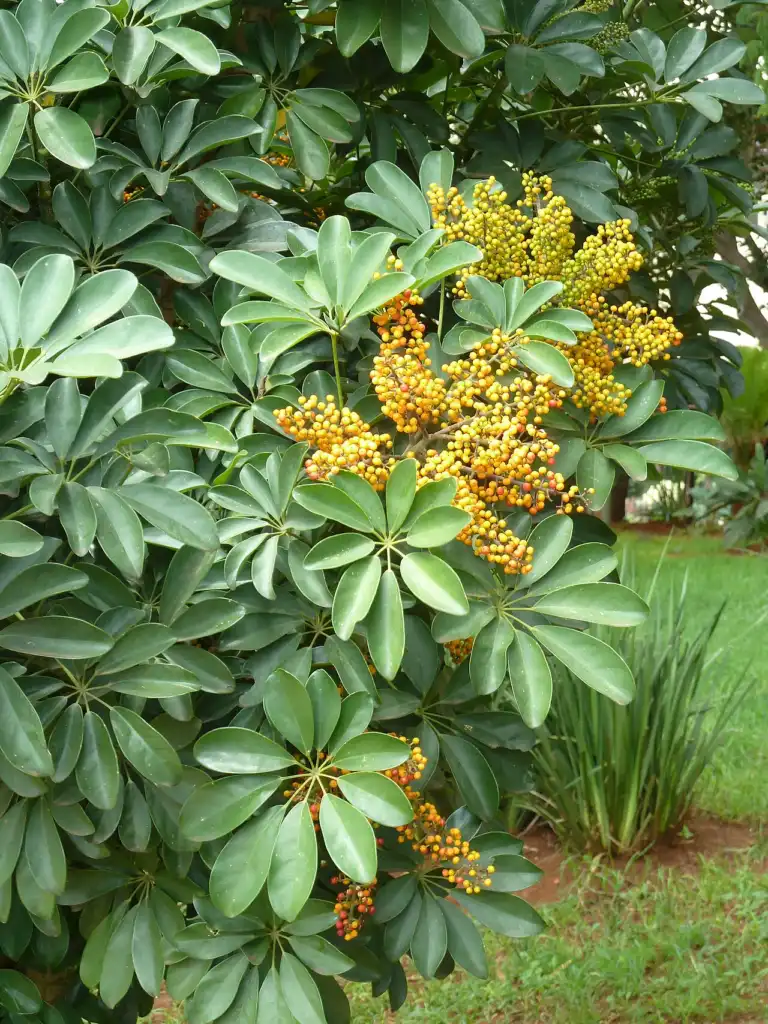
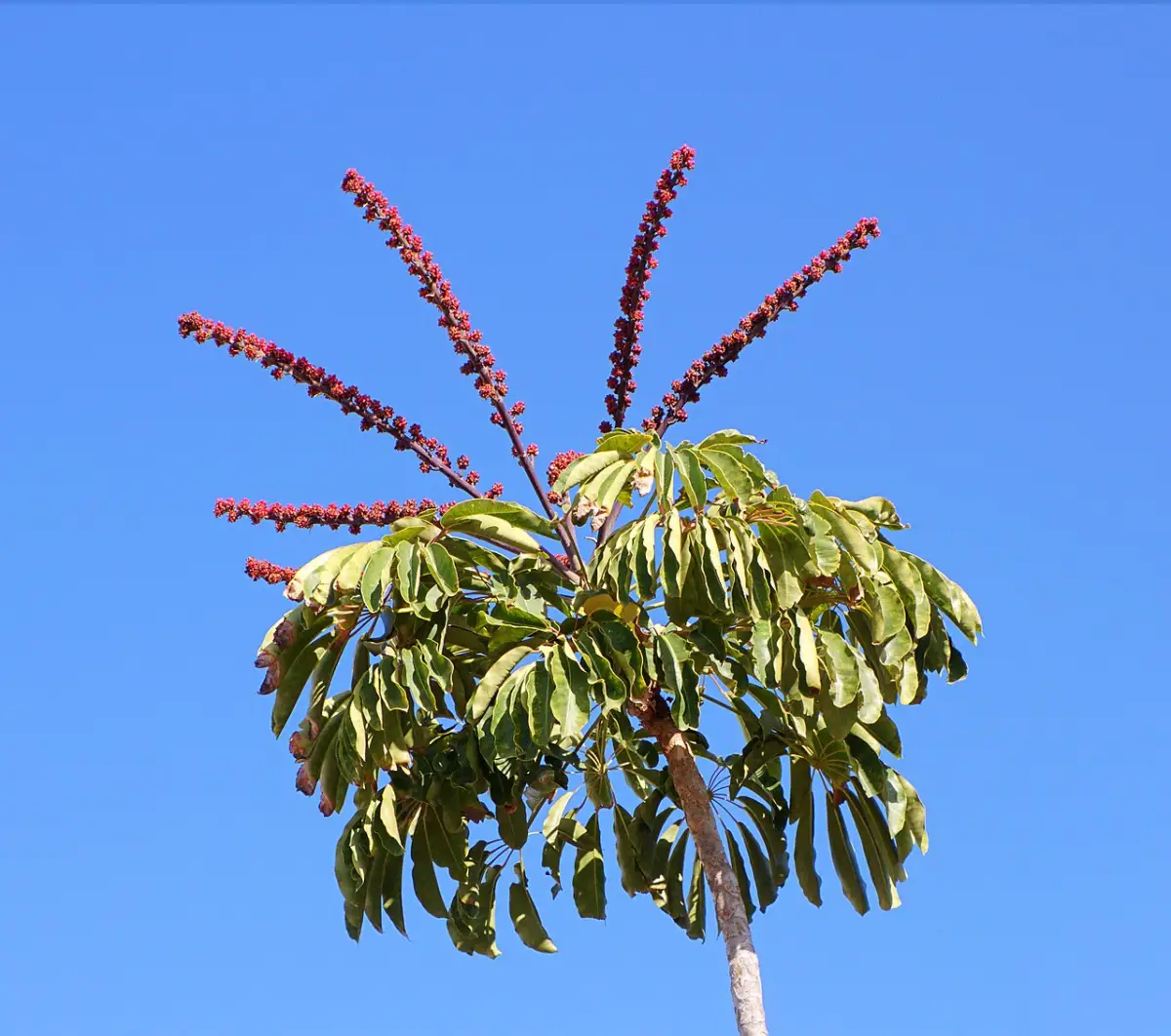
Outdoor plants can flower in summer with tiny red flowers in branched clusters, followed by small round orange fruits that turn black when ripe. Indoor plants rarely flower.
- Tropical and subtropical gardens (South Florida, Hawaii, coastal Australia, Southeast Asia): grow in partial shade or morning sun as a hedge, screen or specimen. Check local rules, because the larger S. actinophylla is considered invasive in parts of Florida and Hawaii.
- Hot, dry summer regions (Punjab, Sindh, the Gulf, inland California): a shaded patio works, but harsh afternoon sun and hot winds scorch leaves. Use shade cloth and expect to water far more often.
- Cool or temperate climates (UK, Northern Europe, most of the US and Canada): keep it as a houseplant. You can move it outside in summer once nights stay above about 16°C (60°F), as NC State Extension advises, then check for pests before bringing it back in.
Seasonal Care Routine for Schefflera arboricola
Most care mistakes happen when the seasons change, so this table shows what to adjust through the year. Months are for the Northern Hemisphere; shift by six months in the Southern Hemisphere.
| Season | Light | Water | Feeding | Other tasks |
|---|---|---|---|---|
| Spring (Mar to May) | Bright, filtered | Increase as growth starts; finger test | Start monthly | Repot if rootbound, prune, take cuttings |
| Summer (Jun to Aug) | Shade from hot afternoon sun | Most frequent; check every few days in heat | Monthly | Check for spider mites, rotate pot |
| Autumn (Sep to Nov) | Move closer to window as days shorten | Reduce gradually | Stop by early autumn | Bring outdoor plants in before nights drop below 16°C |
| Winter (Dec to Feb) | Brightest spot available | About half as often; test first | None | Keep away from heaters and cold glass, keep above 10°C |
The Key Takeaway
A healthy Schefflera arboricola needs steady bright, filtered light, water only when the top few centimetres of soil are dry, and protection from cold drafts. Most leaf drop traces back to one of those three, and fixing the light usually comes first.
Growing indoor plants has helped me appreciate how small changes in care can support healthier growth. Start with the finger test and a brighter spot, then use the decoder table if leaves keep falling.
Schefflera Arboricola Care FAQs
How often should I water Schefflera arboricola?
Water when the top 2.5 to 5 cm (1 to 2 inches) of soil is dry, rather than on a fixed schedule. In a warm, bright room in summer that may be every 5 to 10 days; in winter it is usually about half as often. Always let excess water drain away.
Why is my dwarf umbrella tree dropping leaves?
The most common causes are low light, overwatering, cold drafts below about 10°C (50°F), and shock after being moved or repotted. Losing a few old lower leaves after a move is normal adjustment; losing many green leaves usually points to light, water or cold.
Is Schefflera arboricola toxic to cats and dogs?
Yes. The ASPCA lists Schefflera as toxic to dogs and cats because of calcium oxalate crystals, which cause mouth irritation, drooling, vomiting and trouble swallowing. Contact your vet if a pet chews the plant and shows symptoms.
Can Schefflera arboricola grow in low light?
It survives in medium light but does not thrive in low light. In dim rooms it stretches, drops lower leaves and loses variegation. Give it at least 3 to 4 hours of bright, filtered light or add a grow light.
How do I make my umbrella plant bushier?
Prune in spring, cutting stems about 1 cm above a leaf node and pinching out tall growing tips. New shoots grow below each cut. Remove no more than about one third at a time and give the plant bright light so the new growth fills in.
What is the difference between Schefflera arboricola and Schefflera actinophylla?
Schefflera arboricola has 7 to 11 short, thick leaflets about 5 to 11 cm long and stays bushy at 1.2 to 1.8 m indoors. Schefflera actinophylla has much longer leaflets up to about 30 cm and grows into a taller, more tree-like plant.
Featured image: Photo: Dandy1022 / Wikimedia Commons, CC BY-SA 4.0