

Tropical Hibiscus Not Blooming? Find the Cause and Get Flowers Back
A tropical hibiscus that grows glossy green leaves but no flowers is almost always telling you about one of a few things: light, feeding, pruning, roots or bugs. The good news is that Hibiscus rosa-sinensis flowers on new growth, so once you fix the real cause, buds usually return within a few weeks of active growth. This guide helps you find which cause applies to your plant instead of trying every fix at once.
Quick Answer: Why Is My Tropical Hibiscus Not Blooming?
A tropical hibiscus usually stops blooming because it gets fewer than 6 hours of direct sun, it is fed too much nitrogen or a high-phosphorus “bloom booster”, or it was pruned or moved recently. If buds form but drop before opening, the cause is more often uneven watering, cold nights, or pests such as aphids, thrips or the hibiscus bud midge.
- No buds at all: check direct sun hours first, then your fertilizer label, then when you last pruned.
- Buds that yellow and fall: check soil moisture swings, night temperatures and the inside of a fallen bud.
- Healthy plant in winter: slow or paused flowering in short, cool days is normal and not a problem to fix.
First, Confirm It Is a Tropical Hibiscus
Check the plant type before troubleshooting, because the three common garden hibiscus bloom on different schedules. A hardy hibiscus with no flowers in May is not a problem at all; it simply has not reached its season yet.
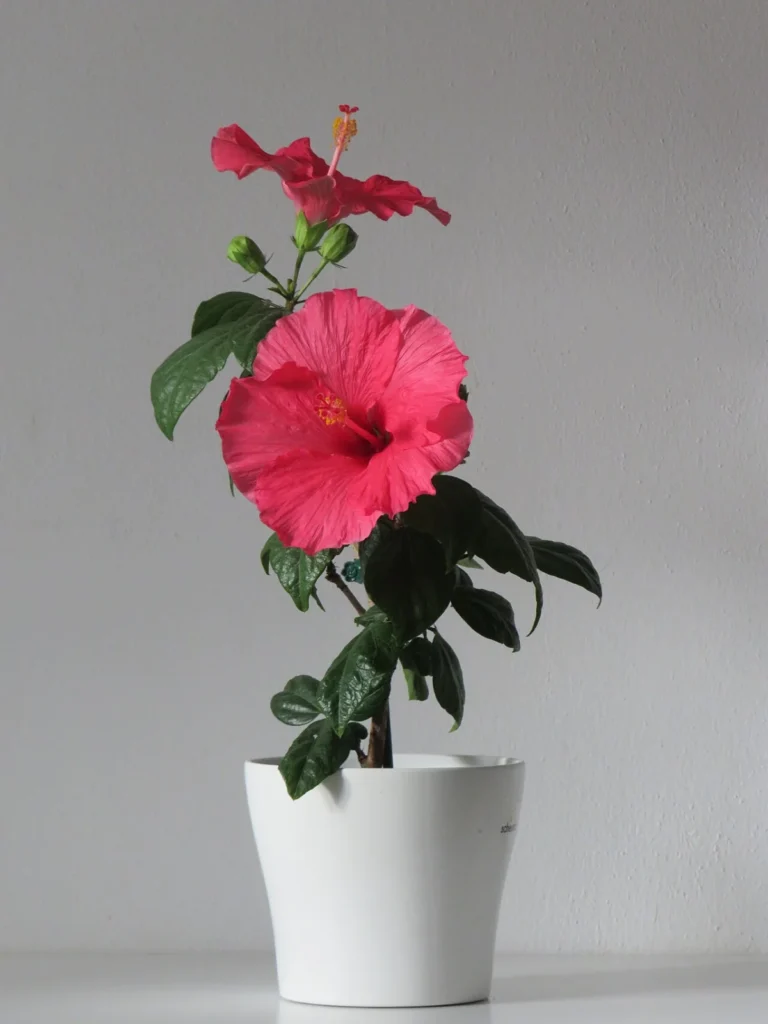
Tropical hibiscus (Hibiscus rosa-sinensis, family Malvaceae) is an evergreen shrub native to Asia with glossy, dark green, toothed leaves arranged alternately on the stem. According to NC State Extension, its funnel-shaped flowers are 3 to 6 inches across with 5 petals and a long central staminal column, and it is hardy only in USDA zones 9 to 11.
| Feature | Tropical hibiscus | Hardy rose mallow | Rose of Sharon |
|---|---|---|---|
| Scientific name | Hibiscus rosa-sinensis | Hibiscus moscheutos (now also listed as Muenchhusia moscheutos) | Hibiscus syriacus |
| Leaves | Glossy, dark green, toothed, evergreen | Dull green to grayish, paler and hairy underneath | Small, 3-lobed, coarsely toothed, deciduous |
| Growth habit | Woody shrub that keeps its leaves | Herbaceous perennial with stems cut back in fall | Upright deciduous shrub or small tree |
| Flower size | 3 to 6 inches | Large, saucer-shaped, up to about 8 inches | 2 to 4 inches |
| Normal bloom time | Spring to fall, nearly year-round in frost-free climates | Summer to early fall | Summer |
| Cold hardiness | USDA zones 9 to 11 | USDA zones 4 to 9 | USDA zones 5 to 9 |

Not sure which one you have? Our guide on how to identify hibiscus walks through leaves and flowers step by step, and you can upload a clear daylight photo to the flower identifier. Photo identification, including our tool, can be wrong, so compare the result with the features in the table above.
Diagnose by Symptom: No Buds or Dropping Buds
The fastest way to find the cause is to split the problem in two: a plant that never sets buds, and a plant that sets buds but loses them. The table below matches what you see to the most likely cause and the first thing to try.
| What you see | Most likely cause | First fix to try |
|---|---|---|
| Lush dark green leaves, long gaps between leaves, no buds | Too little direct sun | Move to a spot with 6 or more hours of direct sun |
| Fast leafy growth right after feeding, no buds | Too much nitrogen | Pause feeding for 2 weeks, then use a lower-nitrogen mix |
| Small or yellowing leaves, few buds, “bloom booster” in use | Excess phosphorus | Flush the pot with plain water and switch fertilizer |
| No buds since a hard cutback | Pruning removed flowering wood | Stop pruning and wait for new shoots to mature |
| Buds turn yellow and drop, soil swings wet to dry | Water stress | Water deeply when the top inch is dry, empty saucers |
| Buds drop after a move or a cold night | Temperature or light shock | Keep the plant in one spot above 50°F (10°C) |
| Buds drop and a tiny maggot is inside when you open one | Hibiscus bud midge | Collect every fallen bud, keep soil surface drier |
| Sticky leaves, insects on bud tips | Aphids, thrips or mealybugs | Rinse with water, then use insecticidal soap or horticultural oil |
Cause 1: Not Enough Direct Sun
Light is the most common reason a healthy-looking tropical hibiscus does not bloom. The plant can grow plenty of leaves in shade, but it needs strong direct light to produce flower buds.
The Smithsonian Gardens care sheet says tropical hibiscus prefers full sun, tolerates light shade, and that more shade means fewer and likely smaller flowers. Most growers aim for at least 6 hours of direct sun a day outdoors.
- Outdoors: count the hours of direct sun on a clear day. Morning sun with light afternoon shade works well in very hot inland climates.
- Indoors: place the plant at a south- or west-facing window in the Northern Hemisphere (north- or west-facing in the Southern Hemisphere). A north window in the Northern Hemisphere is rarely bright enough for steady flowering.
- Grow lights: a full-spectrum light can fill the gap in winter. Our guide to which light color is best for plant growth explains what to look for.
Move a plant into stronger sun gradually over 7 to 14 days. A sudden jump from a dim room to full summer sun can scorch leaves and cause bud drop, which looks like the original problem getting worse.
Cause 2: The Wrong Fertilizer
Feeding problems are the second big cause, and they work in two directions. Too much nitrogen gives you leaves instead of flowers, and too much phosphorus can make flowering worse, not better.
Too much nitrogen
Nitrogen drives leaf and stem growth. If your plant pushes out large, very dark green leaves soon after feeding but no buds, it is likely getting more nitrogen than it can use for flowering. Lawn fertilizer running onto a garden bed is a common hidden source.
Why “bloom booster” fertilizer can backfire
Most general advice says to use a high-phosphorus fertilizer (a big middle number, such as 10-30-20) to force flowers. Tropical hibiscus specialists disagree. Hidden Valley Hibiscus, a specialist grower, recommends medium nitrogen, low phosphorus and high potassium, and warns that high phosphorus can tie up iron and other minerals so the plant becomes yellow and stops blooming.
Gardeners on the UBC Botanical Garden forum report the same pattern: plants fed 15-30-15 dropped buds, and one grower saw flowers return after stopping the high-phosphorus feed. This is grower experience, not a controlled study, and some sources such as the Smithsonian still suggest a higher-phosphorus liquid feed in summer. If a bloom booster has not worked after a few months, it is reasonable to stop it.
What to feed instead
- Flush the pot with plain water until it runs out of the drainage holes for a minute or two. This washes out built-up salts.
- Wait 1 to 2 weeks before feeding again.
- Use a fertilizer labeled for hibiscus or one with low phosphorus and higher potassium, with micronutrients such as iron and magnesium.
- Feed lightly and often in the growing season, for example half strength every 2 weeks, rather than heavy doses now and then.
- Stop or greatly reduce feeding in winter when growth slows.
Coffee grounds and Epsom salt are not reliable bloom fixes. Epsom salt adds magnesium only, which helps only if the plant is actually short of magnesium.
Cause 3: Pruning That Removed the Flowering Wood
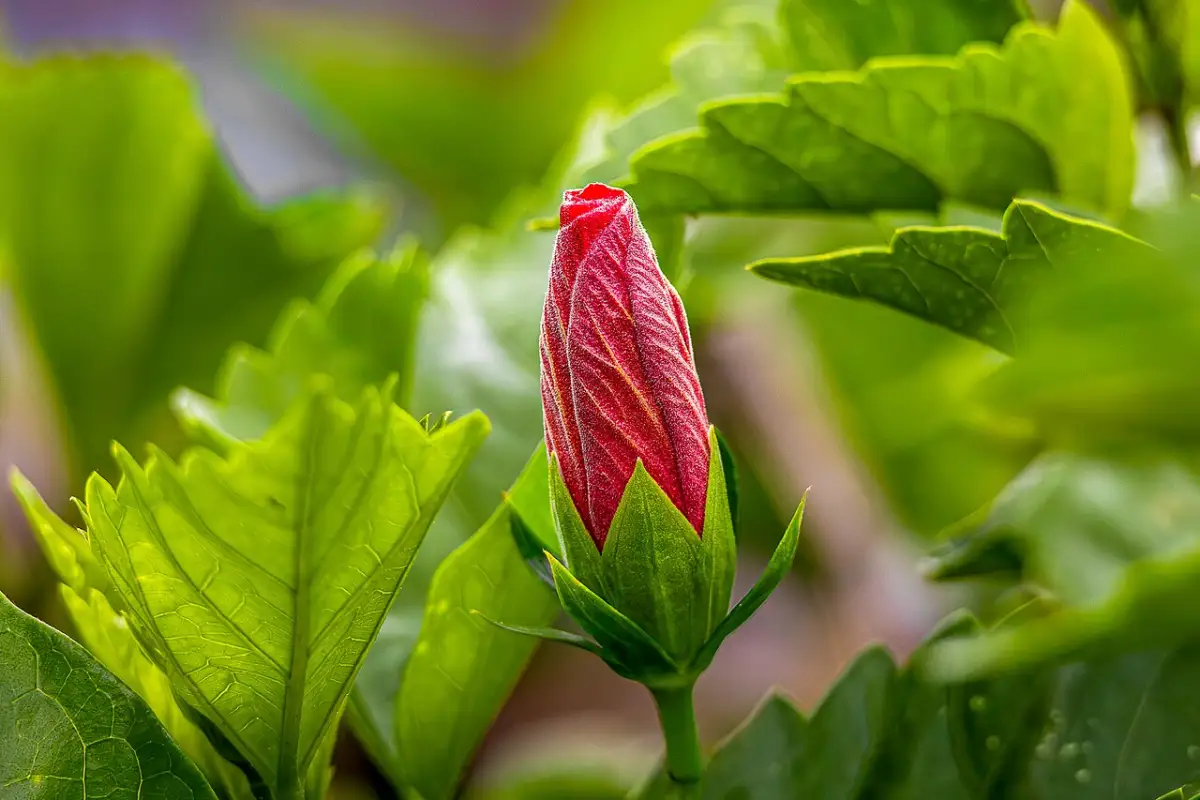
Tropical hibiscus forms flowers at the tips of new growth. Every hard cutback removes the shoots that would have carried buds, so flowering pauses until new stems grow and mature.
The Smithsonian notes that because flowers form on new wood, pruning at any time delays flowering but does not stop it. In practice:
- Do any hard pruning in late winter or early spring, before strong growth starts.
- Avoid hard pruning in midsummer or fall if you want flowers that season.
- Light tip pruning, removing only the last few inches of a stem, makes the plant branch and can give more flower-bearing tips later.
- Remove no more than about one-third of the plant at one time.
Cause 4: Water Swings, Pot Size and Drainage
Uneven watering is the leading reason buds form and then drop. A tropical hibiscus treats a bone-dry pot followed by soggy soil as stress, and it sheds buds first to save itself.
The Smithsonian care sheet advises keeping the root ball evenly moist, checking container plants daily in warm weather, and watering less in cooler months. In my experience with indoor plants, checking the soil before watering is the habit that prevents overwatering most reliably. Push a finger about an inch into the mix and water deeply only when it feels dry at that depth.
- Drainage: use a pot with drainage holes and empty the saucer after watering so roots never sit in water.
- Root-bound plants: if roots circle the pot or poke out of the holes, move up one pot size, about 2 inches wider. Our guide to growing flower plants in pots covers pot choice and mix.
- Pots that are too large: a huge pot holds wet soil around a small root ball, which makes watering hard. Avoid jumping several sizes at once.
- Yellow leaves: if bud drop comes with yellowing foliage, see our guide on why plant leaves turn yellow to separate water problems from nutrient problems.
After repotting, expect a pause in flowering of several weeks while roots grow into the new mix. Do not fertilize a freshly repotted plant as the first fix.
Cause 5: Cold, Heat and Moving the Plant
Tropical hibiscus is sensitive to cold and to sudden changes. Even a brief cold snap can make lower leaves yellow and drop, according to UF/IFAS Gardening Solutions.
- Cool nights: the Smithsonian says the plant prefers temperatures above 50°F (10°C). Below that, growth and flowering slow down.
- Frost: damage is likely below 35°F (about 2°C). Bring container plants indoors before nights reach that range.
- Extreme heat: very hot, dry weather can also cause buds to yellow and drop, especially in containers that heat up in direct sun.
- Moving: NC State Extension notes the plant is sensitive to environmental changes and moving it can cause leaf and bud drop. Pick a spot and leave the plant there.
Overwintering in a cool, dark garage keeps the plant alive but can delay flowering for weeks after it goes back outside. A bright, warm window is better if you want earlier spring flowers.
Cause 6: Pests That Destroy Buds
When buds form and fall while the plant otherwise looks healthy, check for insects. Some pests feed on the outside of buds, and others live inside them where sprays cannot reach.
Aphids, thrips, mealybugs and spider mites
The Smithsonian lists aphids, thrips and spider mites as the main pests of tropical hibiscus, with whiteflies, scale and mealybugs less common. UF/IFAS advises checking leaves and flower buds for clusters of aphids, whiteflies and mealybugs, and notes that black sooty mold on sticky honeydew is a warning sign.

Start with a strong rinse of water, then use insecticidal soap or horticultural oil if needed, following the label. UF/IFAS warns that malathion should never be used on hibiscus. For a full method, see our guide on how to get rid of aphids on indoor plants.
Hibiscus bud midge
The hibiscus bud midge (Contarinia maculipennis) is a tiny fly whose larvae feed inside developing buds. UF/IFAS Nassau County Extension explains that infested buds turn yellow and drop, and the larvae then leave the bud to pupate in moist soil.
To check, split a fallen yellow bud over white paper and look for small pale maggots. Because contact sprays do not penetrate the bud, control depends on collecting every fallen bud and, for plants in the ground, not watering beyond rainfall so the soil surface is less suitable for pupation.
Hibiscus bud weevil
In south Florida, UF/IFAS scientists reported a hibiscus bud weevil in nurseries in Miami-Dade County. Females lay eggs in flower buds, and buds drop before opening. Look for small holes in stems and unopened buds, remove dropped buds, and report suspected finds to your county Extension office.
Cause 7: Plant Age, Double Flowers and the Season
Some non-blooming plants are not sick at all. Three normal factors can explain fewer flowers:
- Young plants: a small rooted cutting may need to build size before it flowers steadily.
- Double-flowered cultivars: UF/IFAS Charlotte County notes that double-flowering hibiscus drop buds more often than single-flowering types.
- Season: in short, cool winter days, flowering slows or stops, especially indoors. In frost-free areas such as South Florida, UF/IFAS says hibiscus blooms nearly year-round.

What to Expect in Your Climate
Where you live changes what “normal” looks like for a tropical hibiscus. Use these as general guides, not fixed rules.
| Climate | Examples | What to expect |
|---|---|---|
| Frost-free tropical and subtropical | South Florida, Hawaii, coastal India, Southeast Asia, northern Australia | Flowers through most of the year; heat, pests and water swings are the main bloom stoppers |
| Hot summers with mild winters | Gulf Coast US, Pakistan, the Middle East, parts of the Mediterranean | Strong spring and autumn flowering; intense midsummer heat and dry wind can cause bud drop, so light afternoon shade and steady watering help |
| Cold winters | Northern US, Canada, the UK, northern Europe | Grown in containers and moved indoors before frost; expect few or no flowers in winter and a flush after the plant goes back into strong summer light |
How to Check It Yourself: A 6-Week Recovery Plan
Change one thing at a time so you know what worked. I believe observing a plant regularly and adjusting care to what it shows you is more useful than any single product, and this plan is built around that.
- Week 1, observe: count direct sun hours, read your fertilizer label, check the roots and inspect bud tips and leaf undersides.
- Week 1, fix light: start moving the plant toward 6 or more hours of direct sun, increasing exposure over 7 to 14 days.
- Week 2, reset feeding: flush the pot and pause fertilizer. Collect any fallen buds and treat visible pests.
- Weeks 3 to 4, steady care: water deeply when the top inch is dry and resume light feeding with a low-phosphorus, potassium-rich fertilizer. Do not prune or move the plant.
- Weeks 5 to 6, look for buds: new shoots should appear first, then small buds at their tips. If nothing has changed after 6 weeks of warm, bright conditions, check the next likely cause in the diagnosis table.
Timing depends on season and temperature. In warm, bright weather a recovering plant can set buds within a few weeks; in cool or short days it may wait until spring.
Is Tropical Hibiscus Safe for Pets?
The ASPCA lists hibiscus (the entry names Hibiscus syriacus, Rose of Sharon, also called Rose of China) as non-toxic to dogs, cats and horses. That entry does not cover every hibiscus species or garden chemicals used on the plant, so treat fertilizer and insecticide residues as the bigger risk. If a pet or person eats part of a plant and shows symptoms, contact your vet or a poison control center.
If you are not sure the plant in your garden is a hibiscus at all, try our leaf identifier with a clear photo, and confirm the result with an expert whenever safety matters.
Key Takeaways
A tropical hibiscus that will not bloom is usually a healthy plant with one limiting factor. Check light first, then fertilizer, then pruning, roots and pests, and give each change several weeks before judging it. Once the plant has bright light, steady moisture and balanced feeding, it will keep producing buds on every new shoot.
Frequently Asked Questions
Why is my hibiscus growing leaves but no flowers?
Leaves without flowers usually mean too little direct sun or too much nitrogen. Give the plant at least 6 hours of direct sun and switch to a fertilizer with moderate nitrogen, low phosphorus and higher potassium.
Why are my hibiscus buds turning yellow and falling off?
Yellow buds that drop are most often caused by uneven watering, sudden temperature changes or a move. If you find a tiny maggot inside a fallen bud, the hibiscus bud midge is the cause, so collect every fallen bud.
Is a high-phosphorus bloom booster good for tropical hibiscus?
Not always. Specialist hibiscus growers recommend low phosphorus and high potassium, and warn that excess phosphorus can tie up iron and reduce flowering. If a bloom booster has not helped after a few months, flush the pot and switch.
How long does it take a hibiscus to bloom again after fixing the problem?
In warm, bright weather new shoots and buds often appear within about 4 to 6 weeks of steady care. In winter or cool weather, flowering may not return until spring.
Does tropical hibiscus bloom in winter indoors?
It can bloom a little at a very bright, warm window or under a grow light, but slower or paused flowering in short, cool winter days is normal and not a sign of a problem.

One Comment