Clerodendrum Bleeding Heart Vine Care: Light, Water, Winter Rest and More Blooms
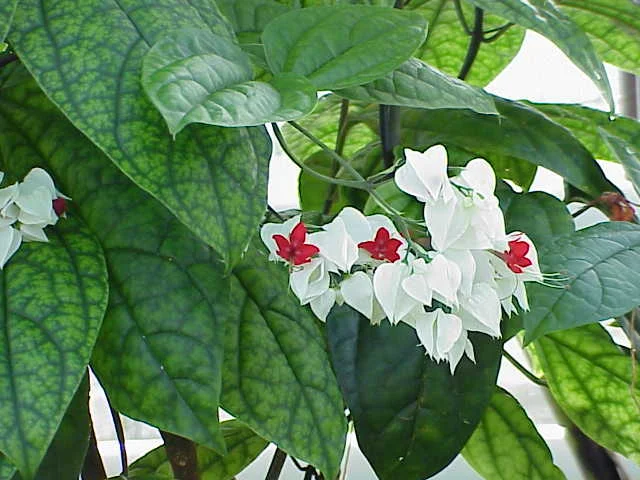
Bleeding heart vine (Clerodendrum thomsoniae) is a tropical climber from West Africa, grown for its clusters of puffy white “bags” with bright red flowers poking out of them. It is easy to keep alive but harder to keep blooming, and most problems come from three things: too little light, wrong winter care and pruning at the wrong time. This guide covers all three, for both indoor growers in cold-winter places and gardeners in frost-free climates.
Quick Answer
To care for a Clerodendrum bleeding heart vine, give it the brightest light it can take without scorching, keep the soil evenly moist but never soggy, and keep it above 45°F (7°C). Feed it monthly from spring to late summer, prune hard after flowering because it blooms on new growth, and let indoor plants rest in a cool room with less water over winter.
- Light: a sunny window indoors; morning sun and afternoon shade outdoors in hot climates.
- Water: water when the top 1 to 2 inches (2.5 to 5 cm) of soil feel dry; much less in winter.
- Temperature: 65 to 80°F (18 to 27°C) in the growing season; bring pots inside below 45°F (7°C).
- Feeding: monthly in spring and summer, none in autumn and winter.
- Pruning: after blooming or in late winter, before new growth starts.
How to Identify Bleeding Heart Vine (Clerodendrum thomsoniae)
Bleeding heart vine is a twining evergreen climber in the mint family (Lamiaceae), though older books still list it under the verbena family (Verbenaceae). It is native to tropical West Africa, from Cameroon to Senegal, and is also called bleeding glory bower, bagflower, glory bower and tropical bleeding heart.
Check these features with your own eyes:
- Leaves: glossy, dark green, oval with pointed tips and smooth edges, 5 to 7 inches (13 to 18 cm) long, according to University of Wisconsin Extension.
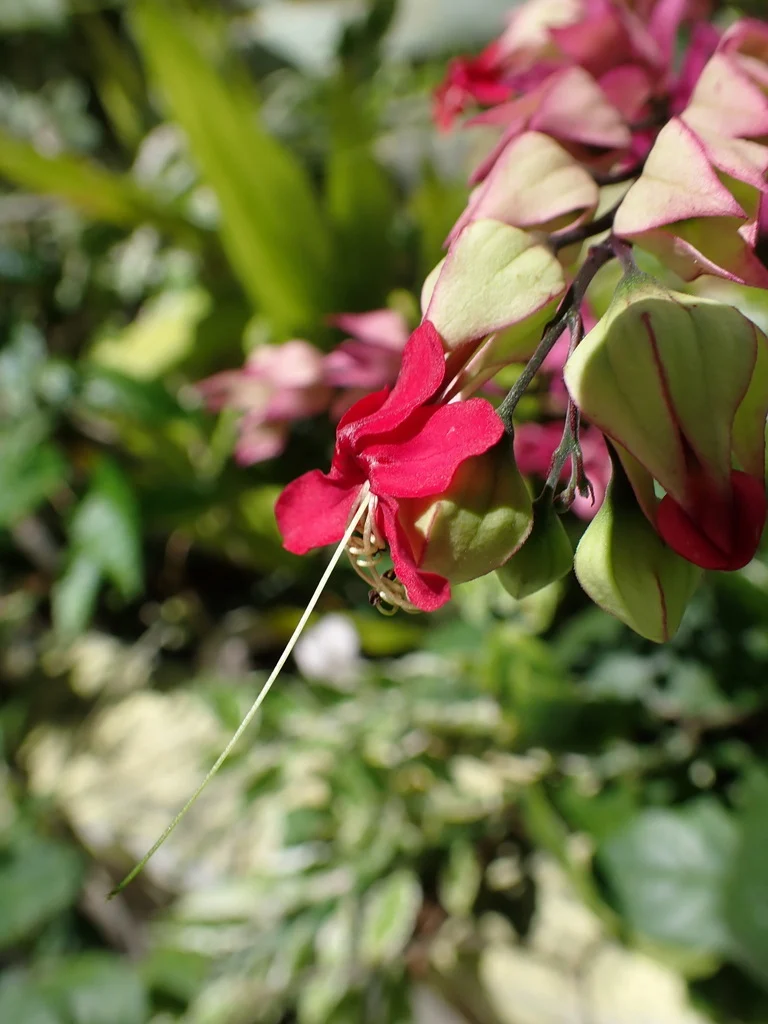
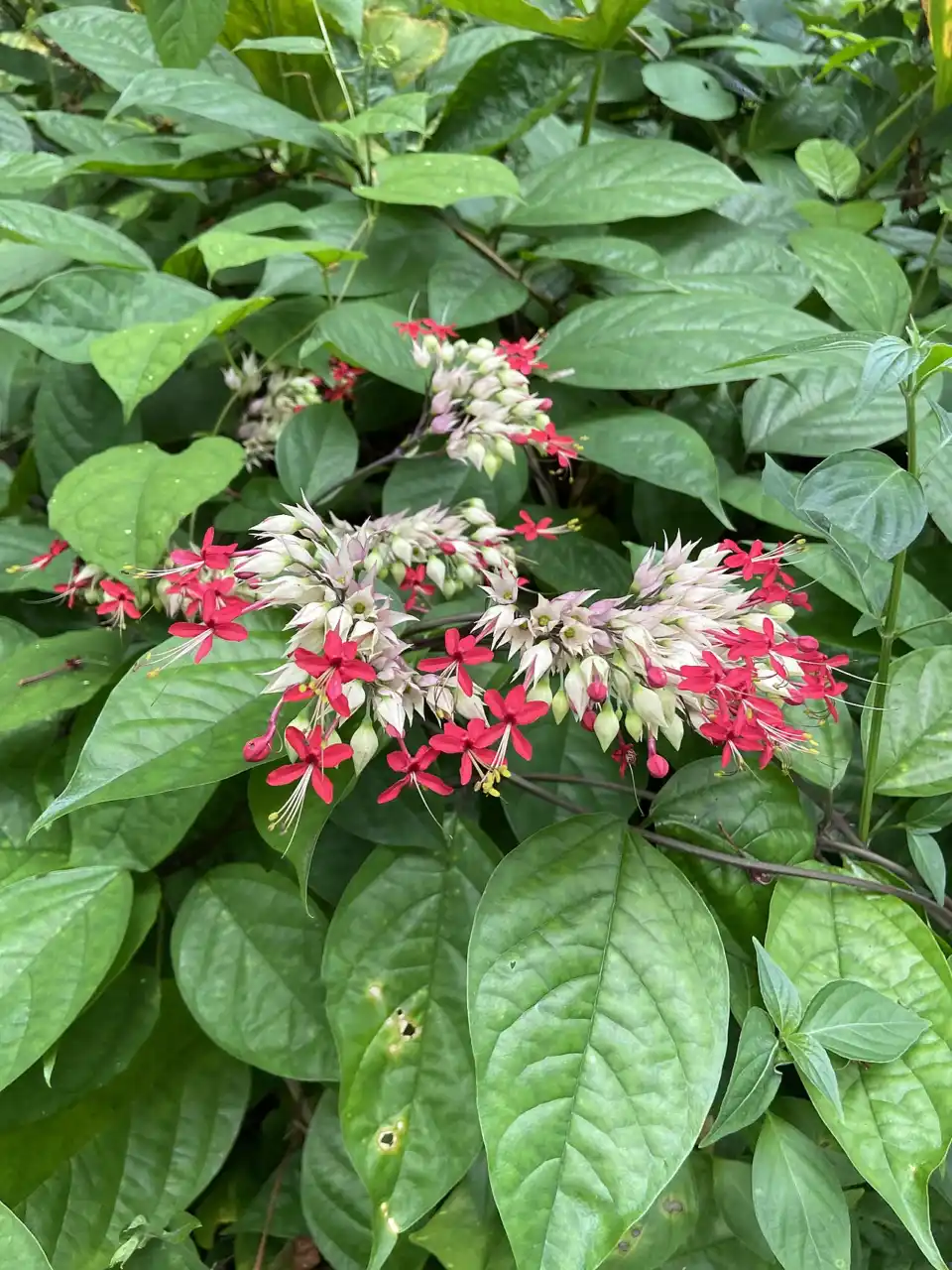
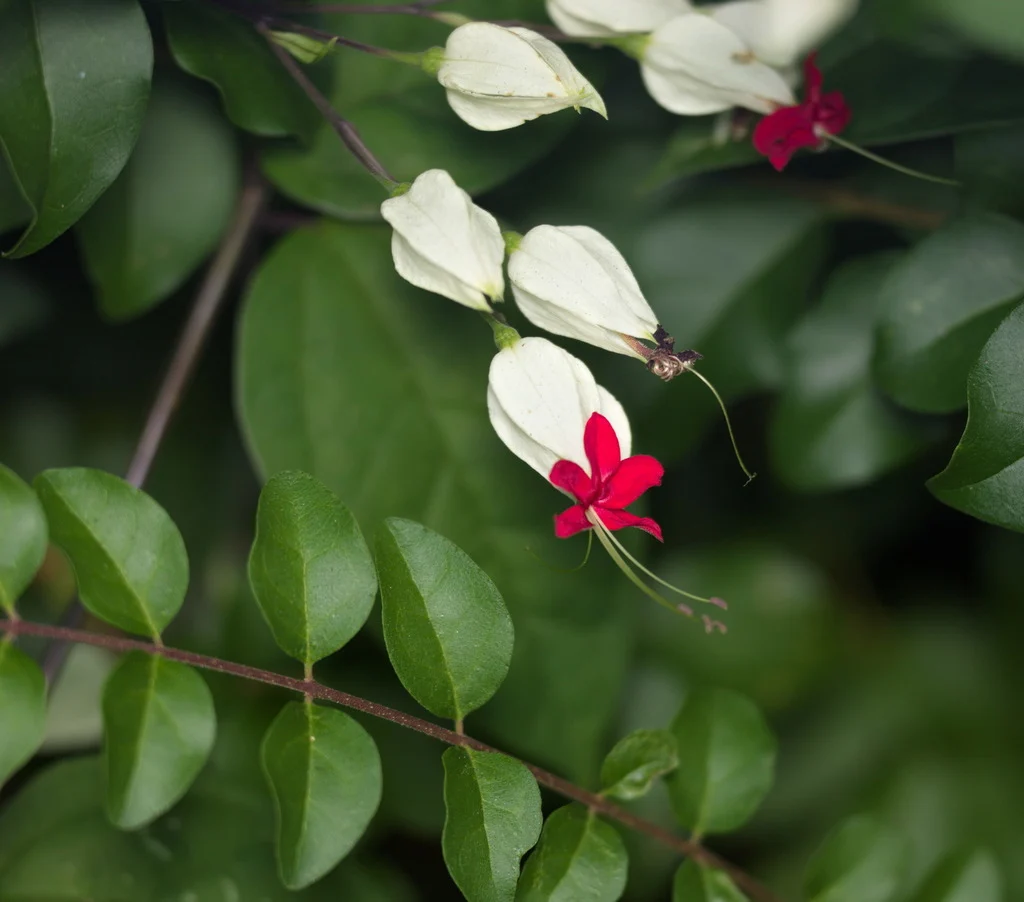
- Flowers: a white, inflated calyx (the “bag”) with a small crimson corolla and long stamens sticking out. Flowers come in end clusters of 8 to 20.
- Flower aging: the white calyx turns pale pink or lavender, then tan as it dries. This is normal aging, not a disease.
- Fruit: if pollinated, green fruits ripen red to black and split to show black seeds on a bright orange inside.
- Size: 10 to 15 feet (3 to 4.5 m) in the tropics; the RHS lists 2.5 to 4 m in cultivation. Pot plants stay much smaller.
Not the Same Plant as Garden Bleeding Heart
The shared name causes real care mistakes. Garden bleeding heart (Lamprocapnos spectabilis, formerly Dicentra spectabilis, family Papaveraceae) is a cold-hardy perennial that dies back in summer heat, while the vine is a frost-tender tropical. Advice for one will hurt the other.
| Feature | Bleeding heart vine (Clerodendrum thomsoniae) | Red bleeding heart vine (Clerodendrum × speciosum) | Garden bleeding heart (Lamprocapnos spectabilis) |
|---|---|---|---|
| Family | Lamiaceae | Lamiaceae | Papaveraceae |
| Habit | Woody twining vine | Woody twining vine | Clump-forming perennial, 2 to 3 ft |
| Calyx color | White, ages to pink or lavender | Pink to rosy red | No bag; pink or white heart-shaped petals |
| Leaves | Glossy, oval, smooth edged | Glossy, oval, smooth edged | Soft, fern-like and divided |
| Cold tolerance | Damaged below about 45°F (7°C) | Similar, frost tender | Hardy to hard frost |
| Rest period | Cool, drier winter rest | Cool, drier winter rest | Goes dormant in summer heat |
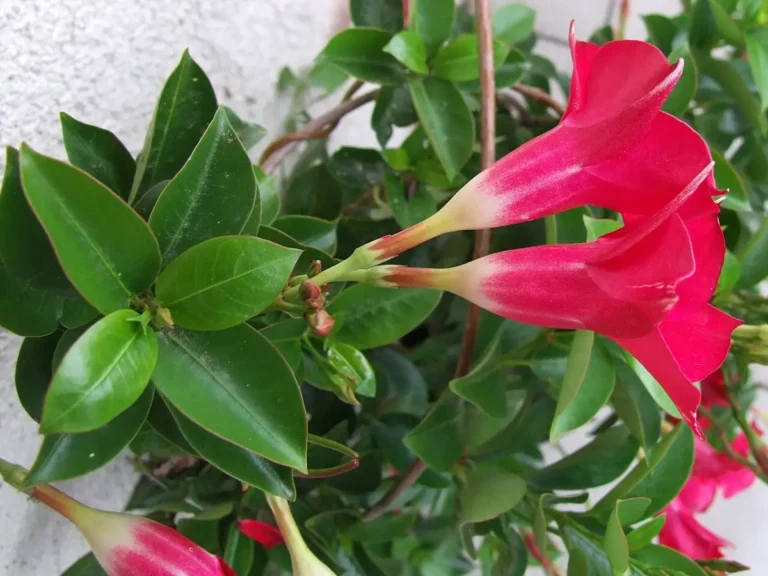
The red-flowered vine is often described as a hybrid of C. thomsoniae and C. splendens, and its care is the same. If you are not sure which plant you have, take a clear daylight photo of a flower cluster and a leaf and try our flower identifier or leaf identifier. Photo identification, including our tool, can be wrong, so confirm with a local nursery or extension office when it matters.
How Much Light Does Bleeding Heart Vine Need?
Bleeding heart vine needs bright light to flower, and the right amount depends on where you grow it. Care guides seem to disagree (some say part shade, others full sun), but they are describing different situations.
The nursery Top Tropicals explains the trade-off well: in shade the plant makes bigger, darker leaves and fewer flowers, while more sun gives more blooms but paler leaves and a risk of sunburn. Your goal is the most light the leaves can handle.
Indoors
Indoors, window light is much weaker than outdoor sun, so give it the brightest spot you have. University of Wisconsin Extension says it needs direct sun to bloom well, and a sunny window may be enough. A south-facing window in the Northern Hemisphere (north-facing in the Southern Hemisphere) works best.
I have found that placing plants in a suitable spot makes a real difference to their growth. For most of my indoor plants that means indirect sunlight, but bleeding heart vine wants more: if it sits back from the window, expect leaves and no flowers. If your window is dim, a full-spectrum grow light helps; see our guide on what color light is best for plant growth.
Outdoors by Climate
- Mild or humid summers (UK conservatories, coastal areas): full sun with shade from the hottest hours. The RHS recommends full light with shade from hot sun under glass.
- Hot summers (Florida, northern India, Pakistan, the Gulf, Arizona): morning sun and afternoon shade. The Florida Museum of Natural History plant sale lists exactly this exposure, because harsh afternoon sun scorches the leaves.
- Moving a pot outside in spring: do it in stages over 1 to 2 weeks, starting in shade. A plant that spent winter indoors will drop or burn leaves if moved straight into full sun.
Watering and Humidity
Keep the soil evenly moist while the plant is growing, and let the top 1 to 2 inches (2.5 to 5 cm) dry before you water again. Soggy soil leads to root rot, and a vine that dries out completely wilts and drops leaves.
I have learned that checking the soil before watering helps prevent overwatering, and that habit matters here because this vine’s needs change so much by season. Push a finger into the soil instead of watering on a fixed day.
- Spring and summer: water thoroughly until it drains from the bottom, then wait for the top layer to dry. In hot, dry weather outdoors that can mean every 2 to 3 days.
- Autumn and winter: water only enough to stop the soil drying out completely, especially if the plant has dropped leaves.
- Humidity: it prefers moderate to high humidity, around 50 percent or more. In dry homes or dry climates, group plants together or use a pebble tray. Very dry air also invites spider mites.
Temperature and Hardiness Zones
Bleeding heart vine grows best between 65 and 80°F (18 and 27°C) and is damaged below about 45°F (7°C). Bring container plants indoors before nights fall to that level.
- United States: grown outdoors year-round in USDA zones 10 to 12. UW Extension notes it is root hardy to zone 9a, where it may die back and resprout from the roots in spring.
- United Kingdom: rated H1B by the RHS, meaning it needs a heated greenhouse or a warm room most of the year and can only go outside in summer.
- Everywhere else: if your winter nights stay above 45 to 50°F (7 to 10°C), it can live outside; if not, treat it as a pot plant you move indoors.
Soil, Pots and Repotting
Use a rich, well-drained potting mix with plenty of organic matter, in a pot with drainage holes. A general potting mix with about one third perlite or bark works well, and slightly acidic to neutral soil suits it.
The vine tends to flower better when its roots are a little crowded, so move it up only one pot size, in spring, when roots circle the pot or grow out of the holes. A very large pot holds extra water and encourages leaves over flowers. Our guide on how to grow flower plants in pots covers drainage and pot choice in more detail.
Give it a support from the start. It twines its stems around a trellis, obelisk or wires; without one it sprawls, or it can be pinched into a bushy shape or grown in a hanging basket.
Feeding
Feed bleeding heart vine monthly from spring to late summer with a balanced or bloom-boosting water-soluble fertilizer, or use a slow-release feed in spring. Stop feeding in autumn and do not feed at all during winter rest.
A common mistake is heavy nitrogen feeding, which gives lush leaves and few flowers. In the video further down, the gardening channel Fresh From My Garden recommends phosphorus-rich organic feeds such as bone meal or seaweed granules once or twice in the blooming season for the same reason.
Pruning for More Flowers
Bleeding heart vine flowers on new growth, so pruning is what produces next season’s blooms. Prune after the main flowering ends, or in late winter before new shoots appear.
- Remove dead, damaged and very old woody stems at the base.
- Thin out crowded or crossing shoots so light reaches the center.
- Cut long stems back by one half to two thirds, just above a pair of leaves or buds. UW Extension advises not to be afraid to prune severely.
- During the growing season, pinch the tips of long, bare stems to make the plant branch.
- Use the healthy pieces you cut off as cuttings (see propagation below).
Winter Rest for Indoor Plants
In cool conditions, even indoors, bleeding heart vine drops some or all of its leaves and rests. UW Extension notes that new leaves sprout in spring from the roots or from stems that look dead, so do not throw the plant away.
- When nights reach about 50°F (10°C), bring the pot indoors.
- Keep it in a bright, cool room, roughly 55 to 65°F (13 to 18°C).
- Water only enough to keep the soil from drying out completely.
- Stop all fertilizer.
- Scratch a stem lightly with a fingernail if you are worried: green under the bark means it is alive.
- In late winter, prune, then move it to a warmer, brighter spot, water more and start feeding when new shoots appear.
In frost-free climates the plant often keeps its leaves and may flower for much of the year, so this rest is mainly for people growing it indoors.
Year-Round Care Calendar
This calendar uses Northern Hemisphere months; shift by six months in the Southern Hemisphere.
| Season | Cold-winter grower (pot moved indoors) | Frost-free outdoor grower (zones 10 to 12, tropics) |
|---|---|---|
| Late winter (Feb to Mar) | Prune hard, increase light and water, start feeding when shoots appear | Prune after flowering, remove cold or wind damage |
| Spring (Apr to May) | Repot if root-bound; move outside gradually once nights stay above 50°F (10°C) | Feed monthly, tie new shoots to the support |
| Summer (Jun to Aug) | Peak flowering; water often, feed monthly, check for mites | Peak flowering; afternoon shade in hot areas, water deeply |
| Autumn (Sep to Nov) | Stop feeding; bring inside before nights reach 45°F (7°C) | Stop feeding by mid-autumn, light trimming only |
| Winter (Dec to Jan) | Cool rest, little water, leaf drop is normal | Water less; may keep blooming in warm spells |
Why Is My Bleeding Heart Vine Not Blooming?
The most common reason a bleeding heart vine does not bloom is too little light. After that, check these causes in order:
- Not enough light: move it to the brightest window or a sunnier spot outdoors.
- No pruning or wrong timing: flowers form on new shoots, so an unpruned, woody vine gives few blooms. Avoid cutting in late spring once flower buds are forming.
- No winter rest: plants kept warm, wet and fed all winter often grow weak and leggy instead of resting.
- Too much nitrogen: switch to a balanced or bloom fertilizer.
- Pot too large: a slightly snug pot encourages flowering.
- Recently moved or repotted: a plant recovering from repotting or a big light change may need a few weeks of new growth first.
The same light-first logic applies to other tropical vines; our guide on mandevilla not blooming walks through a similar checklist.
Leaf Problems, Pests and Fixes
Most leaf problems on bleeding heart vine trace back to water, light or temperature. Use this table to match the symptom to the likely cause.
| Symptom | Likely cause | Fix |
|---|---|---|
| Leaves drop in autumn or winter | Normal rest in cool temperatures | Reduce water, stop feeding, wait for spring growth |
| Yellow leaves, soggy soil | Overwatering or poor drainage, possible root rot | Let soil dry, check roots, repot into fresh draining mix |
| Drooping, limp leaves, dry soil | Underwatering | Water deeply; check more often in heat |
| Brown, crispy patches | Sunburn after a sudden move into sun | Shade it, then acclimate gradually |
| Brown leaf edges | Dry air or salt build-up | Raise humidity, flush the pot with water |
| Leggy stems, small leaves | Low light or a warm, wet winter | More light, prune in late winter |
| White cottony clumps | Mealybugs | Wipe off, spray insecticidal soap weekly |
| Fine stippling, webbing | Spider mites | Rinse leaves, raise humidity, soap or oil spray |
| Tiny white flies when disturbed | Whitefly | Yellow sticky traps, insecticidal soap |
The RHS lists mealybugs, glasshouse red spider mite and glasshouse whitefly as the main pests. Insecticidal soap or horticultural oil, repeated every 7 to 10 days, handles most cases. The gentle methods in our guide to getting rid of aphids on indoor plants work on these sap-sucking pests too. For more yellowing causes, see why plant leaves turn yellow.
I believe that observing plants regularly and adjusting their care is essential, and with this vine a quick look under the leaves each week catches mealybugs and mites before they spread.
How to Propagate Bleeding Heart Vine
Bleeding heart vine roots easily from stem cuttings, usually in about two weeks according to UW Extension.
- In late spring or late summer, cut a 4 to 6 inch (10 to 15 cm) semi-woody tip just below a leaf pair.
- Remove the lower leaves and, if you have it, dip the end in rooting hormone.
- Root it in water, moist sand or a light potting mix.
- Keep it warm and in bright light without direct sun.
- Pot it up once roots are 1 to 2 inches (2.5 to 5 cm) long.
You can also bend a low stem to the soil and pin it down (layering) until it roots, or sow seed in spring after soaking it overnight in warm water.
Is Bleeding Heart Vine Toxic to Pets or People?
Bleeding heart vine is not known to be seriously toxic, but it should not be treated as safe to eat. The evidence is limited and sources disagree.
- Pet Poison Helpline rates Clerodendrum species as mildly toxic to dogs, cats, horses and birds: some species may cause vomiting and diarrhea if eaten and skin irritation on contact. It gives no data specific to C. thomsoniae.
- Some care sites call the plant non-toxic and others warn about the fruit, but neither claim is backed by species-specific poison control data.
- Garden bleeding heart (Lamprocapnos/Dicentra) is a different plant, and Pet Poison Helpline notes it is more toxic.
Keep the plant and its fruit away from pets that chew plants and from small children. If a person or pet ate part of the plant and shows symptoms, contact poison control, your doctor or your vet, for example the ASPCA Animal Poison Control Center in the US.
Watch: Growing Bleeding Heart Vine on a Trellis
This short video from Fresh From My Garden shows a red-flowered bleeding heart vine on a trellis and covers sun placement, pot size, feeding and pruning after bloom, which apply equally to C. thomsoniae.
Final Thoughts
Clerodendrum bleeding heart vine care comes down to a seasonal rhythm: bright light, steady moisture and monthly feeding while it grows, a hard prune after flowering, and a cool, drier rest in winter if you grow it indoors. Get the light right first, because that one change fixes most flowering problems. If you also grow other tropical climbers, our allamanda plant care guide follows a very similar routine.
Frequently Asked Questions
Why is my bleeding heart vine losing leaves in winter?
In cool temperatures, even indoors, Clerodendrum thomsoniae often drops some or all of its leaves and rests. Reduce watering, stop feeding and keep it bright; new leaves usually sprout in spring from the roots or stems.
How much sun does a bleeding heart vine need?
As much bright light as it can take without scorching. Indoors, give it your sunniest window. Outdoors in hot climates, morning sun with afternoon shade works best; in mild climates it can take more sun.
Why is my bleeding heart vine not flowering?
Too little light is the most common cause. Lack of pruning (it blooms on new growth), no winter rest, too much nitrogen fertilizer and an oversized pot can also reduce flowering.
When should I prune bleeding heart vine?
Prune after the main flowering ends or in late winter before new growth starts. It tolerates hard pruning, and cutting long stems back by half or more encourages the new shoots that carry flowers.
Is bleeding heart vine the same as bleeding heart?
No. Bleeding heart vine is Clerodendrum thomsoniae, a frost-tender tropical climber in the mint family. Garden bleeding heart is Lamprocapnos (Dicentra) spectabilis, a cold-hardy perennial with fern-like leaves that needs very different care.
Is bleeding heart vine safe for cats and dogs?
It is not known to be seriously toxic, but Pet Poison Helpline rates Clerodendrum species as mildly toxic, with possible vomiting, diarrhea and skin irritation. Keep it away from pets that chew plants and call your vet if your pet shows symptoms.
Featured image: Photo: Photo by David J. Stang / Wikimedia Commons, CC BY-SA 4.0