Oleander Care Guide: Sun, Water, Pruning, Winter and Safety
Oleander (Nerium oleander, family Apocynaceae) is one of the toughest flowering shrubs you can grow in a warm, sunny garden. It shrugs off heat, drought, wind and salty coastal air, yet it still trips people up with yellow leaves, missing flowers, frost damage and worries about its toxicity. This oleander care guide covers what the plant needs, why, and how to adjust care for your climate, whether you grow it in the ground or in a pot.
Quick Answer: How to Care for Oleander
Oleander needs full sun (at least six hours a day), well-drained soil and deep watering only when the top inch of soil is dry. Feed lightly once a year in spring, and prune right after the main flush of flowers or in late winter, never from early fall onward.
- Light: full sun; shade gives leggy stems and few blooms.
- Water: about 1 inch per week in dry summer weather for shrubs in the ground; more often for pots.
- Soil: any well-drained soil, pH roughly 5.0 to 8.3.
- Cold: damage starts around 32°F (0°C); most plants are hurt below about 20°F (-7°C).
- Safety: every part is poisonous to people, dogs, cats and horses. Wear gloves and never burn clippings.
How to Recognize Oleander (and Its Look-Alike)
Oleander is an evergreen shrub with long, narrow, leathery leaves that grow opposite each other or in whorls of three or four. NC State Extension describes the leaves as linear-lanceolate, 4 to 7 inches long and less than an inch wide, with a smooth edge.
The flowers are funnel-shaped with five petals (or doubled in some cultivars) and a fringed corona at the throat. They come in white, pink, red, salmon and pale yellow, grow in clusters at the branch tips, and are often fragrant. After flowering, the plant forms slender paired seed pods that split to release seeds with tufts of hair.
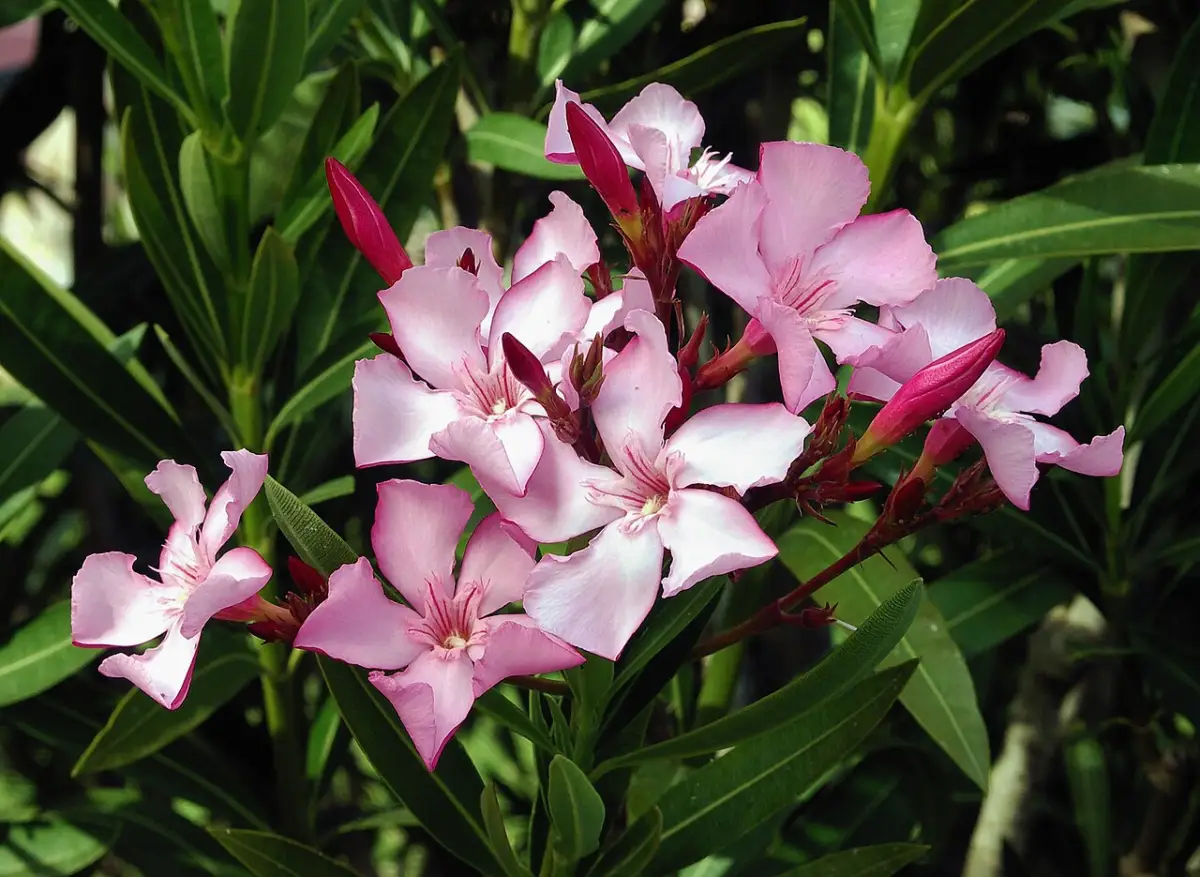
Oleander is native to the Mediterranean region and southern Asia, according to UF/IFAS Extension. It reaches 6 to 12 feet in most gardens and up to about 18 feet where winters are mild.
Oleander vs Yellow Oleander
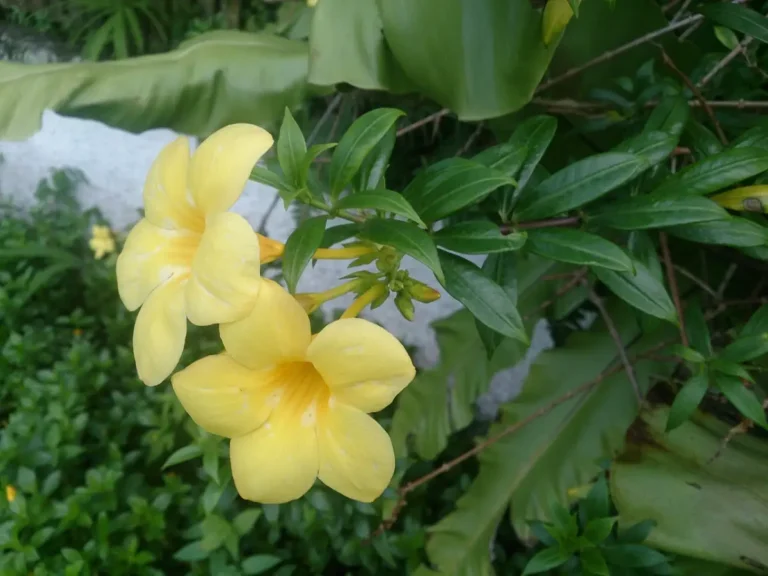
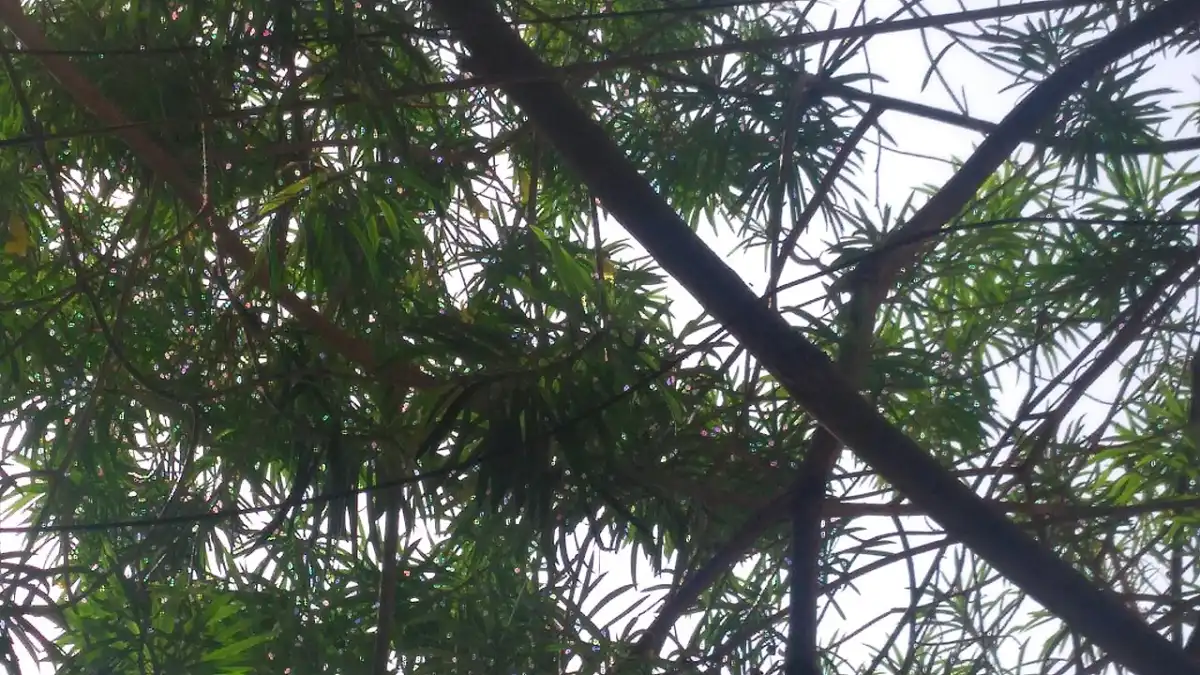
The plant most often confused with oleander is yellow oleander (Cascabela thevetia, formerly Thevetia peruviana), which is in the same family. The fastest check is leaf arrangement: oleander leaves are opposite or whorled, while yellow oleander leaves alternate along the stem.
| Feature | Oleander (Nerium oleander) | Yellow oleander (Cascabela thevetia) |
|---|---|---|
| Leaf arrangement | Opposite or in whorls of 3 to 4 | Alternate |
| Leaf shape | Narrow, leathery, 4 to 7 in long | Narrow, glossy, willow-like, about 6 in long |
| Flowers | White, pink, red, salmon or pale yellow, with a fringed corona | Bright yellow or apricot funnels, about 2 to 3 in long |
| Fruit | Long, slender paired pods | Fleshy, somewhat triangular fruit, green ripening black |
| Native range | Mediterranean and southern Asia | Mexico, Central and South America, West Indies |
| Toxicity | All parts highly toxic | All parts highly toxic, especially fruit and seeds |
Yellow oleander details come from NC State Extension and Queensland Poisons Information. If you are not sure which shrub you have, take a clear daylight photo of a leafy stem and a flower and try our flower identifier or leaf identifier. Photo identification, including our tool, can be wrong, so ask a local extension office or nursery before making any safety decision.
Light and Location
Plant oleander where it gets full sun, ideally six or more hours of direct light a day. UF/IFAS notes that in partial shade it looks lanky and flowers little, so a sparse, floppy shrub is usually a light problem before it is a feeding problem.
Oleander handles reflected heat from walls and paving well, which makes it popular along driveways and roads in hot climates. On the coast, it tolerates salty air, but UF/IFAS advises planting it behind the dune line rather than in direct salt spray. If you also grow other sun lovers, the same logic applies as in our guide on how much sun tropical hibiscus needs.
Soil and Planting
Oleander grows in sand, loam or clay as long as water drains away. UF/IFAS lists a workable pH range of 5.0 to more than 8.3, so most garden soils are fine without amendment.
- Plant in spring or early fall, when temperatures are mild.
- Dig a hole as deep as the root ball and two to three times as wide.
- Set the plant at the same depth it grew in the nursery pot and backfill with the native soil.
- Water deeply, then add 2 inches of mulch, keeping it a few inches away from the stems.
- Space plants about 6 feet apart for a hedge and 8 to 12 feet apart for single shrubs; dwarf cultivars need less room.
For heavy clay that stays wet, plant on a slight mound or choose a raised bed, because soggy roots cause yellowing and leaf drop.
How Often to Water Oleander
Water established oleander deeply when the top inch of soil is dry, which in summer usually means about 1 inch of water per week if it has not rained. Once its roots are settled (after the first year), oleander is very drought tolerant, though regular water in heat keeps it growing and flowering.
| Situation | How often to water | Watch for |
|---|---|---|
| New planting (first year) | Once or twice a week, deeply | Wilting in afternoon heat |
| Established shrub in the ground | About 1 inch a week in dry summer spells; little or none in a rainy season | Yellow leaves from soggy soil |
| Pot in summer | When the top inch is dry, which can be several times a week in strong heat | Dropped flower buds if it dries out |
| Pot in winter, under cover | Sparingly, only when the mix is dry a few inches down | Root rot from cold, wet mix |
With my own plants, I have learned that checking the soil before watering is the simplest way to prevent overwatering. That habit matters with oleander too: push a finger into the soil, and only water if the top inch feels dry.
Fertilizer: How Much Oleander Needs
Oleander in the ground needs little or no fertilizer. UF/IFAS says it grows well with one yearly feeding, and established shrubs near a fertilized lawn often need none at all.
- In-ground shrubs: one light application of a balanced fertilizer (for example 10-10-10) in spring, or a layer of compost spread out to the drip line.
- Pots: a liquid fertilizer about every two weeks from late spring to early autumn, as BBC Gardeners’ World recommends, because nutrients wash out of containers.
- Avoid: heavy nitrogen feeding, which pushes soft leafy growth that attracts aphids and gives fewer flowers.
When and How to Prune Oleander
Prune oleander lightly right after its main flowering, or more heavily in late winter to early spring before new growth starts. Do not prune from early fall onward, because that removes the growth that would carry next year’s flowers.
Why Pruning Dates Disagree
Different guides give late winter, after flowering, or fall as the “right” time, which confuses many gardeners. The explanation is simple: oleander flowers form on the current season’s growth, so any timing works as long as the plant has time to grow new stems before summer. NC State Extension recommends light pruning after flowering, cutting frost-damaged wood once winter has passed, and avoiding pruning after early fall.
In practice, gardeners in frost-free climates (USDA zones 10 to 11) can prune after each flush of flowers. Where frost is possible (zones 8 to 9), wait until the last frost has passed so you can see and remove all the damaged wood in one go.
Step-by-Step Pruning
- Put on gloves, long sleeves and eye protection, since the sap can irritate skin.
- Remove dead, damaged or frost-blackened stems back to healthy green wood.
- Pull or cut suckers at the base while they are young; UF/IFAS notes they can reduce flowering.
- To renew an old, leggy shrub, cut about one third of the oldest stems to near ground level each year for three years.
- Shorten long shoots just above a leaf node to keep the shape compact.
- Snip off spent flower clusters to tidy the plant and reduce seed pods.
- Bag the clippings for disposal. Never burn them and keep them out of compost that will be used around food crops.
Growing Oleander in Pots and Winter Care
A pot is the best way to grow oleander anywhere winters drop below freezing, because you can move it under cover. Choose a pot at least 20 inches (500 mm) wide and deep with drainage holes, and use a soil-based potting mix lightened with about one third grit or perlite, as Gardeners’ World suggests. For general container basics, see our guide on how to grow flower plants in pots.
How Cold Can Oleander Take?
There is no single number, because cold tolerance depends on the cultivar, the plant’s age and how long the cold lasts. The table below shows what each authoritative source says.
| Source | Cold limit given | Zones |
|---|---|---|
| NC State Extension | Can be damaged at or below 32°F (0°C) | USDA 8a to 10b |
| UF/IFAS (ST412) | Tops injured every few years in zone 9a | USDA 9a to 11 |
| Sunset | Lows to about 15°F (-9°C) | Sunset climate zones |
| BBC Gardeners’ World (UK) | Frost tender; grow outside only in very sheltered, frost-free spots | Not given |
A practical rule: expect leaf and tip damage near freezing and serious stem damage below about 20°F (-7°C). In zone 8 and the mildest parts of the UK and northern Europe, plant against a warm, sunny wall and mulch the roots. Anywhere colder, keep oleander in a pot. Hardier choices include ‘Calypso’ and ‘Hardy Pink’, which UF/IFAS and NC State describe as more cold tolerant.
Overwintering a Potted Oleander
- Bring the pot under cover before the first frost, as night temperatures start falling in autumn.
- Trim it back if needed to fit the space, but keep cuts light so it can flower next year.
- Keep it in a bright, cool, frost-free place such as an unheated greenhouse, porch or cool sunroom that stays above freezing.
- Water sparingly and stop feeding until spring.
- Check the undersides of leaves for scale and mealybugs, which spread easily indoors.
- In spring, harden it off: set it outside for an hour on the first day and add an hour each day for a week, starting in light shade.
- Repot every spring or two into the next size up, or replace the top 2 inches of mix in very large pots.
Propagating Oleander From Cuttings
Stem cuttings are the easiest way to make new oleander plants, and they keep the flower color of the parent. Seed-grown plants may not match the parent.
- In late spring to midsummer, cut 6 to 8 inch tips from healthy, non-flowering shoots, wearing gloves.
- Remove the lower leaves, leaving two to four at the top.
- Dip the base in rooting hormone (optional) and insert it about 3 inches deep in a mix of sand and peat or perlite, or stand it in a jar of water.
- Keep it in bright, indirect light and cover loosely with a clear bag to hold humidity.
- Expect roots in about 2 to 6 weeks, then pot up into regular potting mix.
Pests, Diseases and Yellow Leaves
Most oleander problems come from a handful of causes: watering mistakes, cold, three common insects and one serious disease. Use this table to match the symptom to the likely cause.
| Symptom | Likely cause | What to do |
|---|---|---|
| Yellow leaves, soil stays wet | Overwatering or poor drainage | Let soil dry between waterings; improve drainage or repot |
| Yellow leaves, soil bone dry | Underwatering in heat | Water deeply; mulch to hold moisture |
| A few old lower leaves yellow and drop | Normal leaf aging | No action needed |
| Leaves stripped in days, orange hairy caterpillars | Oleander caterpillar (Syntomeida epilais) | Cut off and bag infested shoots; Bt spray on small caterpillars |
| Clusters of bright yellow insects on new shoots, sticky leaves | Oleander aphid (Aphis nerii) | Blast off with water; insecticidal soap or horticultural oil |
| Small round white bumps on leaves and stems | Oleander scale (Aspidiotus nerii) | Scrub off; horticultural oil when crawlers are active |
| Yellow then brown scorched leaf edges, branch dieback that spreads | Oleander leaf scorch (Xylella fastidiosa) | Prune 2 to 3 feet below symptoms; remove badly affected plants |
| Black stems after a cold night | Frost damage | Wait until spring, then cut back to green wood |
| Lots of leaves, few flowers | Too much shade, late pruning or high nitrogen | Move to full sun; adjust pruning and feeding |
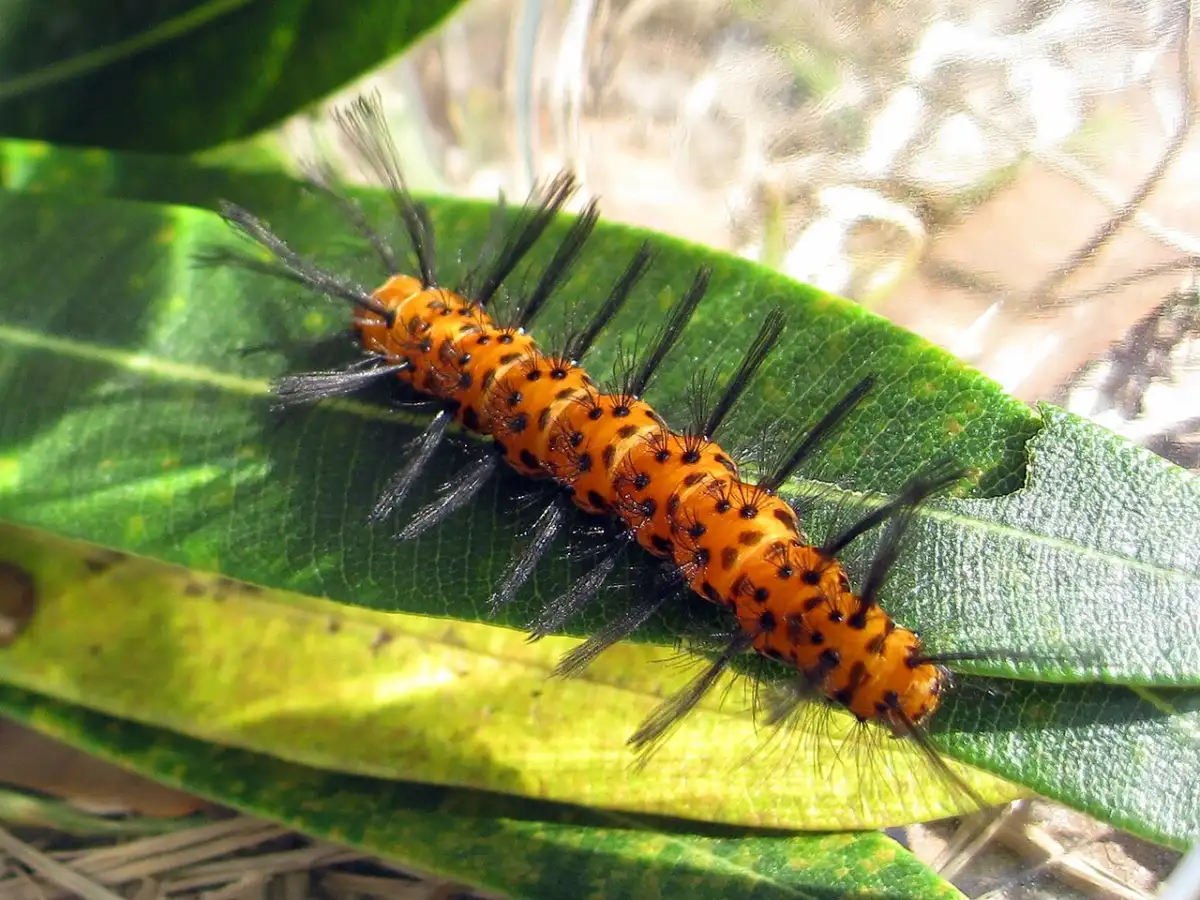
The oleander caterpillar is the most damaging insect in Florida and the Gulf Coast, and UF/IFAS warns it can defoliate a shrub within one to two weeks. The larvae are orange with tufts of black hairs, and the adult is a blue-black, wasp-like moth with white spots. UF/IFAS recommends cutting off infested branches, sealing them in a bag and freezing it for 24 hours, then using Bacillus thuringiensis (Bt) on young caterpillars if needed.
For aphids, the same gentle methods in our guide to getting rid of aphids on indoor plants work on oleander shoots too. Reducing heavy feeding and pruning also cuts down the soft new growth aphids prefer.
Is It Leaf Scorch or a Watering Problem?
Leaf scorch is a bacterial disease spread by sap-feeding insects called sharpshooters, and it is common in California, Arizona, Texas and Florida. According to UF/IFAS, it often kills a shrub within about two years of the first symptoms, and its early signs are easily confused with drought or salt stress.
The difference is the pattern. Watering and cold damage usually affect the whole plant at once and improve after you correct care. Leaf scorch starts on one or two branches, shows yellowing then browning from the leaf edge or tip inward, and keeps spreading branch by branch even with good care. If you suspect it, prune infected limbs 2 to 3 feet below the symptoms, disinfect pruners between cuts, and contact your local extension office for confirmation. For general yellowing causes on other plants, see why plant leaves turn yellow.
Is Oleander Poisonous? Safe Handling Rules
Yes. Every part of oleander is poisonous if eaten, including leaves, flowers, stems, roots, sap and seeds, and the plant stays toxic when dried. The toxins are cardiac glycosides (including oleandroside and nerioside), which affect the heart.
- People: NC State Extension lists nausea, vomiting, stomach pain, dizziness, a slow or irregular heartbeat and drowsiness, and warns it may be fatal if eaten. UF/IFAS notes that chewing a leaf or twig even once or twice can send a person to the hospital.
- Dogs, cats and horses: the ASPCA lists oleander as toxic to all three, with drooling, abdominal pain, diarrhea, colic, depression and possible death.
- Livestock: UF/IFAS reports that small amounts of leaves can kill horses, cattle and sheep.
- Skin: the sap can cause contact dermatitis in some people.
- Smoke: burning oleander releases toxic fumes, so never burn clippings.
Simple precautions make oleander manageable in most gardens. Wear gloves and long sleeves when pruning, wash your hands and tools afterward, bag clippings for disposal, and avoid planting it where young children play or where pets and horses could chew it. Pick up fallen leaves after pruning so animals cannot reach them.
If a person or pet has eaten any part of an oleander, contact poison control or a vet straight away, even before symptoms appear. In the US, call Poison Control at 1-800-222-1222 or the ASPCA Animal Poison Control Center at (888) 426-4435; elsewhere, use your local poison center or emergency number.
How to Check Your Oleander Yourself: A Simple Routine
I believe that observing plants regularly and adjusting their care to what they show you is the habit that keeps them healthy. Small changes made early are easier than rescuing a struggling shrub later. This short routine turns the guide above into a checklist.
| When | What to check | Action |
|---|---|---|
| Weekly in summer | Top inch of soil; new shoots and leaf undersides | Water if dry; treat aphids or caterpillars early |
| After each flower flush | Spent clusters, long shoots | Deadhead and lightly shape |
| Early fall | Forecast lows; pot plant size | Stop pruning; plan winter shelter for pots |
| Winter | Frost damage; indoor pests on pots | Leave damaged wood until spring; water sparingly |
| Late winter to spring | Dead and leggy stems, suckers | Main pruning, one light feeding, repot pots if needed |
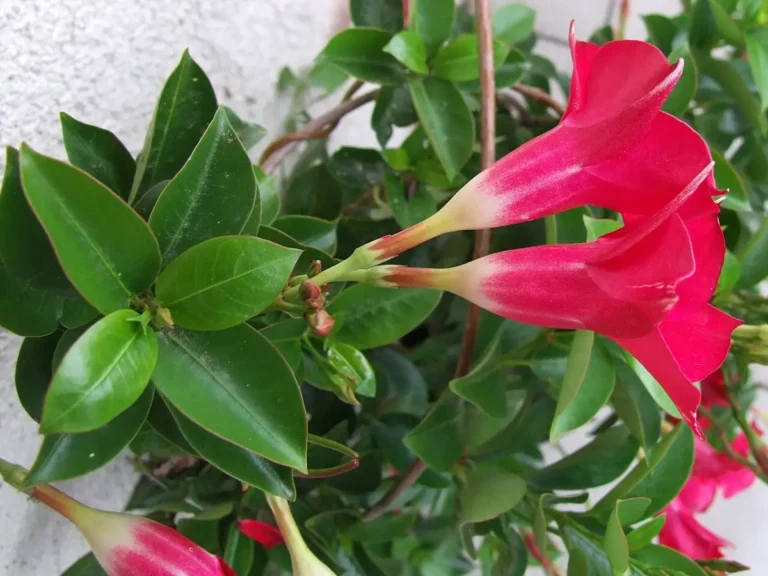
Oleander is closely related to dipladenia and mandevilla, which are also in the Apocynaceae family. If you grow those too, our dipladenia care guide covers a tender cousin that needs more winter protection.
Final Thoughts
Good oleander care comes down to four habits: give it full sun, water deeply but only when the soil is dry, prune before fall rather than after, and protect it from hard frost. Treat it with the same respect you would give any poisonous plant, with gloves on, no burning and away from curious children and pets, and it will reward you with flowers for most of the warm season.
Frequently Asked Questions
How often should I water oleander?
Water established oleander deeply when the top inch of soil is dry, which is usually about 1 inch of water per week in dry summer weather. Potted oleander dries out faster and may need water several times a week in strong heat, but much less in winter.
When is the best time to prune oleander?
Prune lightly right after the main flowering, or more heavily in late winter to early spring before new growth. Avoid pruning from early fall onward, because oleander flowers on the current season’s growth.
How cold can oleander tolerate?
Leaves can be damaged at or below 32°F (0°C), and most plants suffer serious stem damage below about 20°F (-7°C). In colder climates, including most of the UK, grow oleander in a pot and move it to a bright, frost-free place for winter.
Is oleander toxic to dogs and cats?
Yes. The ASPCA lists oleander as toxic to dogs, cats and horses because it contains cardiac glycosides. Contact a vet or the ASPCA Animal Poison Control Center at (888) 426-4435 right away if a pet chews any part of it.
Why are my oleander leaves turning yellow?
The most common causes are overwatering or poor drainage, underwatering in heat, cold damage and normal aging of old leaves. Yellowing that turns to brown scorched edges and spreads branch by branch may be oleander leaf scorch, a bacterial disease worth confirming with your local extension office.
Why is my oleander not blooming?
Oleander usually stops flowering because it gets too little sun, was pruned in fall or winter after buds formed, or received too much nitrogen fertilizer. Move it to at least six hours of direct sun and prune right after flowering instead.
Featured image: Photo: Zeynel Cebeci / Wikimedia Commons, CC BY-SA 4.0