Shrimp Plant Care: Light, Water, Pruning and Winter Guide for Every Climate
Shrimp plant (Justicia brandegeeana) is a Mexican shrub in the acanthus family (Acanthaceae) that is famous for its arching, salmon-pink “shrimp” at the tips of every stem. It is easy to grow, but it turns leggy and stops blooming fast when light, watering or pruning is off. This guide explains exactly what it needs, indoors and outdoors, in warm and cold climates.
Quick Answer
Good shrimp plant care comes down to four things. Give it bright light with morning sun and some shade from harsh afternoon sun, and water thoroughly only when the top 1 to 2 cm (about half an inch) of soil feels dry. Keep it above about 16°C (60°F) indoors, and cut it back hard once a year, in early spring or right after its main bloom ends.
Outdoors it survives year-round in USDA zones 8 to 11, although frost kills it to the ground in zones 8 and 9. In colder places, grow it in a pot and bring it inside before frost.
What Is a Shrimp Plant and How Do You Recognize It?
A shrimp plant is an evergreen, sprawling shrub native to Mexico, also sold under its old name Beloperone guttata. Other common names include Mexican shrimp plant, false hop and shrimp bush, according to the Royal Horticultural Society plant profile, which also gives it an Award of Garden Merit.
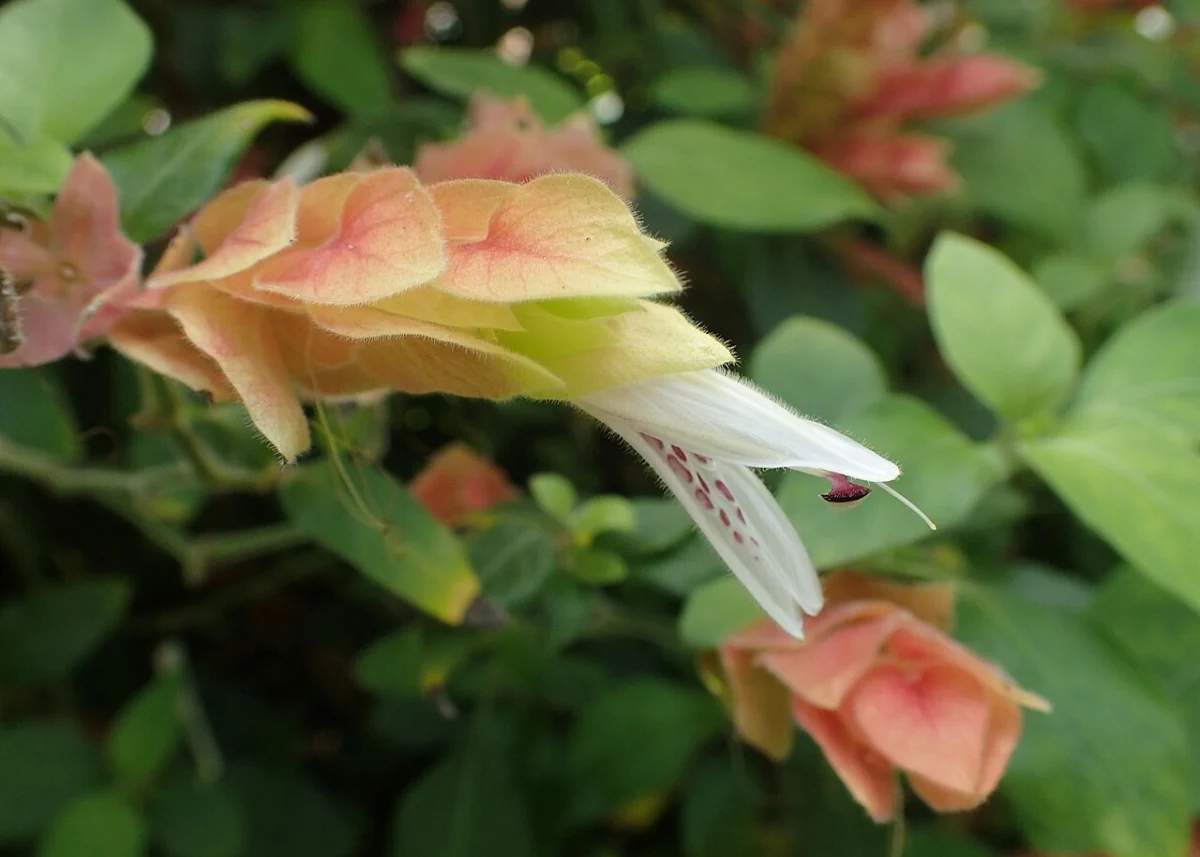
The colorful “shrimp” are not petals. They are overlapping bracts (modified leaves), and the real flowers are the small white, two-lipped tubes that poke out between them. Knowing this matters for care, because new bracts only form at the tips of growing stems.
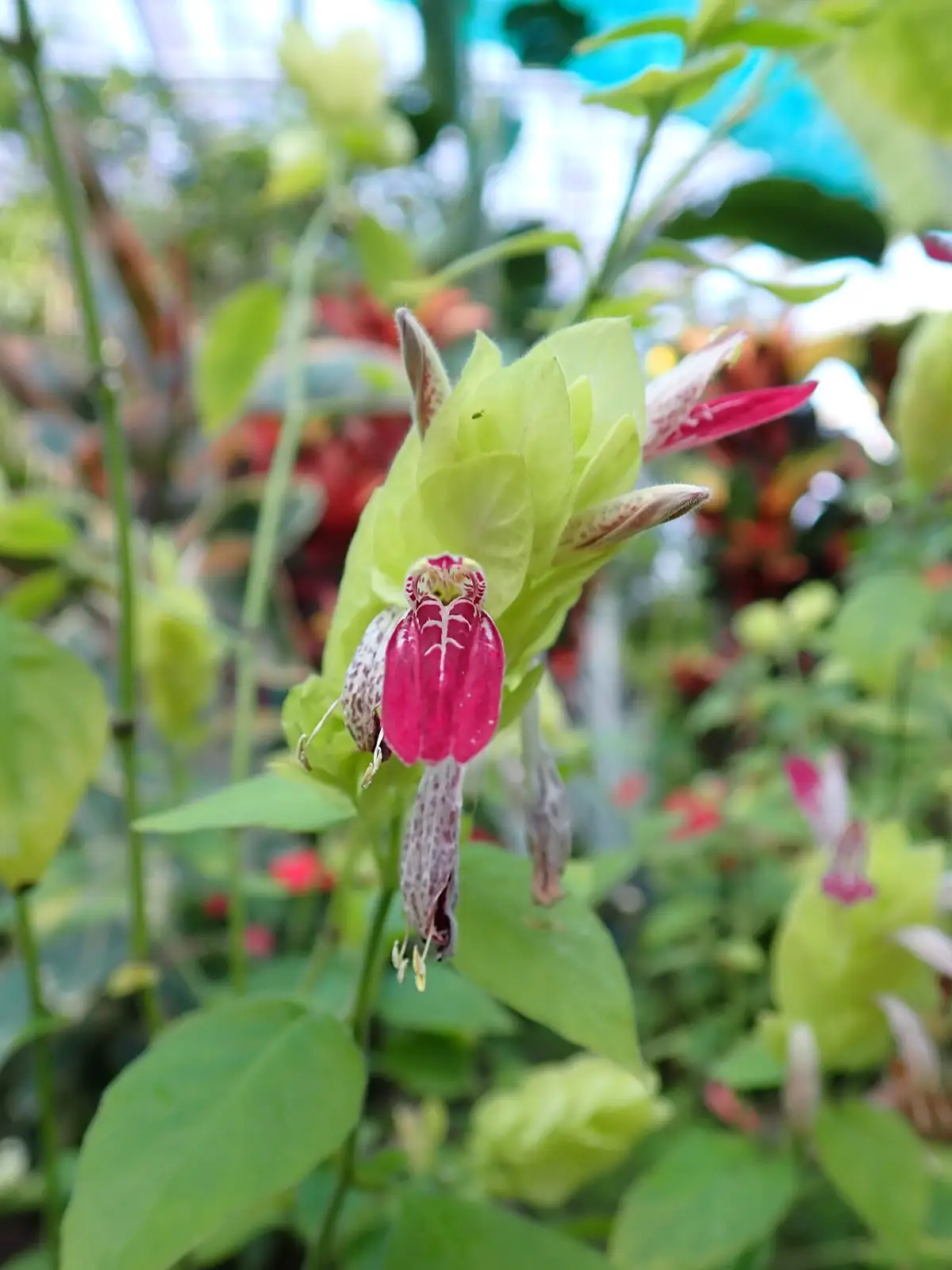
Use these features to confirm you have Justicia brandegeeana:
- Leaves: oval, soft and lightly hairy, about 2.5 to 8 cm (1 to 3 in) long, with smooth (entire) edges.
- Leaf arrangement: opposite pairs, and each pair sits at a right angle to the pair below, as University of Arkansas Extension describes.
- Bract spike: 7 to 10 cm (3 to 4 in) long, arching or drooping to one side, salmon, pink, rusty red or yellow depending on the cultivar.
- Flowers: white, about 2.5 cm (1 in) long, with maroon spots in the throat.
- Size: usually 60 cm to 1 m (2 to 3 ft) in pots, up to about 1.5 m (5 ft) in tropical gardens.
If your plant has upright yellow spikes and much larger leaves, it is probably a different plant. See the look-alike table further down, or upload a clear photo to our flower identifier. Photo identification, including our tool, can be wrong, so compare the features yourself when it matters.
Shrimp Plant Care at a Glance
| Need | What works | Why it matters |
|---|---|---|
| Light | Bright light; morning sun; shade from hot afternoon sun | Low light causes legginess and pale bracts; harsh sun fades them |
| Water | Water thoroughly when the top 1 to 2 cm is dry | It tolerates dry soil better than soggy soil |
| Soil | Well-drained, fertile mix; pH about 6.0 to 7.0 | Wet, heavy soil leads to root rot |
| Temperature | 18 to 24°C (65 to 75°F); minimum about 16°C (60°F) indoors | Cold drafts cause leaf drop |
| Humidity | Average room humidity (around 40%) is fine | Very dry air can brown leaf edges |
| Fertilizer | Balanced liquid feed at half strength every 2 weeks in the growing season | Supports constant new tips and bracts |
| Pruning | Pinch tips through the season; hard prune once a year | Bracts only form on new stem tips |
| Hardiness | USDA zones 8 to 11; RHS rating H1B in the UK | Below freezing it dies back or dies |
How Much Light Does a Shrimp Plant Need?
Shrimp plant needs plenty of light to bloom, but the right amount of direct sun depends on your climate. Sources disagree on this point because they are written for different conditions: a dim northern window and a desert patio need opposite advice.
Indoors
Place it in the brightest window you have, ideally east, south or west facing (north facing in the Southern Hemisphere). Indoor glass filters out a lot of light, so a few hours of direct sun usually helps rather than harms. Turn the pot a quarter turn every week or two so the stems do not all lean toward the glass.
If your window is dim, a grow light is the practical fix. Our guide to which light color is best for plant growth explains what to look for. I have found that moving a plant to a spot with more bright, indirect light can make a visible difference in how it grows, and shrimp plant responds quickly with tighter growth.
Outdoors
Outdoors, morning sun with afternoon shade gives the brightest bract color. In the wild it grows as an understory plant at the edge of tropical forest, so it handles part shade well. The University of Florida IFAS Extension says it grows in full sun or part shade.
In hot, dry summer climates (for example the US Southwest, the Middle East or the plains of South Asia), protect it from afternoon sun. Too much harsh sun bleaches the bracts and dries the soil fast. In cooler, cloudier regions such as the UK or the Pacific Northwest, give it as much sun as you can in summer.
How Often Should You Water a Shrimp Plant?
Water a shrimp plant when the top layer of soil is dry, not on a fixed schedule. A plant in a small pot on a sunny summer patio may need water every two or three days, while the same plant indoors in winter may go a week or more.
How to Check the Soil
From what I have learned growing indoor plants, checking the soil before watering is the simplest way to prevent overwatering. It works especially well for shrimp plant, which is more tolerant of dry soil than wet soil.
- Push a finger into the soil up to the first knuckle, about 2.5 cm (1 in).
- If the top 1 to 2 cm feels dry, water slowly until water runs out of the drainage hole. White Flower Farm uses the same half-inch test.
- Empty the saucer after 15 minutes so the roots do not sit in water.
- If the soil still feels damp, wait and check again in a day or two.
Afternoon wilting on a hot day does not harm it, according to University of Arkansas Extension. Long periods of drought, however, stop flowering and cause leaf drop, so do not let the root ball dry out completely for days.
Winter Watering
Growth slows in cool, short days, so the soil stays wet longer. Keep checking with your finger and water less often. Overwatering in winter is the most common cause of yellow leaves on potted shrimp plants.
Soil, Pots and Repotting
Shrimp plant needs soil that drains freely. For pots, use a good all-purpose potting mix and add a handful of perlite if the mix feels heavy; in the ground, loamy or sandy soil with compost works well, with a pH around 6.0 to 7.0.
- Pot: always use one with a drainage hole. Go up only 2 to 5 cm (1 to 2 in) in width when repotting.
- When to repot: in spring, when roots circle the pot or poke out of the drainage hole. You can prune and repot at the same time.
- Do not repot in full bloom if you can avoid it, because the shock can shorten flowering.
For general container tips that apply here too, see our guide on how to grow flower plants in pots.
Temperature, Humidity and Hardiness Zones
Shrimp plant grows best at normal room temperatures of 18 to 24°C (65 to 75°F) and tolerates a minimum of about 16°C (60°F) as a houseplant. Keep it away from cold drafts, open doors in winter and the direct blast of air conditioners or heaters.
Average indoor humidity is enough. You do not need to mist it; misting can wet the bracts and lead to dark spots on them.
| Climate | What to expect outdoors |
|---|---|
| Tropical and frost-free (USDA zones 10 to 11, coastal Florida, much of South and Southeast Asia) | Evergreen and blooming most of the year |
| Light frost (USDA zones 8 to 9, Gulf Coast) | Frost kills it to the ground; it usually regrows from the roots in spring |
| Hard winters (zone 7 and colder, most of the UK and northern Europe) | Grow in a pot outdoors in summer only, then bring it indoors |
The RHS gives it hardiness rating H1B, which means it can go outside in summer in the UK but needs protection under glass for the rest of the year.
How to Fertilize Shrimp Plant
Feed a balanced, water-soluble fertilizer at half strength every two weeks from spring to early autumn. A slow-release fertilizer mixed in at spring repotting is an easier alternative.
Stop feeding in winter when growth slows. Pale green leaves during the growing season usually mean the plant is hungry, while too much fertilizer produces soft, leggy growth and can burn leaf edges.
Pruning and Pinching for More Bracts
Prune shrimp plant hard once a year, because it blooms only on new growth and gets thin, woody and sparse without cutting. Pinch the stem tips during the growing season to make more branches, and every new branch tip becomes a new place for a bract spike.
- Pick your time: early spring for houseplants and cold-climate pots; right after the main bloom slows (often late autumn to midwinter) in frost-free gardens.
- Use clean, sharp pruners and cut just above a leaf node, the slightly swollen point where leaves join the stem.
- Cut back by about half on a potted plant. Established garden plants can go much lower.
- Remove thin, weak and crossing stems completely at the base.
- Pinch new shoots once they have two or three pairs of leaves to make the plant bushier.
Expect the plant to look bare for a few weeks. New shoots appear from the nodes as days get longer and warmer.
Watch: How to Hard-Prune a Shrimp Plant
In this video from the JoyUsGarden channel, the gardener cuts back a garden shrimp plant in midwinter in Southern California, leaving the outer stems lowest and the center tallest, and returns weeks later to show the regrowth and first new blooms by spring.
Seasonal Care Calendar
| Season | Potted plant (cool climate) | Garden plant (warm climate) |
|---|---|---|
| Early spring | Hard prune by about half; repot if root-bound; start feeding | Cut frost-damaged stems back to live growth |
| Late spring | Move outdoors after nights stay above 10 to 15°C (50 to 59°F); introduce sun gradually | Pinch new shoots; mulch the root zone |
| Summer | Water often; feed every 2 weeks; take cuttings | Give afternoon shade in hot regions; water in dry spells |
| Autumn | Bring indoors before nights drop near 10°C (50°F); check for pests first | Keep blooming; reduce feeding |
| Winter | Bright window; water less; no feeding | Hard prune after main bloom in frost-free areas; protect roots with mulch in zones 8 and 9 |
How to Overwinter a Shrimp Plant
How you overwinter a shrimp plant depends on how cold your winters get. In frost-free climates, simply leave it in the ground and give it its yearly prune.
In zones 8 and 9, frost will kill the top growth, but the roots usually survive. Spread 5 cm (2 in) of mulch over the root zone in autumn, keeping it a few centimetres away from the stems, then cut away dead stems in spring once new shoots appear.
In colder climates, bring potted plants indoors before the first frost:
- Check the undersides of leaves for whiteflies, mealybugs and spider mites before moving it inside.
- Trim long stems lightly so the plant fits its new spot. Save the hard prune for early spring.
- Place it in the brightest, warmest window you have, away from heaters.
- Water only when the top of the soil is dry, and stop feeding until spring.
Some yellowing and leaf drop in the first weeks indoors is normal adjustment. A plant in a sunny window often keeps blooming through winter.
How to Propagate Shrimp Plant
Shrimp plant roots easily from stem cuttings, and established clumps can be divided. Spring and summer are the best times for both.
From Stem Cuttings
- Cut a 10 to 15 cm (4 to 6 in) healthy shoot just below a node.
- Remove any bracts and the lower leaves, keeping two or three pairs at the top.
- Dip the cut end in rooting hormone (optional, but it helps).
- Insert it into a moist mix of potting soil and perlite in a small pot.
- Cover loosely with a clear plastic bag and keep it in bright, indirect light.
- Keep the mix lightly moist. Roots usually form in about six to eight weeks; gentle resistance when you tug means it has rooted.
By Division
Water the plant the day before, lift it from the pot or ground, and cut the root clump into sections with a clean knife. Make sure each section has roots and several stems, then replant at the same depth and keep the soil moist while it settles.
Shrimp Plant Problems: Symptom, Cause and Fix
Most shrimp plant problems come from watering, light or temperature, not disease. Match what you see to the table below, and check the soil before changing anything.
| Symptom | Most likely cause | Fix |
|---|---|---|
| Yellow leaves, damp soil | Overwatering or poor drainage | Let the top soil dry before watering; check the drainage hole |
| Yellow, speckled leaves with fine webbing, dry soil | Spider mites | Rinse leaves, then treat with insecticidal soap or horticultural oil |
| Long bare stems, few bracts | Low light and no pruning | Move to brighter light; hard prune; pinch new tips |
| Pale, washed-out bracts | Too little light indoors, or harsh afternoon sun outdoors | Adjust light for your climate |
| Bracts turning black | Bracts stayed wet from rain, misting or overhead watering | Water at the soil; remove damaged spikes |
| Sudden leaf drop | Cold drafts, moving indoors, or root-bound roots | Keep above 16°C; repot in spring if roots fill the pot |
| Pale green leaves in summer | Lack of nutrients | Feed at half strength every 2 weeks |
| Sticky leaves, tiny white insects that fly up | Whiteflies | Yellow sticky traps plus insecticidal soap on leaf undersides |
| Wilting with wet soil, mushy dark roots | Root rot | Trim rotten roots, repot in fresh dry mix, water less |
The RHS lists glasshouse red spider mite and glasshouse whitefly as the main pests, and University of Arkansas Extension adds mealybugs as a serious pest indoors. For general yellowing causes, read why plant leaves turn yellow, and for soft-bodied insects see how to get rid of aphids on indoor plants, since the same soap treatments work on whiteflies.
If a plant stopped blooming after moving outdoors, the cause is often the sudden change in light. I believe that observing a plant regularly and adjusting its care to what it shows you is the most reliable approach, and with shrimp plant that usually means shifting it to brighter or gentler light for a couple of weeks.
Shrimp Plant vs Golden Shrimp Plant and Other Look-Alikes
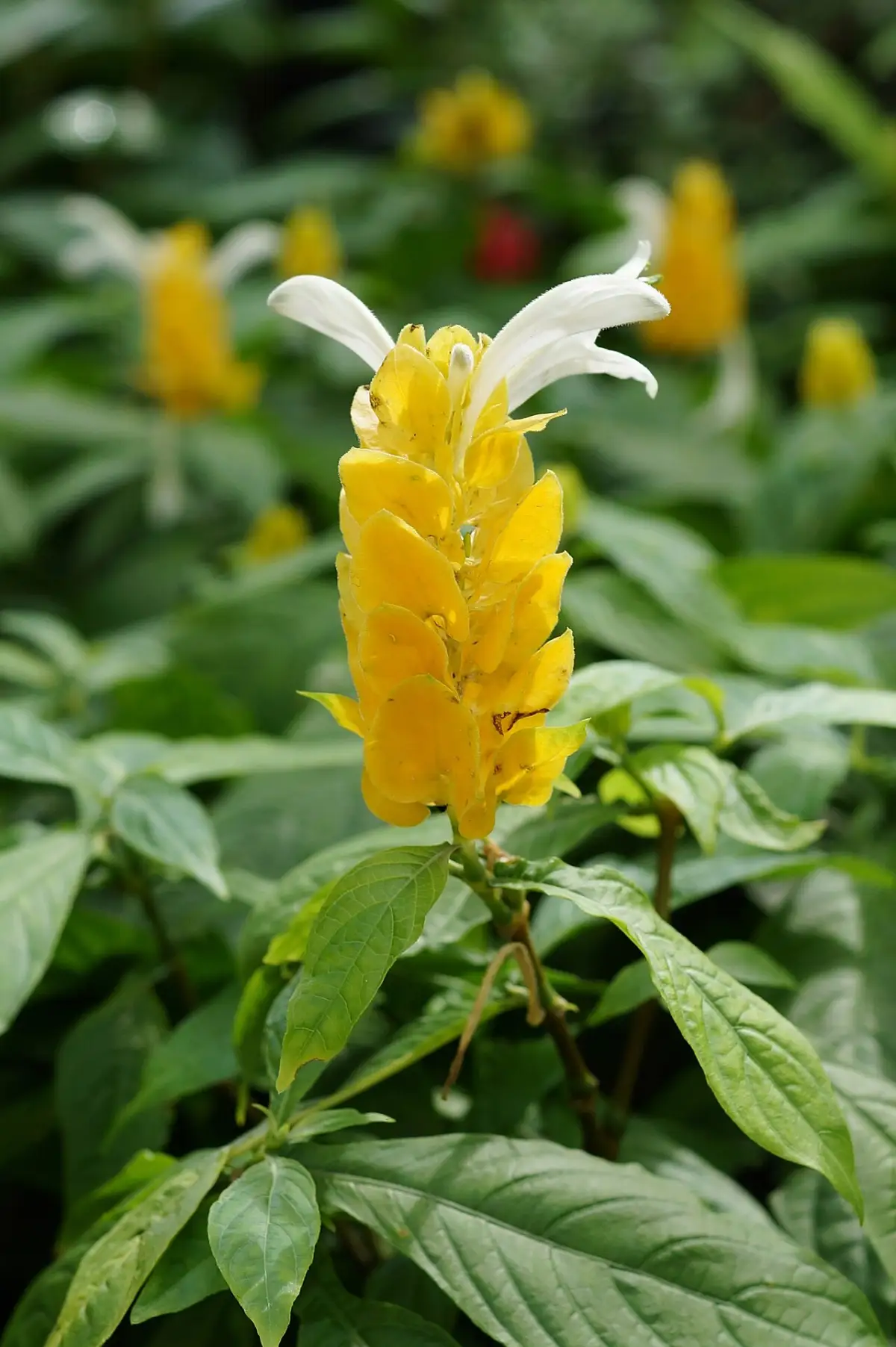
At least three different plants are sold as “shrimp plant,” and their care is not identical. Golden shrimp plant is a different species in a different genus, as the University of Florida IFAS Extension notes, even though some websites call it a variety of shrimp plant.
| Feature | Shrimp plant (Justicia brandegeeana) | Golden shrimp plant (Pachystachys lutea) | Shrimp plant (Phlogacanthus guttatus) |
|---|---|---|---|
| Family | Acanthaceae | Acanthaceae | Acanthaceae |
| Native range | Mexico | South America | Eastern Himalaya to Myanmar |
| Bract spike | Arching or drooping to one side; salmon, pink, red or yellow | Held upright like a candle; bright golden yellow | Orange, yellow, green or gold bracts |
| Leaves | Oval, soft, 2.5 to 8 cm (1 to 3 in) | Lance-shaped, deeply veined and quilted, up to about 15 cm (6 in) | Elliptic, velvety, about 7.5 to 12.5 cm (3 to 5 in) |
| Main bloom | Most of the year in warm conditions | Spring to late summer | December to February in its native habitat |
| Care difference | Tolerates drier soil; average humidity | Prefers evenly moist soil and humidity of 50% or more | Part shade, moist organic soil |
The quickest field check is the direction of the spike: drooping and arching means Justicia brandegeeana, upright and yellow means Pachystachys lutea. NC State Extension notes that Phlogacanthus guttatus is frequently confused with Justicia brandegeeana. If you are unsure, photograph a leaf in daylight and try our leaf identifier alongside the flower tool.
Shrimp plant is also unrelated to “blue shrimp plant” (Cerinthe major), an annual in the borage family. If you grow other long-blooming tropical shrubs, the pruning logic in our allamanda plant care guide is similar.
Is Shrimp Plant Toxic to Cats and Dogs?
There is no authoritative listing for shrimp plant either way. The Lady Bird Johnson Wildflower Center’s expert answer on red shrimp plant and dogs points out that the ASPCA does not include it as toxic or non-toxic, and it is also not on the ASPCA toxic and non-toxic plant list under that name.
That means you should not treat it as proven safe. Keep it out of reach of pets that chew plants and of young children, and never eat any part of it. If a pet or person eats a plant and shows symptoms such as vomiting, drooling or lethargy, contact your vet or local poison control center right away.
Final Takeaway
Shrimp plant care is simple once you match light to your climate, water by checking the soil, and prune hard once a year so new tips can carry new bracts. Growing indoor plants has taught me that small adjustments, like moving a pot a little closer to the window or skipping one watering, often fix more than any product does.
Start with the symptom table if your plant is struggling, and confirm its identity first if it does not look like the plant described here.
Frequently Asked Questions
Does shrimp plant like full sun or shade?
It likes bright light with some direct sun. Indoors, give it your sunniest window. Outdoors, morning sun with afternoon shade gives the best bract color, especially in hot, dry climates where harsh afternoon sun fades the bracts.
Why is my shrimp plant getting leggy?
Legginess comes from too little light and no pruning. Move it to brighter light, cut it back by about half in early spring, and pinch new shoot tips during the growing season so it branches.
How often should I water a shrimp plant?
Water when the top 1 to 2 cm (about half an inch) of soil is dry, then soak until water drains out. That can be every few days in summer outdoors and once a week or less indoors in winter.
Will a shrimp plant come back after a frost?
In USDA zones 8 and 9, frost usually kills the top growth but the roots survive and resprout in spring, especially with mulch over the root zone. In colder zones, grow it in a pot and bring it indoors before frost.
Is golden shrimp plant the same as shrimp plant?
No. Golden shrimp plant is Pachystachys lutea, a different species with upright yellow spikes and larger quilted leaves. Shrimp plant is Justicia brandegeeana, with drooping, arching bracts in salmon, pink, red or yellow.
Can shrimp plant grow indoors all year?
Yes. With a bright, sunny window, temperatures above about 16°C (60°F) and a yearly spring prune, it can grow and bloom indoors year-round.