Tropical Hibiscus Watering Guide: When to Water, How Much, and Signs to Watch
Tropical hibiscus (Hibiscus rosa-sinensis, family Malvaceae) is a thirsty shrub, but it hates soggy roots. Most watering problems come from following a fixed calendar instead of checking the soil. This tropical hibiscus watering guide gives you a simple check, real frequencies for pots, garden beds and winter, and a table to tell overwatering from underwatering.
Quick Answer
Water tropical hibiscus when the top 2.5 cm (1 inch) of soil feels dry, and soak it until water runs out of the drainage holes. In warm weather, potted plants usually need water every 1 to 2 days and in-ground plants 2 to 4 times a week. Indoors in winter, water only when the top 2.5 to 5 cm (1 to 2 inches) is dry, which is often once every 7 to 10 days.
Never let the root ball dry out completely, and never leave the pot standing in water. The soil check always beats the calendar, because heat, sun, wind, pot size and season change how fast the plant uses water.
How Often to Water Tropical Hibiscus
How often you water depends on where the plant grows and how warm and bright it is. Use the table as a starting point, then confirm with the moisture check in the next section.
| Situation | Typical frequency | What changes it |
|---|---|---|
| Pot outdoors, summer, full sun | Every 1 to 2 days; daily or twice daily in heat waves | Small pot, clay pot, wind, temperatures above 32°C (90°F) |
| Pot outdoors, spring or autumn | Every 2 to 4 days | Cool nights, cloudy weeks, rain |
| Newly planted in the ground | Daily for the first week, then every other day | Sandy soil dries faster; clay soil slower |
| Established in the ground (zones 9 to 12) | 2 to 4 times a week in the growing season | Rainfall, mulch, soil type |
| Indoors in winter | About every 7 to 10 days | Window light, room heating, pot size |
These ranges match what growers and gardens report. Hidden Valley Hibiscus, a specialist grower, recommends daily watering in warm weather and twice a day in the upper 80s and 90s °F, while the Smithsonian Gardens care sheet says hibiscus prefer an evenly moist root ball and should be checked daily.
Pots Outdoors in Warm Weather
Container plants dry out fastest because the roots have a small volume of mix to draw from. A large, leafy hibiscus in a small pot can use up its water by late afternoon on a hot, sunny day.
Check every morning in summer. If plants wilt by mid-afternoon even after a morning soak, move them to a bigger pot or give them afternoon shade rather than adding a third daily watering.
Hidden Valley notes that growth and blooming slow down before you see wilting, so a plant that wilts often will also flower less. If your plant has stopped flowering, our guide to tropical hibiscus not blooming covers water stress along with the other causes.
Plants in the Ground
Garden shrubs have a bigger root system and more soil around them, so they need water less often but in larger amounts. Water until the soil is moist at least 15 cm (6 inches) deep.
A 5 to 8 cm (2 to 3 inch) layer of mulch over the root zone, kept a few centimeters away from the stem, slows evaporation. New plantings need regular water through their first year until they are established, according to Smithsonian Gardens.
Indoors in Winter
Indoor plants in winter use far less water because light is low, days are short and there is no wind. Soil that stays wet for days in a cool, dim room is a classic setup for root rot in overwintered hibiscus.
Let the top 2.5 to 5 cm (1 to 2 inches) dry before watering, but do not let the whole pot go bone dry. Hibiscus grower Tyler Mossop makes the same point in his video below: on dull, snowy weeks he waters much less, and in bright spells he may water every day or two.
In this video you will see how a container grower adjusts watering to the light the plant receives and why a pot with a large drainage hole matters.
The One-Minute Moisture Check
The fastest way to know whether your hibiscus needs water is to check the soil, not the date. I have learned that checking the soil before watering helps prevent overwatering and keeps plants healthy, and tropical hibiscus is a plant where this matters a lot.
- Finger test: push a finger into the mix up to the second knuckle, about 5 cm (2 inches). Dry at the first knuckle in summer means water now. Cool and damp means wait.
- Weight test: lift or tip the pot right after a full watering to learn its “wet” weight. A pot that feels clearly lighter is ready for water.
- Leaf check: look at the newest leaves at midday. Slight drooping that recovers by evening is heat; drooping in the morning means the roots are dry or damaged.
A cheap moisture meter can help in large pots where your finger cannot reach the middle of the root ball. Read it in the middle of the pot, not at the edge, because the edge dries first.
How to Water Tropical Hibiscus the Right Way
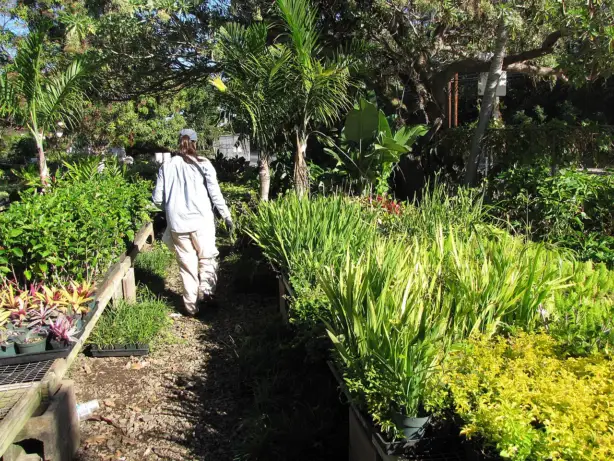
Water slowly, deeply and at the soil, not over the leaves. A quick splash wets only the top layer, so the bottom roots stay dry while the surface looks fine.
Watering a Container Plant
- Water in the morning so the plant is fully hydrated before the midday heat.
- Pour slowly over the whole soil surface until water runs from the drainage holes.
- Wait 5 minutes and water again. The second pass wets any dry pockets that the first pass ran around.
- Empty the saucer within 10 to 15 minutes, as Platt Hill Nursery advises, so the roots never sit in standing water.
- Use water at room temperature. Very cold water can shock the roots of a plant kept indoors.
There is no exact amount that fits every pot. The real target is a fully wet root ball, which you can confirm when water runs freely from the bottom after the second pass.
If the mix has dried out so much that water runs straight down the sides, set the pot in a bucket of water for 20 to 30 minutes, then let it drain fully.
Watering a Garden Shrub
- Make a shallow basin of soil around the plant, slightly wider than the root ball.
- Fill the basin, let it soak in, and fill it a second time.
- Check 15 cm (6 inches) down with a trowel the next day. It should feel moist, not muddy.
- For several shrubs, a drip line on a timer gives the most even moisture.
Overwatering vs Underwatering: Soggy or Dry?
Both overwatering and underwatering turn hibiscus leaves yellow, so the leaves alone cannot tell you which one you have. The soil can. Check the mix 2.5 to 5 cm (1 to 2 inches) down, then match what you see in this table.
| What you see | Soil at 2.5 to 5 cm | Most likely cause | What to do |
|---|---|---|---|
| Yellow lower leaves dropping, plant droops even in the morning | Wet, cool, maybe sour smell | Overwatering or root rot | Stop watering, empty saucer, let top 5 cm dry; check roots if it does not improve |
| Brown, mushy roots when you tip the pot out | Wet | Root rot | Trim soft roots, repot in fresh, fast-draining mix |
| Leaves limp by afternoon, crisp yellow leaves, buds falling | Dry, pot feels light | Underwatering | Soak twice, then water more often or move to a bigger pot |
| Mix shrunk away from the pot sides | Very dry | Long underwatering | Bottom-soak in a bucket for 20 to 30 minutes |
| Yellowing after a cold snap or a move indoors | Normal | Cold or relocation stress, not water | Keep watering normally; new leaves usually follow |
| Yellow leaves with green veins | Normal | Iron uptake problem, often high pH | Check water and soil pH (see below) |
The University of Florida IFAS Gardening Solutions page notes that even a brief cold snap can turn lower leaves yellow, which is easy to mistake for a watering problem. For more causes, read our guide on why plant leaves turn yellow.
Observing plants regularly and adjusting their care is, in my experience, the habit that matters most here. A quick look each morning catches the early signs before leaves start to drop.
Adjusting Water for Your Climate
The same plant needs very different watering in Lahore, London and Miami. Tropical hibiscus grows outdoors all year only in frost-free climates, roughly USDA zones 9 to 12 according to Smithsonian Gardens, and it is damaged below about 2°C (35°F).
- Hot, dry summers (Pakistan and North India before the monsoon, the US Southwest, the Middle East, inland Australia): pots may need water twice a day when temperatures pass 38°C (100°F). Give afternoon shade and use larger or light-colored pots to keep roots cool.
- Monsoon and rainy seasons (South and Southeast Asia, the Caribbean): rain may water the plant for you. Skip watering when the soil is still damp, raise pots on feet so they drain, and move them out of spots where water pools.
- Humid tropics (Florida, Hawaii, coastal Brazil): in-ground plants often need water only during dry spells. Focus on drainage rather than frequency.
- Mediterranean climates (California, southern Europe): dry summers mean regular deep watering from late spring to autumn, then much less in the cooler, wetter winter.
- Temperate climates (UK, northern US, Canada): grow it in a pot, bring it indoors before nights fall below 10°C (50°F), and switch to the winter routine. The RHS rates it H1B, meaning it can stand outside only in summer.
Sun and water work together: more sun means faster drying. Our climate-by-climate guide to tropical hibiscus sun needs explains how much light to give in each of these regions.
Pot, Soil and Water Quality That Make Watering Easier
The right pot and mix make watering forgiving. The wrong ones make it a daily guessing game.
- Pot size: choose a pot 2.5 to 5 cm (1 to 2 inches) wider than the root ball. Too big stays wet; too small dries out by noon.
- Drainage holes: always required. A decorative pot without holes should only hold a plastic pot that does have them.
- Clay vs plastic: clay (terracotta) breathes and dries faster, which suits heavy waterers in humid places. Plastic and glazed pots hold water longer, which helps in hot, dry climates.
- Potting mix: use a light, fast-draining mix based on peat or coco coir with perlite or fine bark. Never use heavy garden soil in a pot.
- Water pH: Hidden Valley Hibiscus gives an ideal water pH of 5.5 to 6.5. Very hard, alkaline tap water can lead to yellow leaves with green veins over time. Rainwater, or testing your tap water, are simple options.
- Feeding with water: because hibiscus is watered often, many growers add a weak dose of water-soluble fertilizer to regular waterings during the growing season instead of a strong dose once a month.
For general container setup, see our guide on how to grow flower plants in pots.
Is It Tropical or Hardy Hibiscus? Why It Changes Watering
Before you follow any watering guide, make sure your plant really is a tropical hibiscus. Hardy hibiscus such as swamp rose mallow (Hibiscus moscheutos) grows naturally in wet ground and tolerates soggy soil, as Bob Vila’s hibiscus care guide notes, while tropical hibiscus rots in the same conditions.
| Feature | Tropical hibiscus (H. rosa-sinensis) | Hardy hibiscus (H. moscheutos) | Rose of Sharon (H. syriacus) |
|---|---|---|---|
| Leaves | Glossy, dark green, oval with toothed edges; evergreen | Larger, dull green, often heart-shaped or lobed; dies back in winter | Small, three-lobed, dull green; drops leaves in autumn |
| Flowers | Five petals, glossy, many colors including orange and yellow; each lasts 1 to 2 days | Very large, dinner-plate size; white, pink or red | Smaller; white, pink, lavender or blue |
| Winter | Damaged below about 2°C (35°F) | Dies to the ground, regrows in spring | Woody shrub, leafless but alive |
| Watering | Moist but well-drained; never soggy | Tolerates wet or boggy soil | Moderate; tolerates some dryness once established |
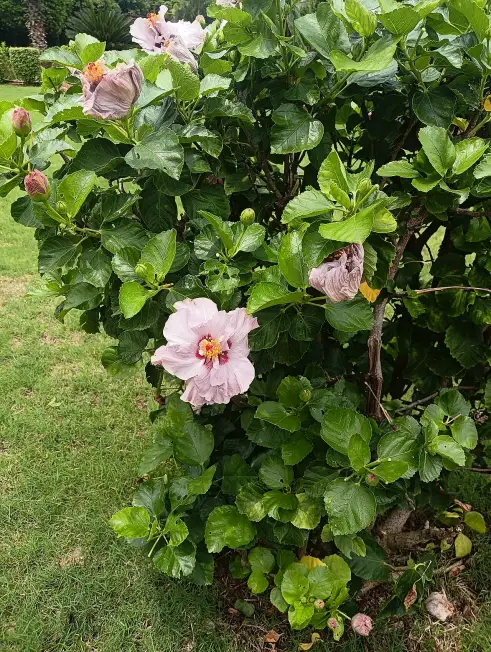
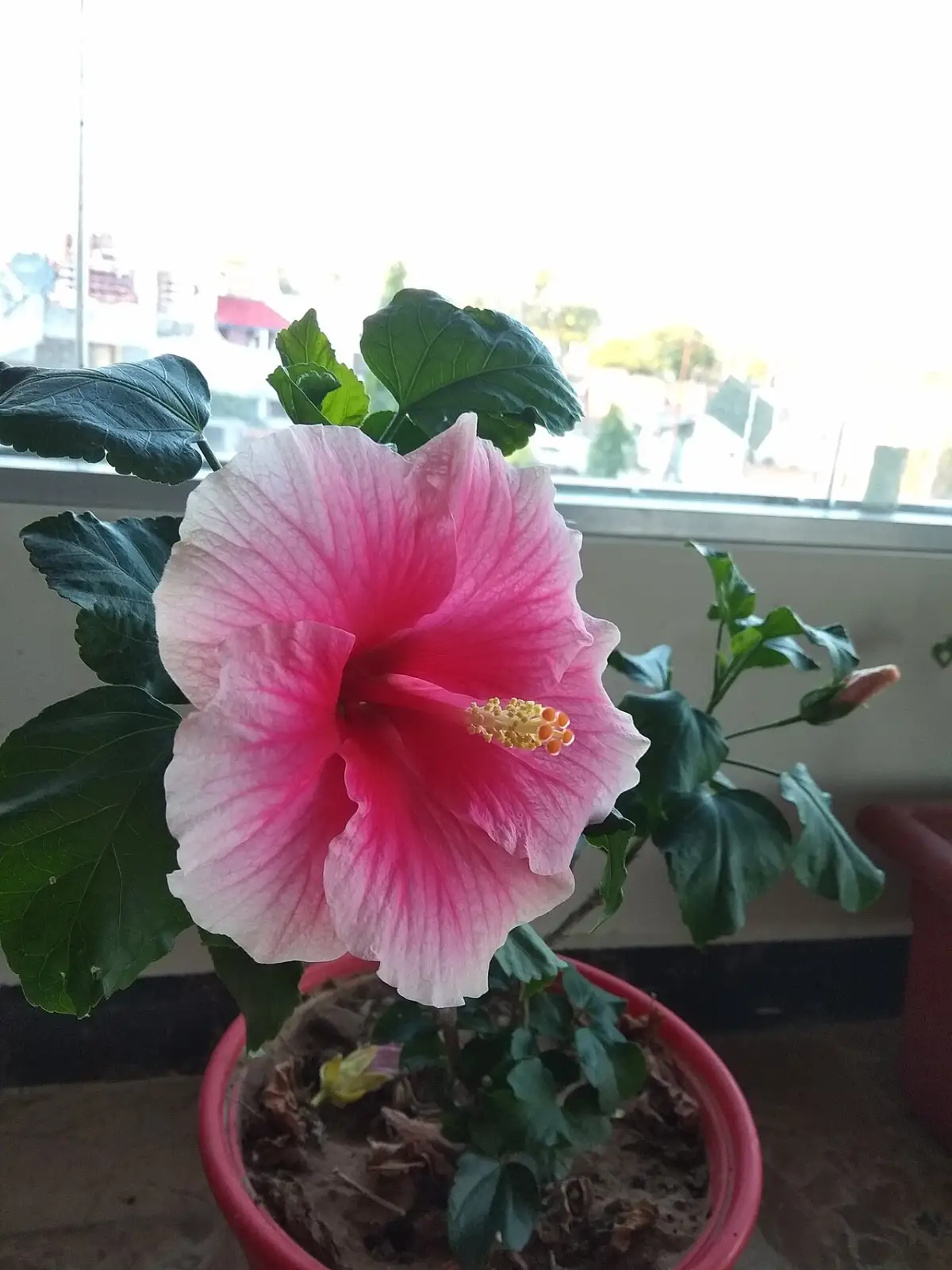
Glossy leaves and orange or yellow flowers point strongly to tropical hibiscus. Our full guide on how to identify hibiscus covers more types and look-alikes.

Still not sure? Upload a clear daylight photo of a leaf and a flower to our flower identifier, or a leaf alone to the leaf identifier. Photo identification, including our tool, can be wrong, so treat the result as a strong hint and confirm with the features in the table.
Pests That Follow Watering Mistakes
A stressed hibiscus is easier for pests to take over. Smithsonian Gardens lists aphids, thrips and spider mites as the main pests, and UF IFAS adds whiteflies and mealybugs.
Spider mites do best on dry plants, especially indoors in winter. Rinsing both sides of the leaves with lukewarm water once a week helps knock them back, a tip the T3 Times channel also shows for indoor hibiscus. If you see clusters of soft insects on buds, follow our guide to getting rid of aphids on indoor plants. UF IFAS warns never to use malathion on hibiscus.
Is Tropical Hibiscus Safe Around Pets?
The ASPCA lists Rose of Sharon (Hibiscus syriacus) as non-toxic to dogs, cats and horses. The veterinary IVIS guide to poisonous plants notes that no toxin has been identified in hibiscus, but dogs that chew and eat the leaves can get vomiting, drooling and diarrhea.
Keep pets from chewing the plant and the fertilizer in its soil. If a pet or a child eats part of a plant and shows symptoms, contact your vet or a poison control center.
Key Takeaway
Tropical hibiscus wants evenly moist, well-drained soil. Check the top 2.5 cm (1 inch) before every watering, soak until water drains, empty the saucer, and water much less indoors in winter. Match your routine to your climate, your pot and your plant’s leaves, not to a fixed calendar.
Frequently Asked Questions
Should I water my tropical hibiscus every day?
Only if the soil is dry. Potted hibiscus in full sun and summer heat often needs daily watering, but indoors in winter daily watering usually leads to soggy soil and root rot. Check the top 2.5 cm (1 inch) of soil first.
How do I know if my hibiscus is overwatered or underwatered?
Both cause yellow leaves, so check the soil 2.5 to 5 cm down. Wet, cool or sour-smelling soil points to overwatering. Dry soil and a light pot point to underwatering.
How often should I water tropical hibiscus indoors in winter?
Water when the top 2.5 to 5 cm (1 to 2 inches) of soil is dry, which is often every 7 to 10 days. Low light means the plant uses much less water than in summer.
Should I water hibiscus when it wilts in the afternoon?
Check the soil first. If it is dry, water deeply. If the soil is still moist and the plant recovers by evening, the droop is heat stress, and afternoon shade or a larger pot helps more than extra water.
Can I use tap water for tropical hibiscus?
Yes, in most places. Very hard, alkaline tap water can cause yellow leaves with green veins over time. Hidden Valley Hibiscus recommends water with a pH of about 5.5 to 6.5, and rainwater is a good alternative.
Is hibiscus toxic to dogs and cats?
The ASPCA lists Rose of Sharon (Hibiscus syriacus) as non-toxic to dogs, cats and horses. The IVIS veterinary guide says no toxin has been identified in hibiscus, but dogs that eat the leaves can get vomiting and diarrhea. Contact your vet if a pet shows symptoms.
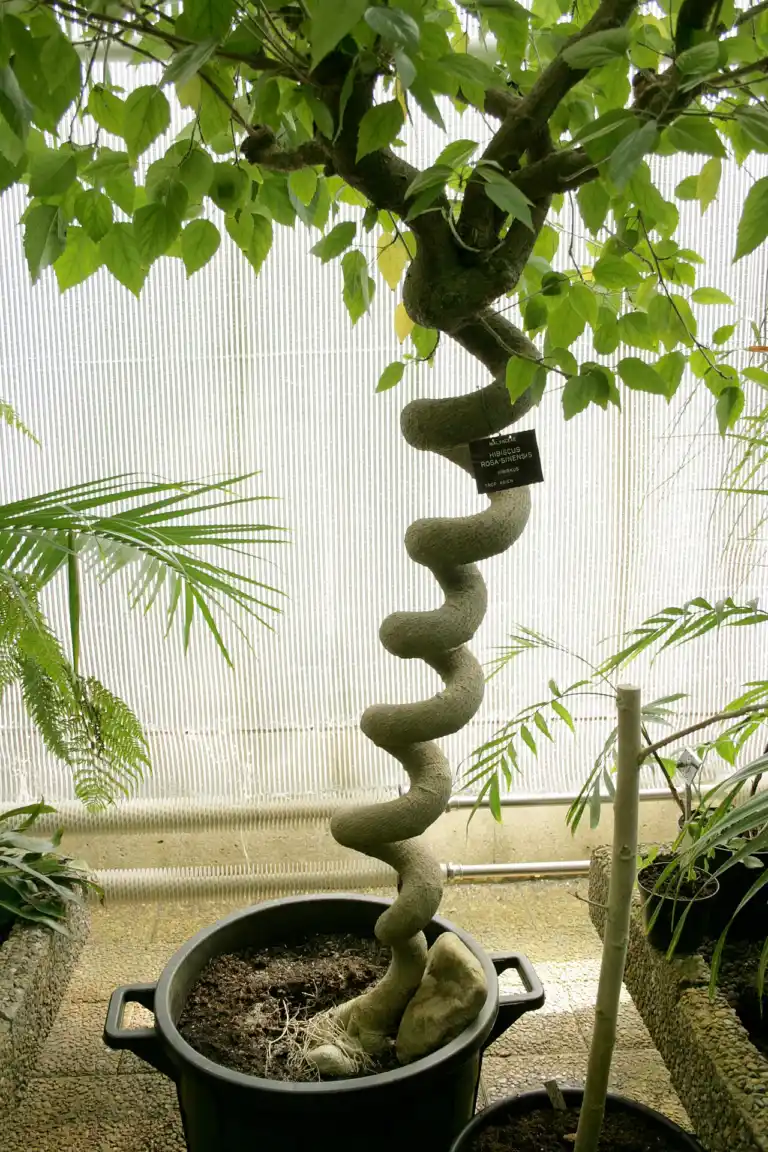
Featured image: Photo: Riquix / Wikimedia Commons, CC BY-SA 4.0