

Majesty Palm Care: Light, Water, Humidity and Brown Tip Fixes
Majesty palm care comes down to four things: bright indirect light, soil that stays evenly moist but never soggy, humid air, and warm temperatures between 65 and 85°F (18 to 29°C). Get those right and the majesty palm (Ravenea rivularis, family Arecaceae) keeps pushing out tall, feathery fronds. Get them wrong and you will see brown tips, yellow fronds and spider mites.
This guide gives you one consistent set of numbers, explains why the plant needs them, and shows you how to read the warning signs before they spread.
Quick Answer: Majesty Palm Care at a Glance
A majesty palm needs more light and more water than most indoor palms. Use this table as your care card.
| Need | What to give it |
|---|---|
| Light | Bright, indirect light for most of the day; a few hours of gentle morning sun is fine |
| Water | Water thoroughly when the top 1 inch (2.5 cm) of soil is dry; never let the whole root ball dry out |
| Humidity | 40 to 50% or higher |
| Temperature | 65 to 85°F (18 to 29°C); keep above 55°F (13°C) |
| Soil | Rich, well-draining potting mix in a pot with a drainage hole |
| Fertilizer | Palm fertilizer with magnesium, half strength, spring and summer only |
| Repotting | Every 2 to 3 years in spring, one pot size up |
| Size indoors | Usually 5 to 10 ft (1.5 to 3 m) over many years |
| Outdoors | USDA zones 10 to 11 only |
| Pets | Non-toxic to cats, dogs and horses (ASPCA) |
Why the Majesty Palm Struggles Indoors
The majesty palm is a riverbank palm from Madagascar. NC State Extension describes its natural home as the edges of rivers and streams, where it can reach up to 100 ft (30 m) tall. Its roots live in constantly moist ground, and its fronds grow in warm, humid air.
A typical living room is the opposite: dry heated or air-conditioned air, lower light than a riverbank, and potting soil that dries out quickly. Almost every majesty palm problem traces back to that gap. Once you see the plant as a “wet feet, humid air, plenty of light” palm, the care rules below make sense.
The wild species is also becoming rarer. NC State Extension notes that deforestation and habitat loss have reduced it in Madagascar, so the plants sold in stores are nursery grown from seed.
Make Sure It Is a Majesty Palm
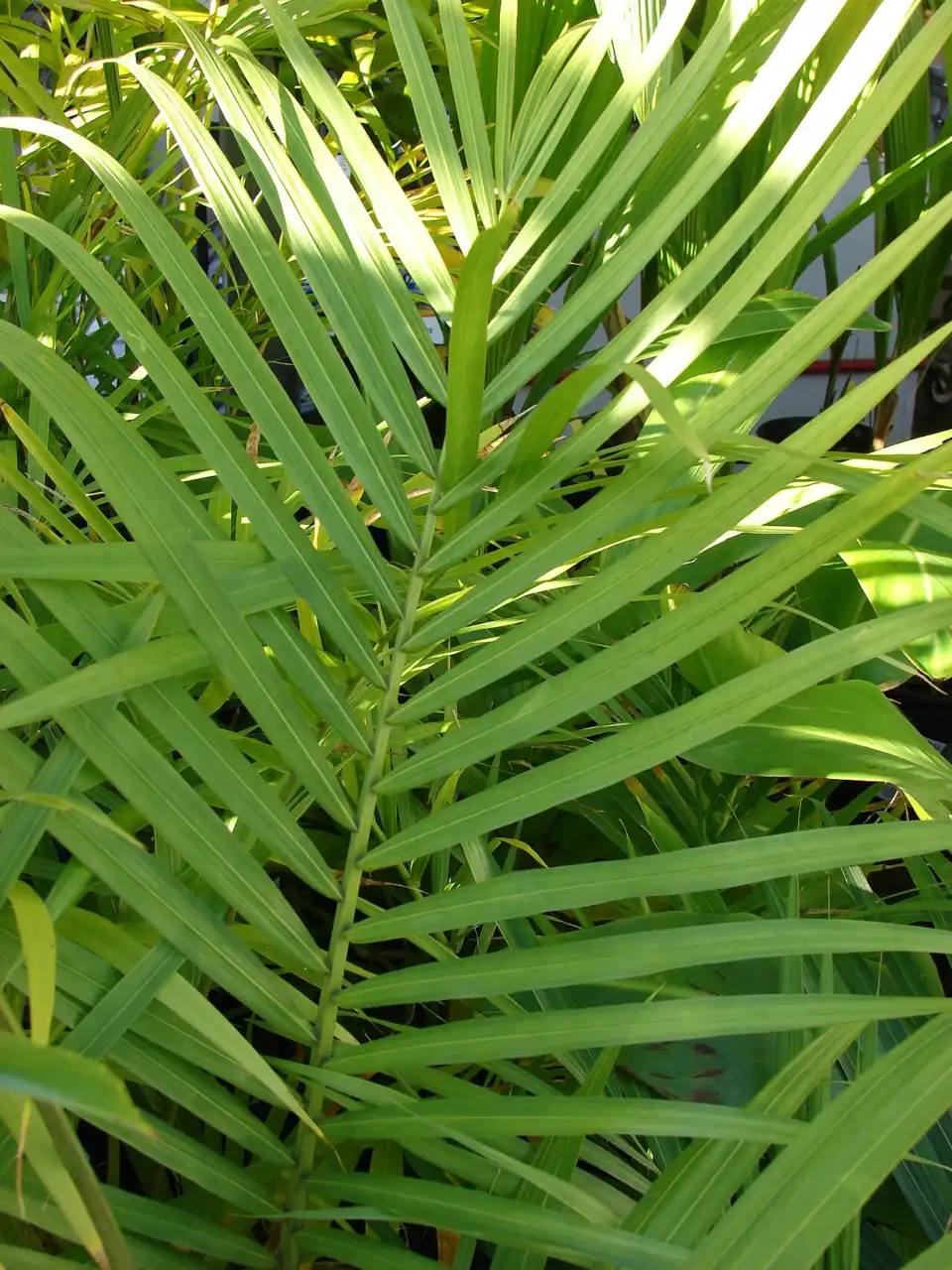
Before you follow any care guide, confirm you have the right palm, because several look-alikes need very different care. A majesty palm has these features you can check yourself:
- Fronds: pinnate (feather shaped), with many narrow, glossy, bright green leaflets on each side of a central stalk.
- Habit: fronds point upward and arch gently at the tips, giving a fountain shape.
- Trunk: a single trunk that swells slightly at the base as the palm matures. Store pots often hold several seedlings planted together, which can make it look like a clumping palm.
- Leaf stalks: green, not yellow.
If you are unsure, take a clear photo of one whole frond in daylight and try our leaf identifier. Photo identification, including our tool, can be wrong, so use it as a starting point and compare the features below.
Majesty Palm vs Areca, Kentia and Parlor Palm
These four indoor palms are often confused in garden centers. The table shows how to tell them apart and why it matters for care.
| Palm | Scientific name | How to recognize it | Care difference |
|---|---|---|---|
| Majesty palm | Ravenea rivularis | Single trunk (often several per pot), green stalks, upright arching fronds | Needs bright light, steady moisture and high humidity |
| Areca palm | Dypsis lutescens | Many cane-like stems in a clump, yellowish leaf stalks | Likes slightly drier soil between waterings |
| Kentia palm | Howea forsteriana | Dark green, broad leaflets on long, drooping fronds; slow growing | Far more tolerant of low light and dry air |
| Parlor palm | Chamaedorea elegans | Small, thin stems; short fronds; usually under 4 ft indoors | Handles lower light; a much smaller plant |
If you were sold a “low light palm” that actually has upright, arching fronds on green stalks, it may be a majesty palm, and that would explain a slow decline in a dim corner.
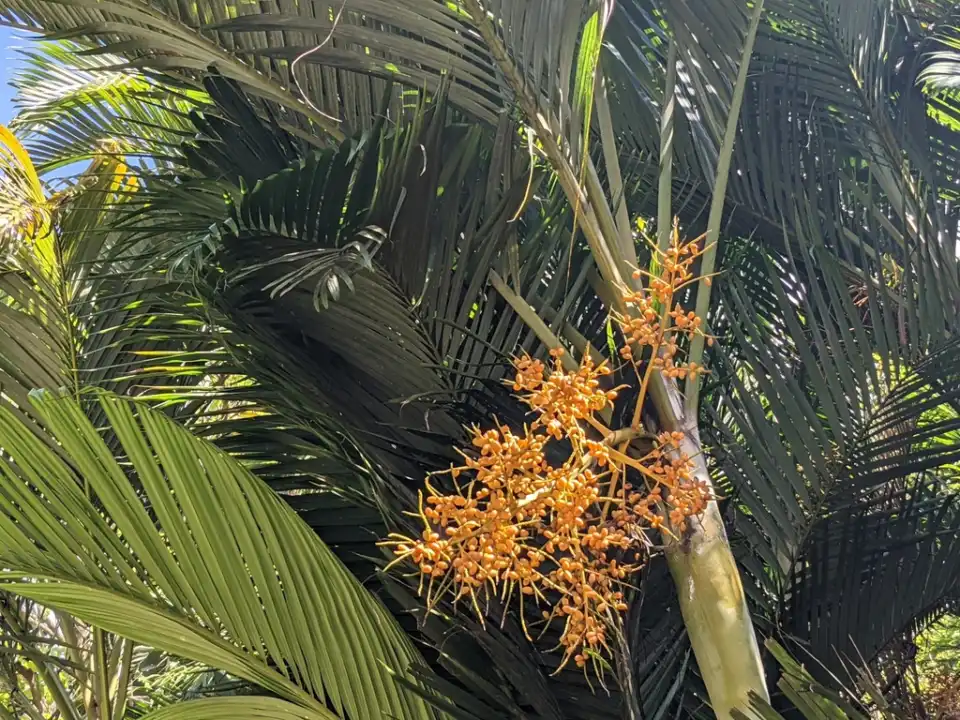
For other palms on this site, see our guides to Adonidia palm care and Chinese fan palm care.
Light: How Much Sun a Majesty Palm Needs
Give a majesty palm the brightest indirect light you have. The New York Botanical Garden recommends bright but indirect light every day, with a bright southern or eastern exposure working best. It tolerates poorer light, but its health slowly declines.
- Best spot: within a few feet of an east window, or set back from a south or west window behind a sheer curtain.
- Too much: hours of hot afternoon sun through glass can scorch leaflets, leaving pale or tan patches.
- Too little: new fronds come out thin and pale, older fronds yellow, and growth stalls.
In my experience, the right spot makes the biggest difference: placing indoor plants where they get bright, indirect sunlight noticeably changes how well they grow. If your room is dark in winter, a full-spectrum grow light can fill the gap; our guide on which light color is best for plant growth explains what to look for.
Watering: Keep It Evenly Moist, Never Soggy
Water a majesty palm thoroughly when the top inch of soil feels dry, and never let the whole root ball dry out. NYBG advises watering until it runs from the drainage hole, then emptying the saucer after about 15 minutes so the roots are not left standing in water.
- Push a finger 1 inch (2.5 cm) into the soil.
- If it feels dry, water slowly until water flows out of the drainage hole.
- Wait 15 minutes, then tip out any water left in the saucer or cover pot.
- If it still feels moist, check again in two or three days.
I have learned that checking the soil before watering, instead of watering on a fixed calendar, is the simplest way to prevent overwatering. That matters with this palm, because it sits right between two failure points: dry roots cause brown, crispy fronds, and soggy roots cause rot.
Summer vs Winter Watering
In a bright, warm room in spring and summer, the top inch often dries in about a week, sometimes faster in small pots or hot climates. In winter, growth slows and the soil stays wet longer. NYBG suggests keeping the soil barely moist through the darkest winter months, which may mean watering every 10 to 14 days, but always let the finger test decide.
Water Quality and Salt Buildup
Palms dislike salt buildup, and NYBG lists fertilizer buildup among the causes of brown tips. Hard tap water and too much fertilizer both leave mineral salts in the pot, sometimes visible as a white crust on the soil or pot rim.
- Every 2 to 3 months, flush the pot: run plain water slowly through the soil for a few minutes, letting it drain completely.
- If your tap water is very hard, use rainwater or filtered water where you can.
- Avoid water from a salt-based water softener, because it adds sodium to the soil.
Humidity and Temperature
Aim for at least 40 to 50% humidity and temperatures between 65 and 85°F (18 to 29°C). Gardening Know How recommends humidity of at least 50%, and NC State Extension gives 65 to 85°F as the comfortable range.
- Raise humidity: run a small humidifier nearby, group plants together, or set the pot on a tray of pebbles with water below the pot base.
- Misting: it raises humidity for only a few minutes, so it does little for brown tips. Several growers call it ineffective.
- Avoid: heating vents, radiators, air conditioners, and cold drafts from doors or open windows.
- Cold limit: growth stops in cool rooms, and the UK guide UK Houseplants advises keeping it above 12°C (about 54°F).
Dry winter air from heating is the most common reason majesty palms brown in cold climates. In hot, dry summers (for example in South Asia, the Middle East or the American Southwest), air conditioning creates the same problem, so humidity matters year round.
Soil, Pot and Repotting
Use a rich, well-draining potting mix in a pot with a drainage hole. NYBG notes regular potting soil with added peat (or coco coir) and perlite works well. A simple mix is about two parts quality potting soil to one part perlite.
Repot every 2 to 3 years in spring, or when roots circle the pot or poke out of the drainage hole.
- Water the day before so the root ball slides out easily.
- Choose a pot only about 2 inches (5 cm) wider than the old one.
- Set the palm at the same depth it grew before; burying the base of the trunk invites rot.
- Fill around the root ball, firm gently, and water through.
- Keep it out of strong light for a week while the roots settle.
Palm roots dislike being disturbed, so do not tease them apart. Splitting a store pot of several seedlings is possible (NC State lists division as a method), but expect some setback.
Fertilizer: What and When to Feed
Feed a majesty palm lightly in spring and summer only, using a palm fertilizer that contains magnesium and other micronutrients. Palms are prone to magnesium and potassium shortages, which show up as yellowing on older fronds.
- Liquid option: a palm or houseplant fertilizer at half strength, about once a month from spring to late summer.
- Slow-release option: NYBG suggests about two summer feedings at half strength with a palm-specific slow-release food.
- Winter: stop feeding when growth slows.
More is not better. Extra fertilizer builds up as salts and burns the frond tips, so flush the soil regularly as described above.
Pruning a Majesty Palm
Only remove fronds that are fully brown or fully yellow. A partly green frond still feeds the palm, so leave it in place. Cut dead fronds close to the trunk with clean, sharp shears.
You can trim crispy brown tips for looks. Cut along the natural angle of the leaflet and leave a thin strip of brown, because cutting into green tissue creates a fresh wound that browns again. Never cut the top growing point: a palm has a single growing tip, and if it dies the trunk cannot branch.
Brown Tips, Yellow Fronds and Other Problems
The pattern of damage usually tells you the cause. Match what you see to the table, fix the cause, and judge success by the new fronds, because damaged tissue does not turn green again.
| What you see | Most likely cause | Fix |
|---|---|---|
| Crispy brown tips on many fronds | Dry air | Raise humidity to 40 to 50%+; move away from vents |
| Brown tips plus white crust on soil | Fertilizer or mineral salt buildup | Flush the soil; feed less; use softer water |
| Whole fronds browning and crisp, soil dry | Root ball dried out | Water thoroughly; check soil more often |
| Mottled or streaky yellow-green fronds in summer | Roots drying between waterings (NYBG) | Water deeply when the top inch dries |
| Yellow fronds, soggy soil, sour smell | Overwatering, poor drainage, root rot | Let the top inch dry; check the drainage hole; repot into fresh mix if roots are brown and mushy |
| Brown or yellow spots after a move | Temperature shock or overwatering | Keep away from drafts; steady conditions |
| Pale, thin new fronds; slow growth | Not enough light | Move closer to a bright window or add a grow light |
| One or two lowest fronds yellowing slowly | Normal aging | Remove once fully yellow |
| Fine webbing, speckled leaflets | Spider mites | See the pest section below |
For a broader checklist that applies to all houseplants, see why plant leaves turn yellow.
Pests: Spider Mites, Scale, Mealybugs and Fungus Gnats
Spider mites are the main pest of indoor majesty palms, and they thrive in the same dry air that causes brown tips. NC State Extension lists spider mites, aphids, whiteflies, mealybugs and scale, and notes that low humidity makes the palm more open to pests.
- Spider mites: tiny dots, fine webbing between leaflets, and a dull, speckled look.
- Scale: small brown bumps stuck to the stalks and undersides of leaflets.
- Mealybugs: white, cottony clusters where leaflets meet the stalk.
- Fungus gnats: small flies around wet soil, a sign the soil stays too wet.
To treat spider mites, mealybugs and scale:
- Move the palm away from other plants.
- Rinse the fronds in a shower with lukewarm water, including the undersides.
- Spray with insecticidal soap or neem oil, testing a small area first and keeping it out of direct sun.
- Repeat every 5 to 7 days for three to four weeks, since eggs hatch after the first spray.
- Raise humidity to help prevent mites returning.
The same gentle approach works on other soft pests; our guide to getting rid of aphids on indoor plants covers more options.
Growing a Majesty Palm Outdoors
A majesty palm can live outdoors year round only in frost-free climates. NC State Extension lists USDA hardiness zones 10a to 11b, which covers places like South Florida, coastal Southern California and Hawaii, and similar tropical and subtropical regions elsewhere.
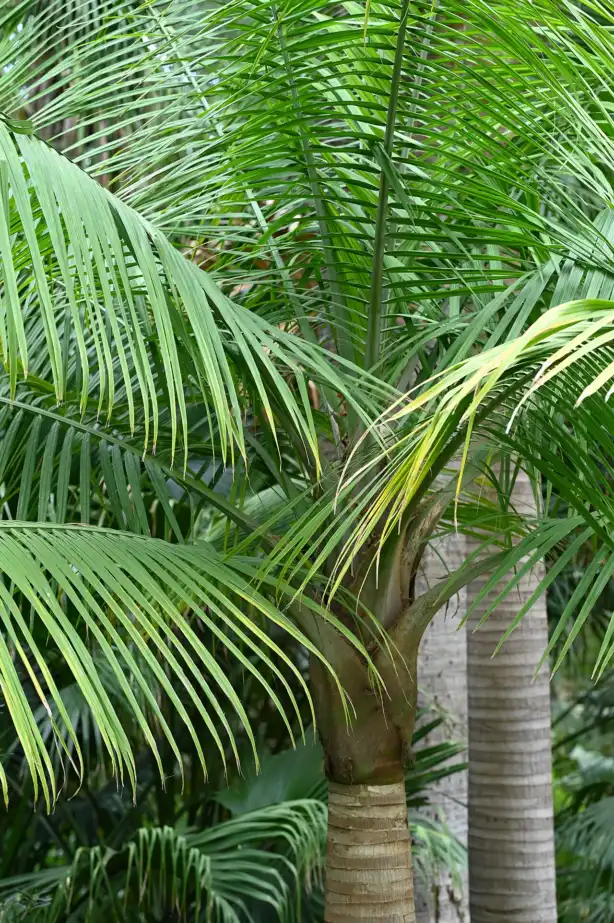
- In colder zones: put it outside in summer once nights stay above about 55°F (13°C), and bring it in before autumn nights drop below that.
- Acclimate first: nursery palms are grown in shade. Start in full shade for a week, then move into partial shade with morning sun, to avoid scorched, bleached fronds.
- Water more outdoors: wind and sun dry pots fast, so check the soil daily in hot weather.
- Bringing it back in: rinse the fronds and check for pests before it joins your other houseplants.
Is a Majesty Palm Safe for Cats and Dogs?
Yes. The ASPCA lists the majesty palm (Ravenea rivularis) as non-toxic to dogs, cats and horses. Chewing the fronds can still cause mild stomach upset in some animals, as with most plant material.
Do not confuse it with the sago palm (Cycas revoluta), which is not a true palm and is highly toxic to pets according to the ASPCA. Our sago palm care guide explains how to recognize it. If a person or pet eats a plant and shows symptoms, contact a poison control center or your vet right away.
A Simple Majesty Palm Care Routine
Consistency matters more than any single trick. This routine covers everything in one place.
- Every few days: check the top inch of soil with your finger; water thoroughly if dry.
- Weekly: look under a few leaflets for webbing or bumps; empty any standing water from the saucer.
- Monthly (spring and summer): feed at half strength; rotate the pot a quarter turn so it grows evenly.
- Every 2 to 3 months: flush the soil with plain water; wipe or rinse dust from the fronds.
- Autumn: stop feeding; move away from heaters; start running a humidifier if your heating dries the air.
- Every 2 to 3 years (spring): repot one size up.
How to Check Your Majesty Palm Yourself
I believe observing plants regularly and adjusting their care to what they show you is essential for keeping indoor plants healthy. Small changes in care, like moving a pot closer to the window or watering a little more deeply, often make the difference. Use this quick health check once a week:
- New growth: is a new frond emerging from the center, and is it a healthy green? That is your best sign that care is working.
- Tips: are new brown tips appearing? If yes, check humidity and salt buildup first.
- Color: are several fronds yellowing at once? Check soil moisture and light.
- Soil: is it dry an inch down, or still soggy days after watering?
- Undersides: any webbing, specks or cottony clusters?
If you are still not sure which palm you have, snap a sharp daylight photo of a full frond and run it through our plant identifier, then confirm the features in the comparison table above. When a pet’s or child’s safety depends on the answer, check with an expert as well.
The Bottom Line
Successful majesty palm care means recreating a riverbank indoors: bright indirect light, soil that never fully dries, humidity of 40 to 50% or more, and steady warmth. Fix those basics, flush out salts a few times a year, feed lightly in summer, and judge your progress by healthy new fronds rather than old damaged ones.
Frequently Asked Questions
How often should I water a majesty palm?
Water when the top inch (2.5 cm) of soil feels dry. In a bright, warm room in summer that is often about once a week; in winter it may be every 10 to 14 days. Always check the soil instead of following a fixed calendar.
Why does my majesty palm have brown tips?
The most common causes are dry air, fertilizer or mineral salt buildup, and letting the root ball dry out. Raise humidity to 40 to 50% or more, flush the soil with plain water every few months, and water before the soil dries deeply.
Should I mist my majesty palm?
Misting raises humidity for only a few minutes, so it does little to stop brown tips. A humidifier, grouping plants together, or a pebble tray works better.
Can a majesty palm live outside?
Year round only in frost-free areas, USDA zones 10 to 11. In colder climates it can spend summer outdoors in partial shade once nights stay above about 55°F (13°C), then come back inside before autumn.
Is a majesty palm toxic to cats or dogs?
No. The ASPCA lists the majesty palm (Ravenea rivularis) as non-toxic to cats, dogs and horses. Do not confuse it with the sago palm, which is highly toxic to pets.
Why is my majesty palm turning yellow?
Streaky yellow fronds in summer usually mean the roots are drying out; yellow fronds with soggy soil point to overwatering or poor drainage; pale new growth means too little light. One or two lower fronds yellowing slowly is normal aging.
Featured image: Photo: Glpinagelpinagel / Wikimedia Commons, CC BY-SA 4.0


One Comment